Richmond, Virginia Just Became the Fastest-Growing Metro in the State. Nobody Outside Virginia Noticed.
We may earn money or products from the companies mentioned in this post. This means if you click on the link and purchase the item, I will receive a small commission at no extra cost to you ... you're just helping re-supply our family's travel fund.
Henrico County, just outside Richmond, logged more than $2.1 billion in construction activity in fiscal year 2023-2024 alone — a 44.8 percent jump from the year before. The Diamond District, a $2.4 billion mixed-use redevelopment anchored by a new CarMax Park baseball stadium, is under construction near Scott’s Addition. Richmond made Zillow’s list of hottest U.S. housing markets for 2025. And yet ask most Americans outside the mid-Atlantic what’s happening in Richmond and you’ll get a shrug, maybe a mention of the Confederate monuments that came down in 2020 and 2021. The city has steadily become one of the more dynamic mid-size markets on the East Coast while national attention stayed elsewhere.
What’s actually being built
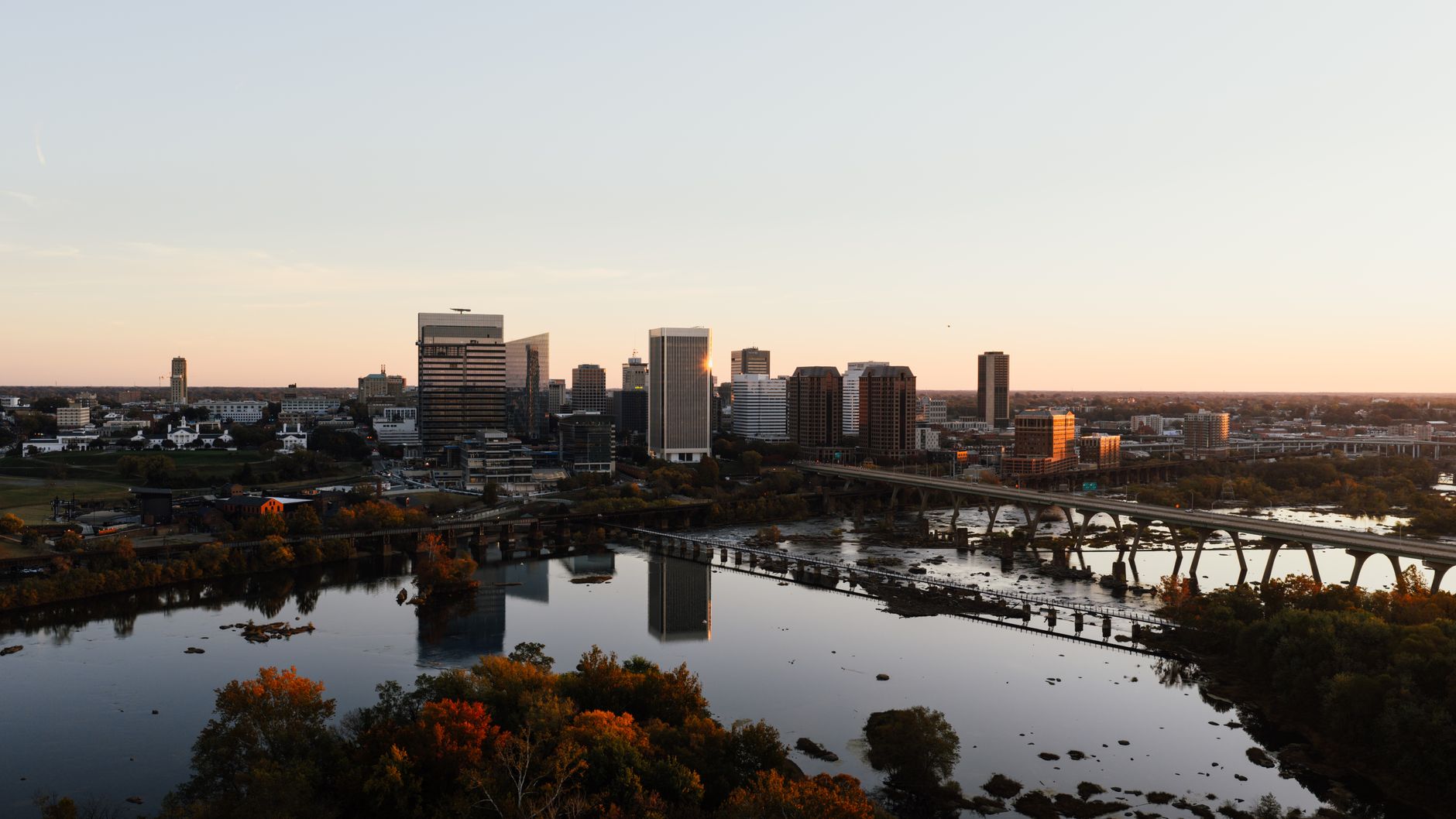
Scott’s Addition is the clearest example of what’s changed. Ten years ago it was warehouses and light industrial buildings. Today it’s Richmond’s fastest-growing neighborhood, with breweries, converted-loft apartments, and a walkability score around 71 out of 100 — high for a formerly industrial pocket. The area anchors a broader development wave: nearly 12,000 new apartments were added across the Richmond region over a recent three-year stretch, with roughly 4,600 more units currently in the development pipeline as of late 2024, according to commercial real estate data from Thalhimer.
The Diamond District project alone is expected to bring nearly 2,700 housing units alongside the new ballpark, positioned as a long-term anchor for the city’s north side. Meanwhile the City Center Innovation District, a 26-acre biotech-focused redevelopment near VCU Health and Virginia Biotech Park, is aiming to turn underused downtown parking lots into a life-sciences hub with 800 planned residential units and thousands of promised jobs.
Why Richmond specifically, and why now
Richmond benefits from a combination that’s hard to find elsewhere on the East Coast: a two-hour drive from Washington D.C. without D.C. prices, a genuine historic core in neighborhoods like the Fan District and Church Hill, and a state capital’s worth of government and legal employment stacked on top of VCU’s health system and university presence. Rent growth has stayed comparatively moderate — effective rents rose about 2.8 percent year-over-year through the end of 2024 — which is a real number but nowhere near the spikes seen in Austin or Nashville during their own boom years. That relative restraint is part of the pitch: Richmond is growing without (yet) becoming unaffordable in the way faster-growing Sun Belt cities did.
Where the growth is concentrated
- Scott’s Addition — breweries, lofts, and the city’s most walkable new development
- Church Hill — historic rowhouses undergoing renovation, new infill construction on long-vacant lots
- Manchester — a formerly industrial district south of the James River, now drawing millennial renters
- Short Pump and western Henrico — the suburban growth engine, anchored by retail and office parks
- Midlothian and Chesterfield County — family-oriented suburban expansion with new school-zoned developments
What it actually feels like on the ground
The Fan District still looks the way it did decades ago — Victorian rowhouses, tree-lined streets, VCU students filling out the rental market — but the median sales price there has climbed to around $677,000 with homes averaging only about 15 days on market, among the fastest-moving submarkets in the city. That’s a meaningful shift for a neighborhood that used to be a relatively attainable entry point. Meanwhile, a 43.6-mile paved trail called the Fall Line Trail is under construction connecting Ashland to Petersburg through the metro area, the kind of infrastructure investment that signals a region planning for sustained population growth rather than a short-term boom.
The history the growth is being built on top of
Richmond’s identity as the former capital of the Confederacy shaped its built environment for a century and a half, most visibly along Monument Avenue, where statues of Confederate leaders stood for generations before being removed following the protests of 2020. That removal was itself a significant civic moment, and the empty pedestals along the avenue — some still standing, others cleared entirely — represent an unusual physical marker of a city actively renegotiating its relationship with its own history in real time, even as new development reshapes the skyline around it.
The city’s older Black neighborhoods, including Jackson Ward, once called the “Harlem of the South” for its concentration of Black-owned businesses and cultural institutions in the early 20th century, are seeing renewed investment after decades of decline tied partly to highway construction that physically cut through the neighborhood in the 1950s and 60s. That history matters for understanding today’s growth story, because Richmond’s current boom is unfolding in a city still actively working through the consequences of how it treated its own neighborhoods a half-century ago.
Richmond’s food and beer scene has developed alongside the real estate boom, with Scott’s Addition alone hosting more than a dozen breweries and distilleries within a walkable radius, an unusually high concentration for a neighborhood that size. That density has become a draw in its own right, pulling visitors from Washington D.C. and Northern Virginia for weekend trips independent of any relocation interest, which adds a tourism revenue stream on top of the residential growth story and gives local businesses a customer base that isn’t solely dependent on the pace of new housing construction continuing indefinitely.
For visitors rather than prospective residents, the practical upshot is that Richmond now supports a genuinely full weekend itinerary that didn’t exist in the same form a decade ago — historic sites in the morning, a walk through the Fan District at midday, and a brewery crawl through Scott’s Addition by evening, all within a compact, increasingly walkable urban core.
The honest read is that Richmond is in the early-to-middle stage of the same trajectory Nashville and Austin went through fifteen years ago, minus the national spotlight, which for now is working in its favor — the growth is real but the prices haven’t caught up to the hype, mostly because there isn’t much hype yet.