Every State Had a Tourism Project That Was Supposed to Put It on the Map. Here Are the Ones That Spectacularly Failed.
We may earn money or products from the companies mentioned in this post. This means if you click on the link and purchase the item, I will receive a small commission at no extra cost to you ... you're just helping re-supply our family's travel fund.
Every state has a pitch. A reason why you should come here instead of somewhere else — a natural wonder, a cultural heritage site, a culinary tradition, an experience you can’t get anywhere else. States spend real money on this pitch. Tourism bureaus, marketing campaigns, state-funded attractions, public-private partnerships — the investment in drawing visitors runs into billions of dollars annually across all 50 states.
Some of this money is well spent. A lot of it isn’t. And a specific category of tourism project — the ambitious, expensive, highly publicized attraction that was supposed to change a state’s travel profile — has produced some of America’s most instructive and entertaining failures.
Here is a selective tour of the American tourism flop, state by state.
The Midwest’s Finest Tourism Flops
Iowa: The Field of Dreams Site (Sort Of)
The actual filming location of the 1989 film Field of Dreams in Dyersville, Iowa became a modest but real tourist attraction — people genuinely came, and it became charming in a low-key way. That’s not the flop. The flop is the $60 million stadium built next to the original field for a one-off MLB game in 2021 (Yankees vs. White Sox).
The event was genuinely beautiful television. The stadium was specifically designed to be temporary — it was built around a cornfield and then partially dismantled. Iowa tourism hoped the game would catalyze ongoing Field of Dreams pilgrimage. It got a bump. Whether the $60 million was worth it for a single game is a question Iowa officials have been answering carefully ever since.
Wisconsin: The Tommy Bartlett Exploratory
Tommy Bartlett was a water ski show that started in Wisconsin Dells in 1952 and became a genuine regional institution. The Tommy Bartlett Exploratory — a science and entertainment museum built adjacent to the water ski show in 1990 — represents a different category of flop: the well-intentioned expansion that diluted a successful brand. The Exploratory is still operating but is widely considered the weaker cousin of the original show, a reminder that not every tourist attraction needs a museum attached to it.
Ohio: The Rock & Roll Hall of Fame’s Ongoing Location Identity Crisis
The Rock & Roll Hall of Fame in Cleveland is not a flop in the sense of having closed. It’s still open, still attracts visitors. But its history is instructive: multiple cities competed for it (Memphis, San Francisco, and others were serious contenders), Cleveland won largely through a telephone vote campaign in 1986, and the city has spent decades trying to leverage the institution into a broader tourism identity that hasn’t quite materialized. Cleveland’s tourism identity remains fragmented — it has the Hall of Fame, and it has a great food scene, and it has the Cleveland Clinic medical complex drawing health visitors, and none of these things add up to a coherent destination narrative.
Michigan: Cobo Hall Waterfront Redevelopment
Detroit’s Cobo Center/TCF Center convention facility has been repeatedly renovated, renamed, and rebranded with promises that it would anchor waterfront tourism revival. The convention center is functional. The waterfront tourism revival has been slower than every plan projected, and the facility itself has required hundreds of millions in public investment over decades.
Southern States and the Heritage Tourism Bet That Didn’t Pay Off
Mississippi: The Grand Gulf Military Monument
Grand Gulf Military Monument was developed with state funding to memorialize a Civil War engagement on the Mississippi River. The site is historically significant and honestly presented. It draws approximately 20,000 visitors per year against an infrastructure that was built for significantly more, making it a functional but perpetually underperforming investment for Mississippi tourism.
Alabama: The U.S. Space & Rocket Center’s Perpetual Financial Crisis
Huntsville’s U.S. Space & Rocket Center is a genuinely excellent museum — arguably the best space museum in America — and it has been in financial difficulty so regularly that it has required state bailouts multiple times. The most significant crisis came in 2020 during COVID when the facility nearly closed permanently. A state of $20 million in debt at peak crisis for an institution that receives 900,000 visitors per year and houses one of the world’s great collections of space artifacts is a remarkable indictment of how American cultural institutions are funded.
South Carolina: Camelot Theme Park
Camelot Theme Park opened in Myrtle Beach in 1991 as a medieval-themed amusement park and closed less than three years later. It was supposed to be the non-beach anchor of Myrtle Beach tourism and compete with Disney on a lower budget. It failed on both counts. The site was later developed into other uses, but Camelot stands as an example of the “build it and they will come” optimism that regularly fails in regional theme park development.
Western States: When Natural Beauty Wasn’t Enough
Nevada: The Nevada Museum of Art’s Endless Expansion
Nevada has struggled to build a tourism identity beyond Las Vegas. The Nevada Museum of Art in Reno has been part of a decades-long effort to establish Reno as a legitimate cultural destination. The museum is genuinely good. Reno’s cultural tourism growth has been steady but far slower than the projections that justified the public investment.
Oregon: The Oregon Vortex
This one is endearingly weird rather than tragic. The Oregon Vortex in Gold Hill claims to be a “spherical field of force” where compasses spin, balls roll uphill, and perspective plays tricks. It has been operating since 1930. It charges admission for experiences that are optical illusions. It has been debunked repeatedly. It remains open and draws visitors. As tourism flops go, it’s the kind that has outlasted every skeptic.
California: The Salton Sea Tourism Dream
The Salton Sea — an enormous inland sea in the California desert, created accidentally in 1905 by an irrigation accident — was briefly a genuine resort destination in the 1950s and 60s, hosting beaches, marinas, and yacht clubs. By the 1980s, agricultural runoff had made the lake increasingly saline and the fish population crashed. The resort buildings decayed into one of California’s most striking ghost town landscapes.
California has spent decades attempting to revive the Salton Sea, with various proposals for geothermal energy development, lithium extraction, and ecological restoration. The total amount committed over the years in state funds runs into the hundreds of millions. A significant portion of this investment has produced limited results. The Salton Sea remains a compelling and sad destination for dark tourism enthusiasts — but not the resort comeback California has been trying to engineer.
The Northeast’s Expensive Mistakes
Maine: The Shaker Village Preservation Paradox
Maine has several preserved Shaker villages from the 19th century — genuine historical artifacts of a religious community that produced extraordinary furniture and architecture. The tourism draw is real. The challenge is that preserving living history sites costs far more than they generate in admission revenue, and Maine’s various heritage tourism investments have faced chronic underfunding. It’s a structural problem, not a failure of the concept, but the gap between investment and return has been a recurring theme.
New York: The Hudson Valley Wine Tourism Push
New York State invested substantially in promoting Hudson Valley wine tourism as a competitor to Napa Valley. The wines have improved dramatically over 20 years. The tourism infrastructure has developed. The comparison to Napa, however, hasn’t materialized — Hudson Valley wine tourism draws a regional weekend audience, not the destination visitors the marketing promised. It’s a success at the level it has achieved and an underperformer against its own ambitions.
Pennsylvania: Centralia (Unintentional Tourism)
Centralia wasn’t a tourism project — it was an accident. An underground coal mine fire has been burning beneath this Columbian County town since 1962. The state spent over $42 million relocating residents and eventually condemned and demolished most of the town. Centralia now draws thousands of visitors annually to see its cracked, smoke-vented streets, graffiti highway, and ghost-town atmosphere. The state spent tens of millions to end a town and created a dark tourism destination by accident.
What Makes a Tourism Project Fail
Looking across these cases, some patterns emerge:
- Overestimated demand — Almost every failed tourism project projected visitor numbers based on optimistic assumptions. Realistic demand projections would have scaled the investment differently.
- Wrong location — A museum in a town with no other draw requires the museum itself to be worth traveling for. A museum in a city with other attractions can survive on supplemental visitors. Many failed attractions were built in locations that couldn’t support destination travel.
- Competition from the internet — Attractions built on novelty or education have faced rising competition from free online content. A roadside curiosity that made sense as a destination in 1975 faces a different competitive environment in 2024.
- Seasonal demand problems — Many attractions that seem viable in summer are not viable year-round. The operating costs don’t stop in winter.
- The “if you build it” fallacy — Tourism infrastructure creates the conditions for tourism; it does not create tourism itself. A new convention center doesn’t generate convention business unless the city is already competitive for conventions.
The Attractions That Were Embarrassing and Then Became Beloved
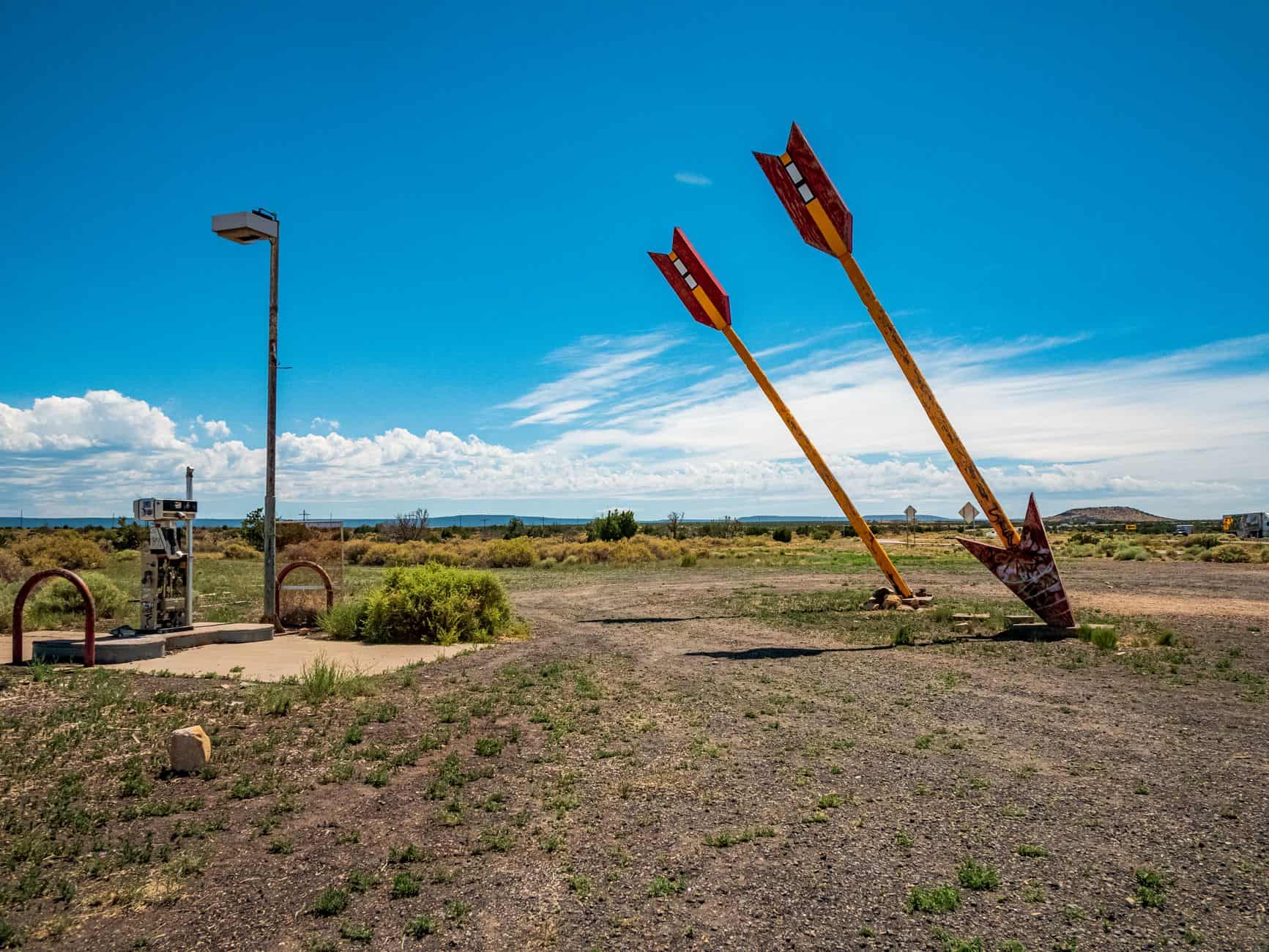
Not every apparent flop stays a flop. Some of the most beloved American roadside attractions started as failures or jokes:
- Wall Drug, South Dakota — Started by a struggling pharmacy that offered free ice water to travelers on a hot highway. The gimmick worked. Wall Drug is now a genuine South Dakota institution that draws 2 million visitors per year, which is more than Mount Rushmore. It is deeply tacky and joyfully American.
- Carhenge, Nebraska — A Stonehenge replica made from spray-painted cars in a farmer’s field outside Alliance, Nebraska. Built in 1987 as a tribute to the original Stonehenge. Initially controversial with local residents who found it an eyesore. Now a beloved Nebraska oddity and a fixture on every American road trip list.
- The World’s Largest Ball of Twine (multiple locations) — Darwin, Minnesota claims the original. There are competing claims in Kansas and elsewhere. The competition over who has the largest ball of twine is a legitimately American argument. All of the locations draw visitors. None of them are a waste of time if you’re driving past.
The lesson from these accidental successes might be the most useful thing in this entire article: authenticity, weirdness, and a genuine human story behind a place will out-draw an expensive engineered attraction almost every time. The states that spend the most on tourism don’t always get the best results. The states with the most honest, specific, weird identity often do.