Airlines Blame Weather. The Real Reason Your Flight Is Late Is Far More Embarrassing for Them.
We may earn money or products from the companies mentioned in this post. This means if you click on the link and purchase the item, I will receive a small commission at no extra cost to you ... you're just helping re-supply our family's travel fund.
You’re sitting at the gate. The board flips from “On Time” to “Delayed.” The gate agent gets on the PA and says something vague about “weather in our hub city” or “air traffic control holding patterns.”
You pull up the weather app. It’s clear and 72 degrees at the hub city. You look around. Other passengers are already rolling their eyes. You’ve been through this before.
Here’s the part the airline doesn’t want you to think too hard about: weather and ATC together account for roughly 28% of delays in most years, according to FAA data. The other 72%? That’s on the airlines. And the specific operational failures buried in that number are far more embarrassing — because they’re largely preventable.
The Official Story vs. What’s Actually Happening on the Tarmac
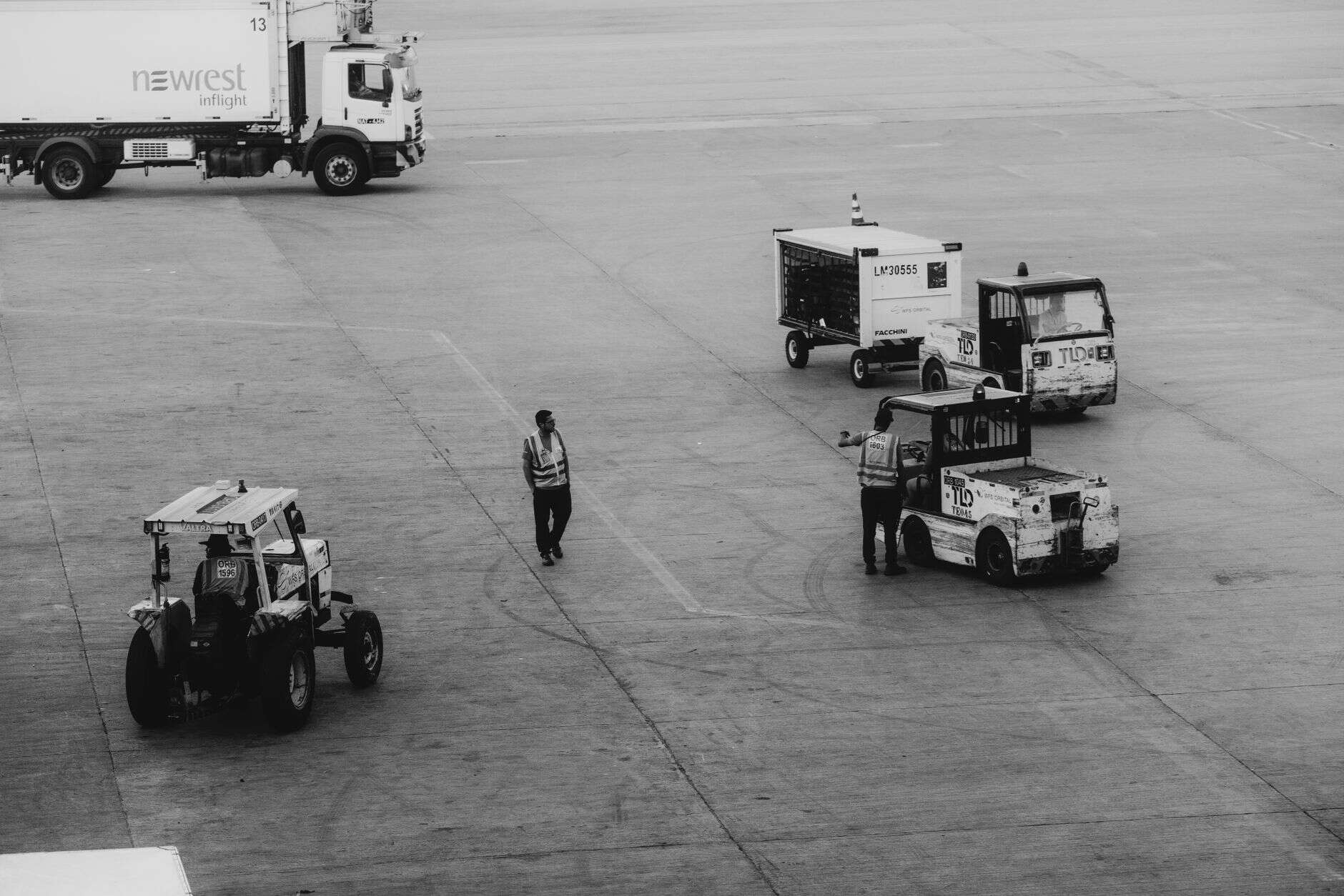
The FAA tracks delay causes in five categories:
- Air carrier delays — the airline’s fault (maintenance, crew, fueling, baggage, cabin cleaning)
- Extreme weather — the one category that’s genuinely out of everyone’s hands
- NAS (National Airspace System) delays — ATC volume management, non-extreme weather affecting routing
- Late aircraft — the previous flight with this plane ran late, so your flight is late too
- Security delays — TSA-related issues
In recent years, “late aircraft” has been one of the largest single categories — often 25–30% of all delays nationwide. That’s not weather. That’s not ATC. That’s an airplane that was somewhere else and didn’t get to your gate in time.
Combine that with outright air carrier delays (maintenance, crew not showing up, slow turnarounds), and you’re looking at roughly half of all delays being things airlines could structurally address with more buffer time, better staffing, and fewer back-to-back aircraft rotations.
They choose not to, because adding buffer time means slower aircraft utilization, which means lower revenue per aircraft per day. Your delay is a financial calculation, not an act of God.
Crew Rest Rules: The Delay Airlines Will Never Fully Explain to You
After a series of regional airline crashes in the 2000s, the FAA overhauled crew rest requirements. The rules that went into effect in 2014 mandate minimum rest periods based on how many flight segments crews work, what time of day they start, and how many time zones they’ve crossed.
In broad terms:
- Pilots must have a minimum 10-hour rest period before a flight
- That rest period must include at least 8 hours of uninterrupted sleep opportunity
- Flight time is capped — typically 8–9 hours per day for most domestic schedules
- “Duty time” (being on call, in briefings, taxiing, etc.) has its own separate caps
These rules are good. Fatigued pilots crash planes. But here’s the operational reality: when a crew’s inbound flight runs late due to weather or a mechanical issue, the math on their rest requirements suddenly breaks. They hit their duty time limit. They go out of service. A new crew has to be found.
Finding a replacement crew at 11pm in a mid-sized hub city is not fast. Airlines maintain “reserve” crews for exactly this scenario, but reserve pools have gotten leaner as airlines have tried to cut costs. When the reserve crew is already assigned somewhere else, you’re looking at a delay that could stretch to 3-6 hours — or an outright cancellation.
The gate agent will say “crew availability issue.” What they mean is: the original crew legally cannot fly your plane, the backup crew is gone, and we are scrambling.
Aircraft Rotation: Why Your 6am Flight Is Late Before the Sun Rises
Most commercial aircraft fly five to seven legs per day. A single narrowbody might go Boston → Charlotte → Denver → Phoenix → Los Angeles → back to Charlotte. Every leg that runs even slightly long bleeds time into the next one.
Airlines build buffer time into schedules to absorb this — but only a little. A fifteen-minute buffer is common on short-haul domestic legs. It’s often not enough.
This is why the worst delay to get is the one on an afternoon or evening flight: the plane has already flown two or three legs that day, and any hiccup earlier in the rotation has been compounding all afternoon. By the time your 5:40pm departure rolls around, that aircraft might be 45 minutes behind before it ever reached your airport.
The best flights to book, purely from an on-time performance standpoint, are the first departure of the day on any given route. That plane overnighted at your airport. There’s no rotation history to absorb. The crew is fresh. The catering was loaded hours ago. The only thing that can delay it is a maintenance finding or truly local weather.
First flights also get priority from ground crews. The whole station knows the day is starting — they’re not backed up yet.
The Cascading Failure Nobody Talks About
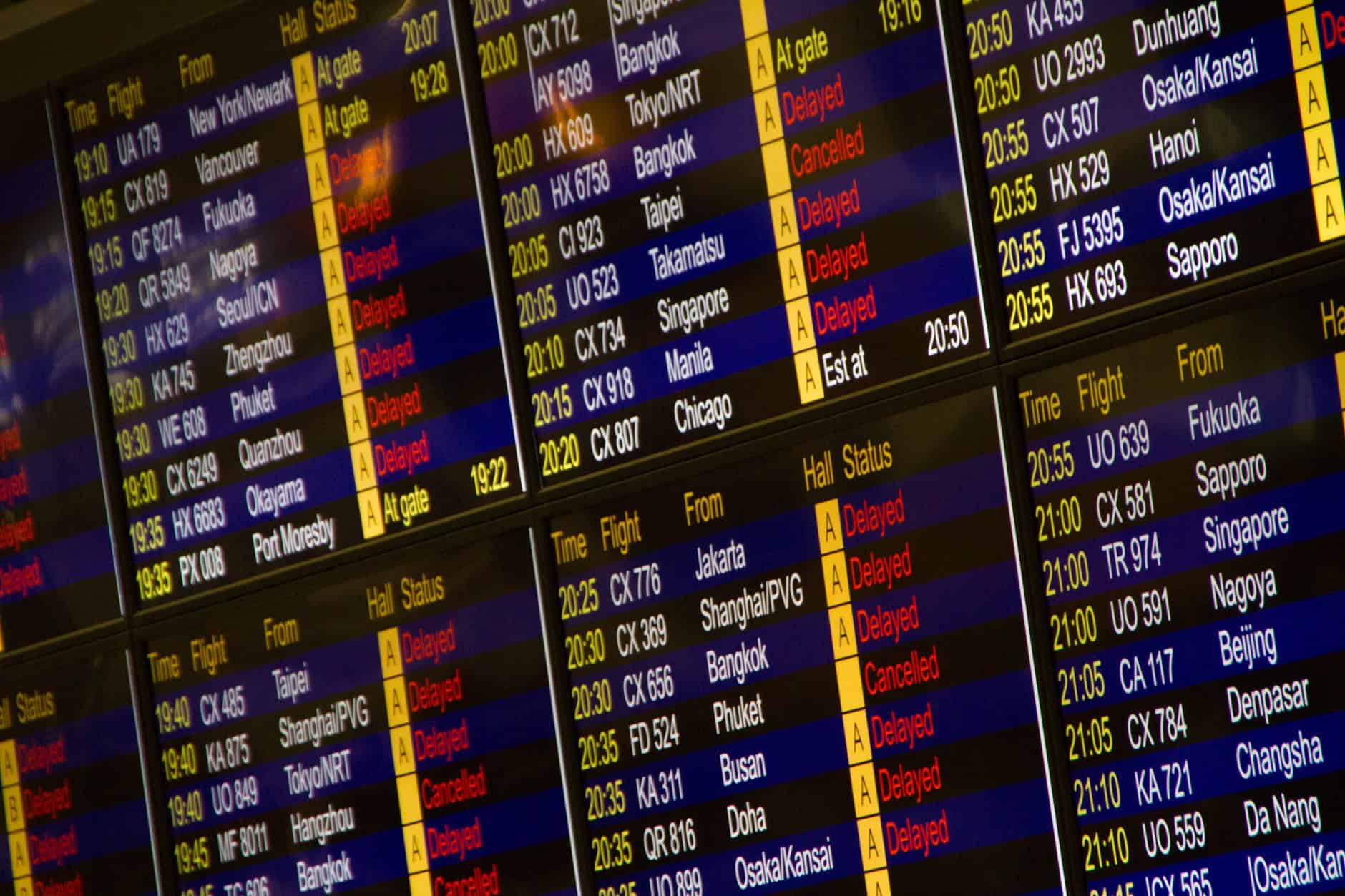
The delay domino effect is real, and it’s worse at hub airports than anywhere else.
Hub operations work by design on the “bank” system: dozens of flights arrive within a short window, passengers make their connections, then dozens of flights depart. The arriving planes become the departing planes. The arriving crews become the departing crews.
When a storm hits a hub — Chicago O’Hare, Atlanta, Dallas/Fort Worth — it doesn’t just delay flights at that hub. It delays every flight in the country that was supposed to arrive there and then leave. An aircraft that was supposed to fly Chicago → Nashville at 3pm after arriving from Denver at 2:30pm might not get there until 5. Nashville gets a delay for a storm they never had.
This is the cascade. It’s why looking at weather only at your origin and destination misses most of the picture. The question is: where has your plane been today, and what kind of weather exists anywhere in that rotation?
Flight tracking apps like FlightAware let you see the exact tail number of your inbound aircraft and its full day of travel. Checking this 2–3 hours before your flight is one of the most useful things any frequent traveler learns to do. If your inbound plane is currently sitting on the ground in Denver and your departure is in 90 minutes, you know before the gate agents do.
The One Delay Code That Means You’re Probably Missing Your Connection
Airlines have internal delay codes — dozens of them — that mean very specific things to operations teams. Passengers never see these. But one category of delay should make any connecting passenger nervous: mechanical/maintenance delays.
Here’s why: when the delay is weather or ATC, it affects everyone. The airline’s hub operations know about it. They’re already holding connecting flights, rerouting passengers, and managing the cascade. You might still miss your connection, but the whole system is aware.
When the delay is mechanical, it’s specific to your aircraft. Other flights don’t know. The system isn’t compensating. And crucially: mechanical delays are genuinely unpredictable in duration. A crew rest delay has a known endpoint (X hours from when the crew went off duty). A maintenance delay ends when the mechanic signs off — which could be 40 minutes or could be never if they can’t source the part.
Mechanical delays that push past 90 minutes have a high historical rate of becoming multi-hour delays or outright cancellations. If you’re connecting and you see a maintenance delay on your flight with 90 minutes or less of connection time, don’t wait. Get on the phone with the airline immediately and ask to be rebooked on an alternate routing. You want to be first in line for the limited rebooking inventory, not 200th.
What ‘Controllable’ vs. ‘Uncontrollable’ Delays Actually Means for Your Rights
The distinction between controllable and uncontrollable delays matters enormously for what the airline owes you.
- Uncontrollable delays (weather, ATC, security): airlines owe you essentially nothing beyond refunding your ticket if they cancel. No hotel, no meals, no compensation.
- Controllable delays (mechanical, crew, operational): most major US airlines now have official policies (published in their “Customer Commitment” documents) promising meal vouchers after certain delay thresholds, hotel accommodation for overnight controllable delays, and rebooking assistance.
The Biden-era DOT pushed airlines to codify these commitments, and most major carriers (Delta, United, American, Southwest) have published dashboards on the DOT website listing exactly what they’ll provide. The catch: you have to ask. Gate agents don’t always volunteer vouchers. The DOT’s airline customer service dashboard at transportation.gov is worth bookmarking.
In Europe, EU261 regulation provides hard cash compensation (€250–€600) for delays over 3 hours on flights to or from EU airports. US rules are weaker, but the EU rules apply to any flight departing from an EU airport — including on US carriers.
How to Protect Yourself Before the Delay Happens

The best delay protection is structural — built into how you book:
- Book first flights of the day on critical travel days. The on-time differential is significant.
- Build real connection time. For domestic connections at hub airports, 75 minutes is the minimum you should voluntarily accept. At international connection airports, 2 hours.
- Track your inbound aircraft using FlightAware the day of travel. Know before you go.
- Have the airline app downloaded and a phone number saved. When something goes wrong, the people who get rebooked first are the ones who call while everyone else is in line at the gate.
- Travel insurance with trip delay coverage — look specifically for policies that cover meals and accommodation after a 6-hour delay, not just cancellations.
- The right credit card. Several premium travel cards (Chase Sapphire Reserve, Amex Platinum, Capital One Venture X) include trip delay insurance as a card benefit — often kicking in at 6 hours with up to $500 in covered expenses. You have to pay for the ticket with that card for the coverage to apply.
Flight delays are not random bad luck. They’re a predictable output of an operational system that has been optimized for aircraft utilization and cost reduction, not passenger experience. Knowing how the system actually works — and where the failure points are — is the difference between passengers who end up sleeping on airport floors and the ones who are already checked into a hotel with a meal voucher by the time the cancellation board lights up.