The Hudson Valley Has Been ‘Having a Moment’ Since Obama’s First Term. It Still Hasn’t Peaked
We may earn money or products from the companies mentioned in this post. This means if you click on the link and purchase the item, I will receive a small commission at no extra cost to you ... you're just helping re-supply our family's travel fund.
New York City residents started talking about the Hudson Valley as the new Brooklyn sometime around 2012, when rising city rents pushed a wave of buyers north toward towns like Beacon, Hudson, and Kingston. That was more than a decade ago. Most trend pieces about a region eventually have to declare the trend over — the moment has passed, the secret’s out, move along. The Hudson Valley has resisted that arc almost entirely. Home prices in towns along the Metro-North and Amtrak lines have kept climbing steadily rather than spiking and correcting, and new restaurant and gallery openings have continued at a pace that suggests the region still hasn’t reached whatever ceiling defines a fully arrived destination.
Why This One Didn’t Flame Out
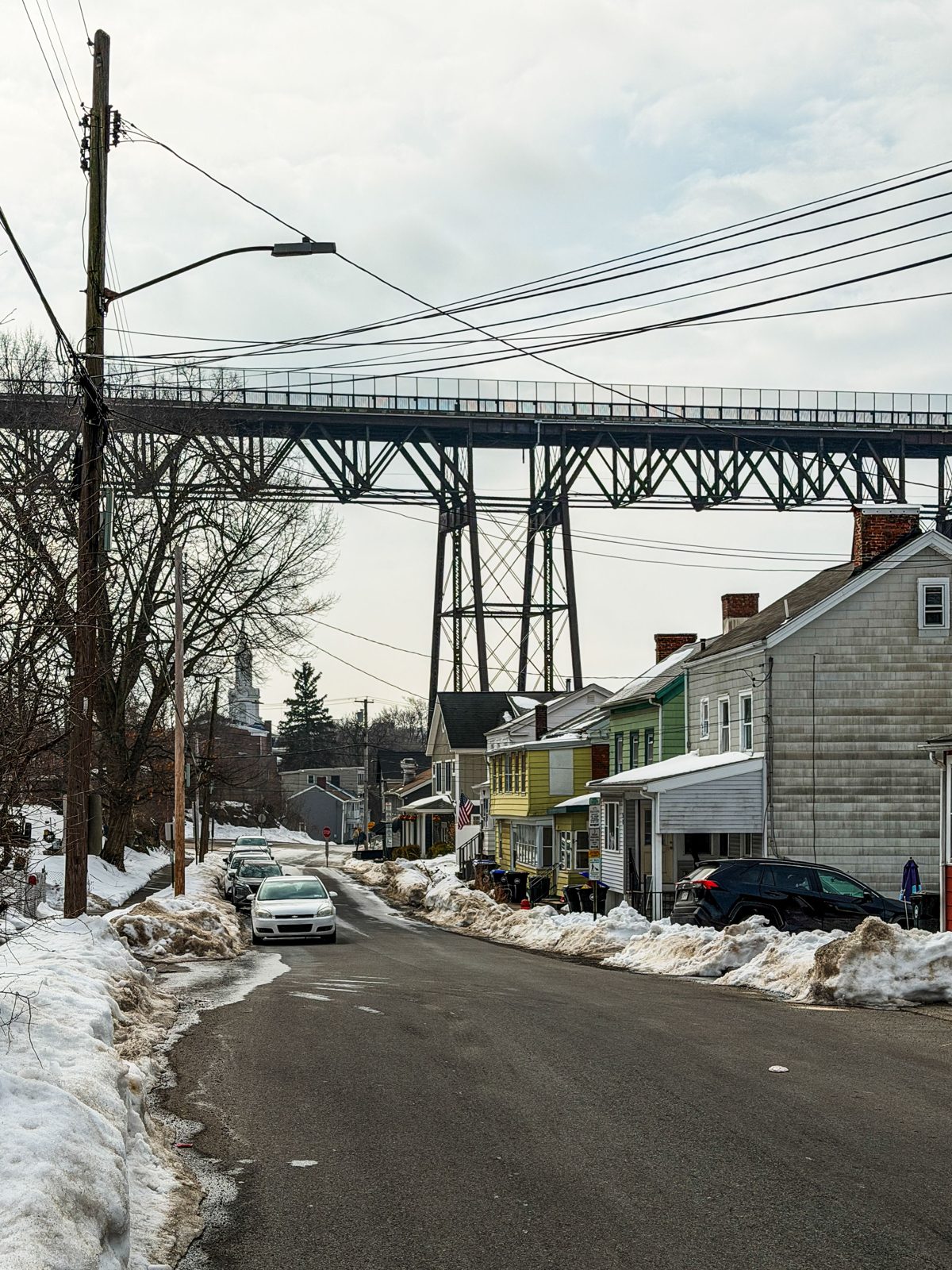
Most “the next Brooklyn” migrations eventually stall because the underlying towns lack the infrastructure to absorb sustained growth — limited transit, limited commercial space, limited healthcare and schools. The Hudson Valley avoided that trap partly by accident of geography: Amtrak’s Empire Corridor and Metro-North’s Hudson Line already existed, built over a century ago to move wealthy New Yorkers to summer estates and industrial goods to the city. That infrastructure meant the region could absorb a new wave of remote workers and weekenders without needing to build a transit system from scratch, unlike more remote exurban migrations that fizzled once the initial excitement wore off.
What’s Actually Changed Town by Town
- Beacon: transformed by Dia Beacon’s 2003 opening, now anchors a walkable Main Street with a restaurant and gallery density well beyond what a town of 14,000 typically supports
- Hudson: became a design and antiques destination first, then a genuine food destination, with Warren Street property values climbing faster than almost any comparable small town in the state
- Kingston: the most affordable of the well-known Hudson Valley towns for years, now facing its own rapid price appreciation as it absorbs overflow from pricier neighbors
- Cold Spring: the most explicitly “discovered” of the bunch, with weekend foot traffic that has visibly reshaped its small commercial core
The Part That Hasn’t Peaked Yet
What keeps the region from feeling fully saturated is its sheer geographic size. The Hudson Valley stretches roughly 150 miles from the city’s northern suburbs to the edge of the Adirondacks, and the boom towns getting media attention represent a small fraction of that footprint. Towns 20 minutes off the train lines — places like Rhinebeck’s quieter neighbors, or towns along the western shore that lack direct rail access — have absorbed far less of the investment and price appreciation that’s transformed the more accessible river towns, leaving a meaningful buffer of less-discovered territory for anyone willing to drive rather than rely on the train.
What a Weekend There Actually Costs Now
A weekend trip from New York City — train fare, a night or two at a boutique inn, meals at the kind of farm-to-table restaurants the region has become known for — realistically runs $400-700 for a couple, comparable to or slightly less than an equivalent Berkshires or Litchfield County weekend, but with dramatically better transit access if you don’t want to drive. That accessibility, combined with a critical mass of genuinely good restaurants and cultural institutions that took over a decade to build, is exactly why the region keeps drawing new visitors and new residents rather than settling into being merely a nostalgic reference to a boom that already happened.
Why Locals Have Mixed Feelings About All of This
Longtime Hudson Valley residents — people who lived in these towns before Dia Beacon or the antiques boom in Hudson — describe a familiar tension: rising property taxes, the slow disappearance of hardware stores and diners in favor of restaurants that cater to weekenders, and a housing market that’s made it harder for the area’s existing working population to stay. It’s the same story playing out in dozens of American small towns experiencing this kind of discovery, except the Hudson Valley’s version has now run long enough that an entire generation of new residents has arrived, taken root, and started raising the same complaints about the next wave behind them.
What Happens if the Trend Finally Does Cool Off
Some real estate analysts have begun steadily asking whether the Hudson Valley’s run is finally approaching a natural ceiling, pointing to interest-rate-driven slowdowns in weekend-home purchases and a leveling off in some towns’ price growth over the past two years. Even those analysts tend to stop short of predicting a real correction, noting that the region’s fundamental advantages — proximity to New York City, existing rail infrastructure, and a level of natural beauty that doesn’t depreciate — aren’t going anywhere regardless of short-term interest rate cycles. If anything, the towns furthest from Metro-North stations remain the ones most likely to see continued discovery in the coming years, simply because they’re the last pieces of the region that haven’t yet had their turn.
Practical Notes for a First Visit
- Metro-North’s Hudson Line runs from Grand Central to Poughkeepsie, with connecting local transit or rideshare needed to reach most town centers
- Amtrak’s Empire Service extends further north, useful for Hudson and Rhinecliff, but runs less frequently than Metro-North
- Fall foliage season (early-to-mid October) is by far the most crowded and expensive time to visit; late spring offers comparable scenery with far less competition for restaurant reservations
The Bottom Line for Anyone Planning a Trip
The Hudson Valley rewards exactly the kind of visitor willing to get off the well-worn Beacon-to-Hudson circuit and spend a little time in the towns that haven’t made a magazine list yet. That’s likely to remain true for years, given how much geography the region still has left to fully absorb the attention it’s been getting since roughly 2012.