Twin Falls and Hagerman Share a Canyon and Almost Nothing Else. Here’s What Working Idaho Looks Like Away From Boise
We may earn money or products from the companies mentioned in this post. This means if you click on the link and purchase the item, I will receive a small commission at no extra cost to you ... you're just helping re-supply our family's travel fund.
Most visitors to Idaho see Boise, Sun Valley, or the Tetons. Working Idaho away from Boise looks different, and two towns on the Snake River Plain show it well. Twin Falls and Hagerman are only about 30 miles apart and both sit near the Snake River Canyon, but one is a regional hub of about 50,000 people and the other is a village of roughly 1,300. Their economies, pace, and visitors have little in common.
This guide walks through both, what each does for a living, and what a traveler can do in a day or two. Prices and hours change, so check before you go.
What Working Idaho Away From Boise Looks Like
South-central Idaho is called the Magic Valley, a name that comes from the irrigation projects that turned desert sagebrush into farmland in the early twentieth century. Water from the Snake River and from the huge Eastern Snake River Plain Aquifer made agriculture possible, and agriculture still shapes the economy. Potatoes, sugar beets, barley, beans, hay, and dairy dominate, and food processing follows.
Twin Falls: The Regional Hub
Twin Falls, the seat of Twin Falls County, has about 52,000 residents, making it one of the larger cities in Idaho outside the Boise area. It sits on the south rim of the Snake River Canyon, which cuts about 500 feet deep through the plain just north of town. The Perrine Bridge crosses the canyon, and it is one of the few places in the country where BASE jumping is legal without a permit, so visitors often watch jumpers float down to the river. Evel Knievel’s 1974 rocket-cycle attempt to jump the canyon is part of local lore.
The economy is built on agriculture and food manufacturing. A very large yogurt plant opened in the city in 2012, and cheese, dairy, and other food plants employ thousands of workers. Health care, education, retail, and logistics are also major employers, and the College of Southern Idaho adds jobs and students. The city has grown quickly in recent years, with new housing developments and rising home prices, though still well below Boise’s.
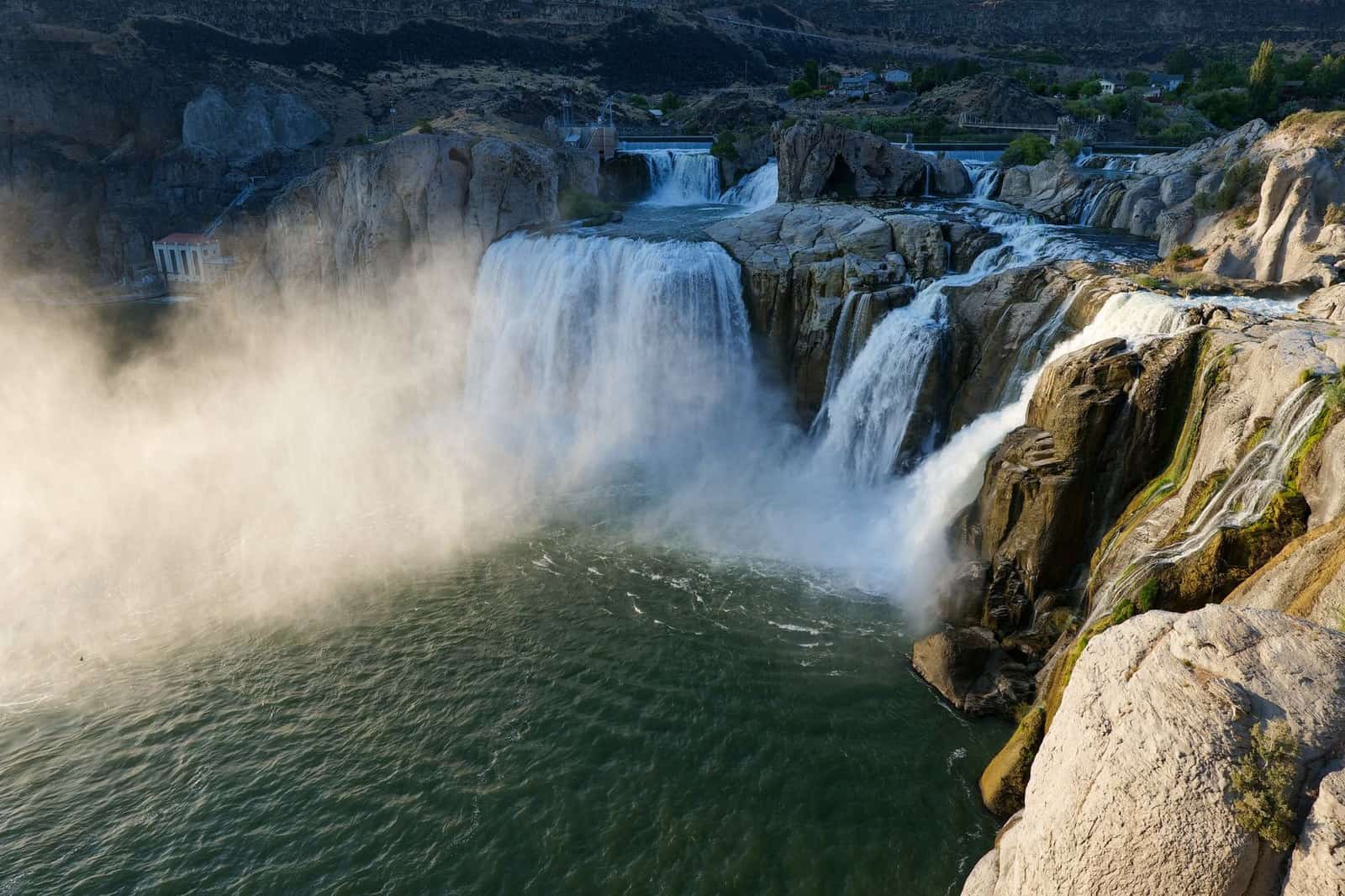
What visitors can do: see Shoshone Falls, sometimes called the Niagara of the West, which is taller than Niagara Falls but best in spring when snowmelt and irrigation releases raise the flow. Visit Perrine Bridge and the canyon rim trail, Dierkes Lake for swimming and rock climbing, and the Herrett Center for Arts and Science at the college. Downtown has restaurants, breweries, and shops. Fees for Shoshone Falls apply in some seasons, so check before you go. Lodging in Twin Falls generally ranges from about 90 to 180 dollars a night, higher on summer weekends.
Hagerman: Springs, Fish, and Fossils
Hagerman, a village in Gooding County about 30 miles northwest of Twin Falls, has roughly 1,300 residents. It sits on the Snake River below the canyon rim, where cold, clear water flows out of the canyon wall from the aquifer. Those springs feed trout hatcheries and fish farms, which make the region one of the leading producers of farmed trout in the country. Idaho produces a large share of the nation’s trout, and Hagerman Valley is at the center.
The valley is also known for fossils. Hagerman Fossil Beds National Monument preserves one of the richest deposits of Pliocene-era fossils in North America, including the Hagerman horse, a zebra-like animal that lived about 3.5 million years ago. The monument has a visitor center, trails, and overlooks, and the Oregon Trail ruts are also visible in places. Thousand Springs State Park and the nearby Ritter Island offer views of waterfalls that gush from the canyon wall, and the Hagerman Wildlife Management Area has hiking and birdwatching.
The economy here is small: fish farming and processing, agriculture, a bit of tourism, and commuting to jobs in Twin Falls and Gooding. There are a few restaurants, a small grocery, and several lodging options. Visits are about landscape, history, and quiet, and not about attractions or nightlife.
What visitors can do: stop at the Hagerman Fossil Beds visitor center, hike Thousand Springs trails, eat trout at a local restaurant, and watch for birds. Hours vary by season, and some facilities are limited, so check before you go. Lodging is limited and typically in the range of 80 to 150 dollars a night.
What They Do Not Share
Though both towns lie near the same canyon, differences are striking.
- Scale: Twin Falls has about 50,000 people and Hagerman about 1,300.
- Industry: Twin Falls is a food manufacturing and services center, and Hagerman is a fish farm and tourism village.
- Pace: Twin Falls has traffic and shopping centers, and Hagerman has one main road.
- Visitors: Twin Falls draws BASE jumpers, road trippers, and business travelers, and Hagerman draws fossil fans, anglers, and nature lovers.
- Housing: Twin Falls is growing fast with new developments, while Hagerman has limited housing and little new building.
- Services: Twin Falls has hospitals and large stores, and Hagerman residents drive to town for most needs.
Working Life Behind the Scenes
Working Idaho depends on early mornings, shift work, and seasonal rhythms. In Twin Falls, food plants run around the clock, and trucks haul milk, potatoes, and beets in and out. Many workers come from immigrant communities, and the area has a growing Hispanic population and a refugee resettlement program that has brought families from several countries. Housing, child care, and language access are issues for the community.
In Hagerman, fish farm workers rise early to feed fish and manage water flows. Many farms are family-owned, and water rights, which are legally defined by seniority, are an important topic. Disputes over water use among farmers, fish producers, and cities can be intense. The aquifer has declined in places because of pumping, and conservation agreements have been negotiated.
Planning a Day or Two
A good loop starts in Twin Falls for breakfast, then a visit to Shoshone Falls and the Perrine Bridge. After lunch, drive northwest to Hagerman via US 30, with stops at Thousand Springs and the fossil beds visitor center. End the day with trout for dinner and stay overnight in Hagerman or return to Twin Falls. If you have a second day, take a kayak or paddleboard on the Snake River, or visit Craters of the Moon National Monument, about 90 minutes northeast.
Boise is about two hours west by interstate, so you can reach the area from there in a long day trip, but staying overnight adds more time on the canyon.
When to Go
Spring has the highest water at Shoshone Falls, and fall has pleasant weather and harvest activity. Summer is warm and dry, with temperatures often in the 90s, and winters are cold with some snow. Check before you go for waterfall flow levels and seasonal hours.
Being a Good Guest
These are working places, so be respectful. Do not enter farm fields or fish farm property without permission, follow signs at the fossil beds, and stay on trails. Support local businesses with meals and purchases. Learn a little about water rights and agriculture, which makes the landscape more meaningful.
Water: The Quiet Driver of Everything
Nothing in the Magic Valley makes sense without water. The Snake River Plain sits on one of the largest aquifers in the country, fed by snowmelt and rivers from the mountains to the north and east. Irrigation canals built from the early 1900s carried river water to farm fields, and later, powerful pumps drew groundwater. Today, farmers, dairies, food plants, cities, and fish farms all draw on the same system.
When aquifer levels dropped and spring flows declined, tension grew between surface-water users and groundwater pumpers. State officials and water users have worked out agreements to reduce pumping and recharge the aquifer by spreading water on fields during the off-season. Visitors will not usually notice these debates, but they explain why water signs, canals, and ponds appear across the plain.
Why the Springs Matter
At Thousand Springs, water pours from the canyon wall at a constant temperature of around 58 degrees Fahrenheit. This steady flow makes the Hagerman Valley ideal for raising trout and other fish, since cold, clean water is available all year. Hatcheries and farms lining the river supply restaurants and grocery stores across the country. The industry employs hundreds of people and supports small businesses in the area.
Newcomers and Change
Both towns are changing, though at different speeds. Twin Falls has seen new residents from Boise, California, and other states, drawn by lower costs and outdoor recreation. Home prices have risen, and the city is building new neighborhoods and shopping centers. Longtime residents sometimes worry about traffic, housing costs, and the loss of farmland.
Hagerman is changing more slowly, but it feels pressure too. Land near the river is attractive for recreation and second homes, and fish farms and farms face rising costs. The community has worked to protect its character through preservation of historic buildings and support for local businesses. Visitors who stay overnight and eat locally help.
Food Worth Seeking Out
Idaho is more than potatoes, but potatoes are a good start. Look for local diners that serve hash browns, baked potatoes, and potato-based specials. Trout is the specialty in Hagerman, often served grilled or smoked. In Twin Falls, you can find a mix of Mexican, Basque-inspired, American, and international restaurants, along with craft breweries. Cheese curds, huckleberry desserts, and local honey also appear in stores.
- Breakfast: diners with large portions and strong coffee.
- Lunch: sandwiches, burgers, and Mexican food.
- Dinner: steak, trout, or regional specialties.
- Snacks: potato chips and local jerky.
Casual meals typically cost 10 to 25 dollars per person, and prices vary by season.
Outdoor Options
The canyon and river offer much more than the main sights. Anglers can fish for trout and sturgeon on the Snake River, and kayakers and paddleboarders enjoy calm stretches. Hikers can follow the canyon rim trail in Twin Falls or explore trails at Thousand Springs. Cyclists will find quiet farm roads, and birdwatchers can see waterfowl, raptors, and sandhill cranes in migration. In the winter, the area is quiet, and the mountains of Sun Valley are about two hours north.
Safety matters: the river can be fast and cold, and canyon rims have steep drops. Follow signs, wear a life jacket on the water, and keep children close.
Common Questions
Is Twin Falls Worth a Stop?
Yes, especially for the canyon, Shoshone Falls, and the Perrine Bridge. It is a good base for exploring south-central Idaho.
Can You Visit Both in One Day?
Yes. They are about 30 miles apart, and the drive takes under an hour. A full day lets you see the main sights in both places.
Is Hagerman Open Year-Round?
The village is, but some visitor facilities have seasonal hours. Check before you go, especially for the fossil beds visitor center and state park areas.
The Takeaway
Working Idaho away from Boise looks like irrigated fields, food plants, fish farms, and small towns where jobs depend on water and the land. Twin Falls and Hagerman show two sides of it, a regional hub and a tiny village, sharing a canyon but little else. Visit both, ask questions, and check hours and conditions before you go.