Mexico City Gets Compared to Every European Capital. Here’s Why That Comparison Keeps Winning
We may earn money or products from the companies mentioned in this post. This means if you click on the link and purchase the item, I will receive a small commission at no extra cost to you ... you're just helping re-supply our family's travel fund.
Mexico City is a metropolitan area of 21 million people with a National Museum of Anthropology that rivals the Louvre, a food scene that the New York Times has covered as intensively as any city on earth, a walkable middle-class neighborhood culture that Americans find disorienting in how livable it is, and a Mesoamerican history spanning over 3,000 years that’s visible everywhere from the ruins under the main plaza to the murals inside government buildings. It takes about 4 hours to fly there from Texas or California. Most Americans still haven’t gone.
The Safety Question — The Honest Answer
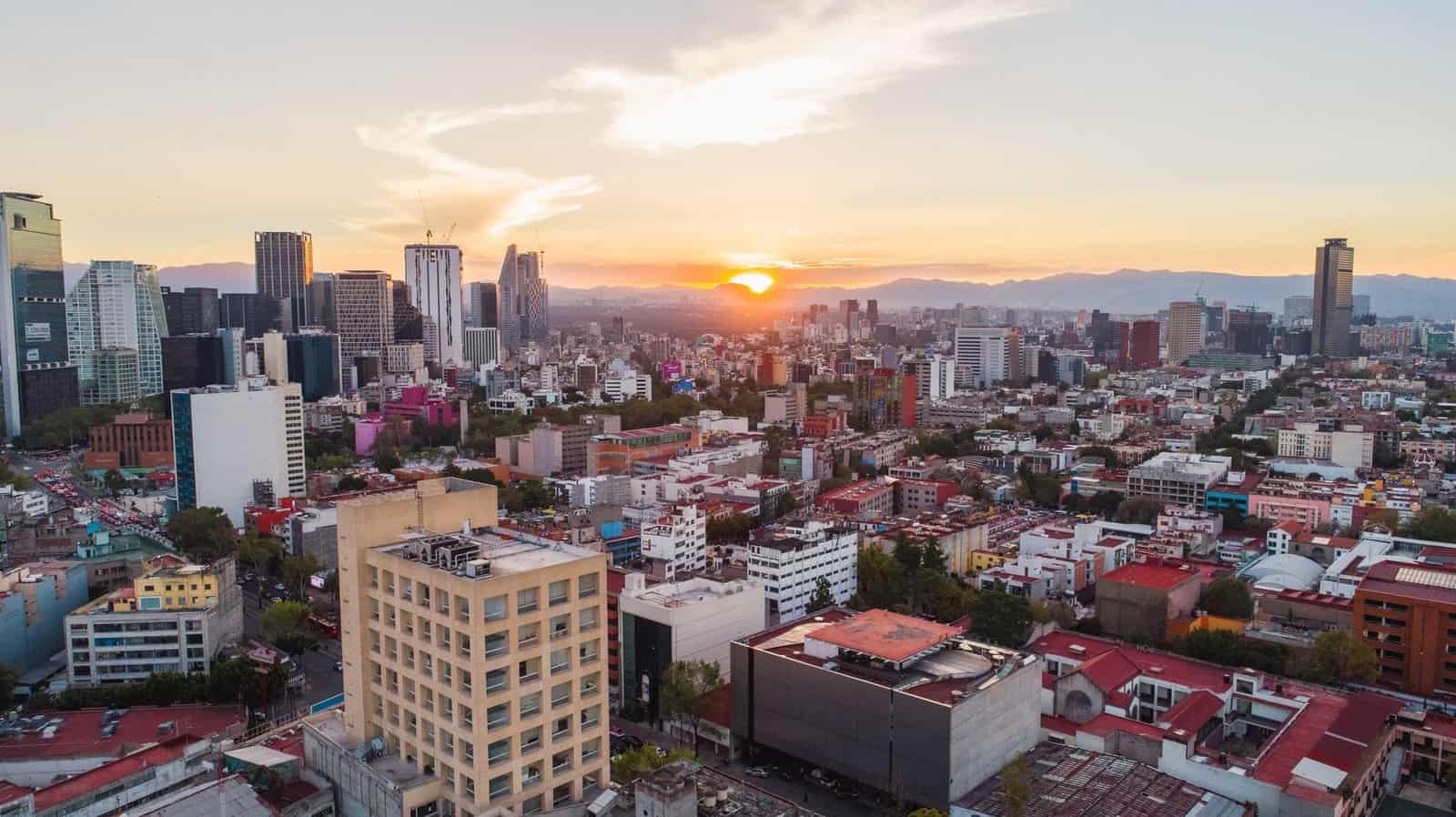
Mexico City has a US State Department Level 2 advisory: “Exercise Increased Caution.” The same Level 2 advisory applies to France, Germany, and Japan. The city has specific areas — neighborhoods in the far periphery, certain transit routes at night — that require the same precautions any large global city requires. The neighborhoods where tourists and expats concentrate (Condesa, Roma Norte, Roma Sur, Polanco, Coyoacán) have safety profiles comparable to popular neighborhoods in any major city.
The millions of Americans and Europeans who visit Mexico City annually, and the substantial expat community that lives there, do not experience the city as consistently dangerous. Like any city of 21 million, it has areas and situations to avoid and areas that function as well as any comparable urban neighborhood. The State Department advisory accurately reflects that the city has elevated risks relative to, say, Switzerland — not that it’s uniformly dangerous.
What Mexico City Offers That No American City Does
The National Museum of Anthropology houses the largest collection of Mesoamerican artifacts in the world. The Aztec Sun Stone, which most people call the Aztec Calendar, is here. Rooms dedicated to the Olmec, Maya, Toltec, and dozens of other civilizations cover the full scope of Mexican pre-Columbian history in a building designed by Pedro Ramírez Vázquez that’s itself architecturally significant. A full visit takes 4–5 hours. Admission costs approximately $4 USD. This is not a regional museum — it’s one of the most significant archaeological collections on earth, at a fraction of the admission cost of a European equivalent.
The food scene in Mexico City is genuinely extraordinary and operates at every price point. Pujol (consistently in the world’s top 50 restaurants) books months in advance. Around the corner from Pujol, tacos de canasta on the sidewalk for 10 pesos each are as good as any food you’ll eat in the city. The taco culture, the pozole, the tlayudas, the tamales from Oaxacan vendors — the diversity of regional Mexican food available in the capital means visitors who expect “Mexican food” as understood in the US are encountering an entirely different cuisine.
What Mexico City Costs
Per day for a mid-range visitor (USD approximate):
- Hotel in Condesa or Roma: $80–$150 USD/night
- Three meals including one mid-range restaurant: $25–$45 USD/day
- Metro and Uber transportation: $5–$10 USD/day
- Museum admissions: $4–$8 USD per museum
- Total daily spend for a couple: $130–$220 USD
Mexico City is accessible on any budget at any comfort level. A week there at mid-range costs roughly what a weekend in New York costs. The cultural and historical density per dollar spent is among the highest of any destination available to North American travelers. The combination of Mesoamerican history, world-class contemporary food culture, walkable European-influenced neighborhoods, and a size and energy that’s genuinely metropolitan places Mexico City in a category that has very few equivalents at any price — and no equals at the price point Mexico City actually offers.
Mexico City’s Specific Districts for First-Time Visitors
Condesa and Roma Norte — the two neighborhoods that most first-time English-speaking visitors use as a base — have Art Deco apartment buildings, tree-lined boulevards, and an independent restaurant and cafe culture that compares favorably to any equivalent neighborhood in Western Europe. Parque México in Condesa is a 1927 Art Deco park with a concrete amphitheater and the kind of social life that European plazas have and American parks typically don’t: families, couples, coffee vendors, and off-leash dogs on a Tuesday afternoon. The restaurant density on Amsterdam Avenue — which traces the oval of the former Hipódromo de la Condesa horse racing track — produces a walkable dining neighborhood with enough quality per block to sustain three nights without repeating.
The Historic Center (Centro Histórico) is a 30-minute Metro ride from Condesa and provides the historical layering that makes Mexico City unlike any other city in the Americas. The Metropolitan Cathedral, built on top of the main Aztec temple of Tenochtitlan, was under construction for 240 years (1573–1813) — its subsidence into the soft lake bed below is visible in the tilting floor and the structural correctives that have been applied since the 1970s. The Templo Mayor archaeological site, excavated after a 1978 utility accident revealed the top of the main pyramid 30 feet below street level, is now an outdoor museum with a portion of the original Aztec sacred center exposed and interpreted. The combination of the cathedral and the Templo Mayor on the same block represents 3,000 years of human settlement at the same geographic location.