What You Find Out About Someone the First Time You Travel With Them
We may earn money or products from the companies mentioned in this post. This means if you click on the link and purchase the item, I will receive a small commission at no extra cost to you ... you're just helping re-supply our family's travel fund.
This article contains affiliate links. We may earn a commission if you book through our links, at no extra cost to you.
There is an old saying — possibly apocryphal, attributed variously to therapists and divorce lawyers — that says you don’t really know someone until you’ve traveled with them. People who’ve experienced both the best and worst versions of that wisdom tend to agree it understates the case.
Travel doesn’t just reveal character. It accelerates it. The ordinary social friction of daily life — the kind that accumulates slowly over months and gives people time to adjust, negotiate, and adapt — arrives in travel all at once. A delayed flight, a navigation failure, a disappointing meal, a room with a view of a parking structure. How the person you’re traveling with handles these things tells you things that a year of dinner dates never would.
Travel as an Accelerated Relationship Test

In ordinary life, people manage their self-presentation with remarkable sophistication. They choose when to be seen, in what contexts, and under what conditions. A relationship in its early stages is, in part, a negotiation over mutual self-presentation — both people putting a version of themselves forward that is, if not dishonest, curated.
Travel dismantles this. You are with someone for eighteen hours a day, in conditions you didn’t fully control, making decisions in real time with incomplete information, often in a language neither of you speaks well. The curation becomes unsustainable.
Relationship researchers who study attachment and stress responses note that travel is one of the few situations in modern life where couples face genuine shared adversity in compressed time. The responses that emerge — who takes charge, who shuts down, who blames, who adapts, who finds humor, who needs comfort — are highly predictive of how the relationship will function under future stress.
Some couples discover they are extraordinary partners under pressure. The delayed flight becomes a story they tell for years. The navigational disaster bonds them. Others discover something that takes years to name but can’t be unfound: a fundamental incompatibility in how they face adversity. That incompatibility was always there. The trip just made it visible.
The Logistics Personality You Never Knew They Had

People divide, roughly, into two travel logistics styles. There are planners and there are wanderers. Neither is inherently better; both are capable of wonderful travel. The problem is when two people with opposite styles discover each other’s style for the first time, mid-trip, with nonrefundable bookings already made.
The planner who has organized a spreadsheet of restaurants, timed out transit connections, and booked tickets to attractions three months in advance is not a difficult person. They have a particular relationship with uncertainty — one where managing it in advance produces enjoyment. The wanderer who wants to walk until something interesting appears, eat wherever looks right, and “figure out the rest later” is also not a difficult person. They have a different but equally valid relationship with uncertainty — one where open-endedness is the point.
When these two people travel together for the first time without having negotiated their styles in advance, the trip becomes a proxy war. The planner experiences the wanderer’s flexibility as disrespect for their preparation. The wanderer experiences the planner’s schedule as the replacement of experience with performance. Both feel unheard. Neither is wrong.
People who have navigated this successfully tend to describe a specific conversation — often prompted by a specific conflict — where both styles were named and a hybrid approach was negotiated. The trip that prompts that conversation becomes, despite everything, one of the more important ones.
How Someone Handles Being Wrong in a Foreign Place

Being wrong in your own city is manageable. Being wrong in a foreign city — getting on the wrong train, misreading a map, choosing a restaurant that turns out to be terrible, booking a hotel in the wrong neighborhood — triggers something that ordinary daily life rarely exposes.
Some people, when wrong in a foreign place, become briefly and understandably frustrated and then recalibrate. They treat the error as information and move forward. Others externalize the error — find something to blame, whether a guidebook, a navigation app, a travel companion, or the destination itself. Others shut down, surrendering the decision-making entirely and becoming a passenger in a way that shifts the burden of the trip onto their companion.
This is not always a character flaw. Some people are simply not practiced at being wrong in unfamiliar conditions. But it is revealing. The person who, under pressure in an unknown city, looks for someone to blame is showing you something real about how they handle failure and uncertainty. The person who laughs, recalibrates, and makes a better decision is showing you something equally real.
Travelers who have been on revealing first trips often cite navigation as the most clarifying test. Not the major disasters — those produce adrenaline that can temporarily override personality — but the small, low-stakes navigational failures that reveal how someone relates to being lost.
Money on the Road: The Uncomfortable Reveal
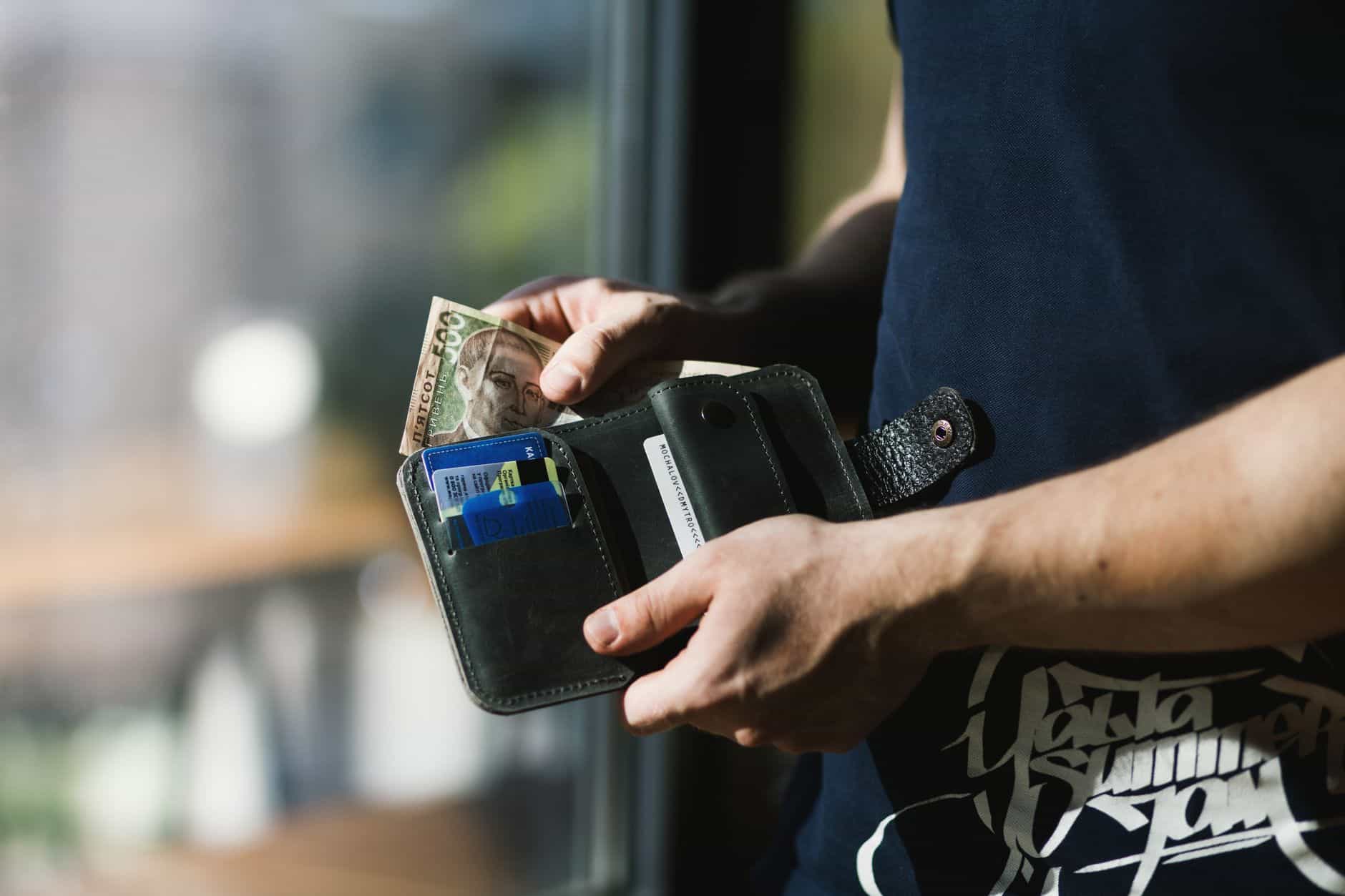
Money in ordinary life can be obscured by social convention. Most people don’t know exactly what their friends or partners earn, spend, or worry about. Travel makes money visible and immediate in ways that can be genuinely disorienting.
How someone handles the calculation of splitting a bill in a foreign currency, whether they notice when someone else has been consistently paying more, how they respond to an unexpected expense, what they consider worth spending on and what they find wasteful — these are windows into financial personality that can take years to see in domestic life.
The specific flashpoints vary. One person thinks upgrading to a nicer hotel for one night is a reasonable splurge; the other thinks it’s irresponsible. One person wants to eat at the best restaurant in a city they may never visit again; the other wants to find something cheap and call it an adventure. One person tips generously abroad even when it isn’t expected; the other thinks this is performative.
None of these positions is wrong. All of them reveal a financial value system. Travel accelerates the moment of that reveal — and in a new relationship, the reveal can be startling.
What Hunger and Exhaustion Strip Away

Travel involves, with some regularity, being hungry in an unfamiliar place at a time when you would normally have eaten, and being more tired than you expected. The combination is a stress test that strips away the social performance layer that most adults maintain in daily interactions.
How someone behaves when they are exhausted and haven’t eaten in six hours in a city where they don’t speak the language is probably how they behave when they are at their least managed. This is useful information.
Some people, in this condition, become quietly determined — they make a decision, execute it, and recover quickly once the situation is resolved. Others become irritable in specific and targeted ways. Others become withdrawn and unresponsive. Others become entertaining, turning the misery into material.
The research on hunger and decision-making is consistent: depleted cognitive and physiological resources cause people to fall back on habitual response patterns rather than considered ones. Travel reliably produces depletion. The patterns that emerge are reliable signals.
The Hotel Room Etiquette Nobody Warned You About

Sharing a hotel room with someone for the first time is its own category of revelation. This is true even if you’ve shared domestic space before, because hotel rooms compress cohabitation to its most basic elements: the bathroom, the sleeping arrangement, the noise management, the temperature of the room.
Some people are incapable of sleeping with any light. Others need a specific temperature. Some require silence; others fall asleep to the television. These are not character flaws. They are preferences that, in ordinary life, are managed in private. In a shared hotel room, they must be negotiated openly, often for the first time.
The etiquette of hotel room sharing — who gets the bathroom first, what constitutes acceptable morning noise, where belongings are allowed to accumulate, how much light is permitted during the other person’s sleep — is an etiquette nobody teaches because nobody discusses it before it becomes necessary.
What makes hotel room dynamics revealing is not the preferences themselves but how they’re communicated. Someone who states a need directly and offers a reciprocal accommodation is demonstrating relational skills that matter far beyond the hotel room. Someone who states a preference as an absolute requirement without acknowledging the other person’s needs is demonstrating something else.
What the Trip Reveals About Your Compatibility

The question that follows a first trip is rarely stated explicitly but is almost always being asked: was this person good to be with when things were hard?
Not exciting. Not impressive. Not entertaining. Good to be with when things were hard. This is a different and more fundamental question than most people think to ask before planning a trip together.
Compatibility in travel is not primarily about having the same preferences. It is about having compatible strategies for managing preference differences, disappointment, discomfort, and error. Two people with very different travel styles can be extraordinarily compatible if they have high tolerance for negotiating their differences with good humor and mutual respect.
Conversely, two people whose stated travel preferences are identical can be entirely incompatible if neither has the flexibility to adapt when the reality of the trip diverges from the plan — as it always does.
The Trips People Never Came Back from the Same

Some first trips end relationships. Not always because something dramatic happened — sometimes because of a quiet accumulation of small observations that added up to a clarity that daily life had been obscuring.
Some first trips deepen relationships in ways that would have taken years otherwise. A shared adversity overcome. A moment of genuine mutual support. A conversation that could only happen somewhere far from ordinary life.
And some trips produce a specific kind of knowing — a knowledge of another person that can’t be unknowed, that shapes everything that follows. The person who was revealed in that foreign city, hungry and lost and wrong about the train — that person is more real than the person you brought to the airport. The trip introduced you to someone you thought you already knew.
This is either a gift or a problem, depending on what you found out. But it is almost always a revelation.