Why Some People Come Home from Travel Feeling Empty — and the Research on What Actually Makes Trips Meaningful
We may earn money or products from the companies mentioned in this post. This means if you click on the link and purchase the item, I will receive a small commission at no extra cost to you ... you're just helping re-supply our family's travel fund.
This article contains affiliate links. We may earn a commission if you book through our links, at no extra cost to you.
There’s a version of post-trip depression that is well-documented and widely discussed — the sadness of returning to ordinary life after an extraordinary experience. This is real and has a name: post-vacation blues.
But there is a different, less-discussed version. The version where you come home not sad about leaving but vaguely unmoved — as if the trip happened to a slightly different person, as if you watched it more than lived it, as if all the effort of planning and executing and photographing added up to something less than you expected.
This version doesn’t have a common name, but it is extraordinarily common. And the psychology research on what makes travel meaningful points directly to why.
The Post-Travel Flatness Nobody Posts About
Travel culture is built on a particular emotional narrative: you go, you are transformed, you come back different. The Instagram feed, the travel memoir, the dinner party story — all of these reinforce the idea that travel is inherently meaningful, inherently transformative, inherently worth whatever it cost.
The people who come home feeling flat tend not to post about it. The feeling is too diffuse to photograph and too vague to articulate. It doesn’t have the dramatic shape of disappointment — no single thing went wrong. It’s more like a general deficit between what the experience was supposed to feel like and what it actually felt like.
Psychologists who study subjective well-being and travel note that this gap — between anticipated and actual emotional payoff — is one of the most underreported phenomena in travel psychology. People don’t discuss it because it feels like a personal failure rather than a predictable structural problem. If you didn’t feel transformed by the Colosseum, something must be wrong with you. The Colosseum itself is fine.
Nothing is wrong with you. The structure of how most people plan and execute travel is almost perfectly designed to produce exactly this outcome.
What the Research Says About Travel and Happiness
The relationship between travel and happiness is more complicated than the travel industry’s marketing suggests. The research consistently shows that travel produces a reliable spike in positive affect — particularly in the anticipation phase, which begins when a trip is booked and extends until departure.
Studies using experience sampling methods — where participants report their mood in real time throughout a trip — find that the emotional peak of most vacations occurs in the first two days, when novelty is highest. After that, happiness returns toward the participant’s baseline, sometimes within the same trip.
Longer vacations do not produce proportionally more happiness. Research from Tilburg University found that vacationers reported higher happiness in the two weeks before a trip than in the two weeks after returning — regardless of trip length or destination. The anticipation was more reliably pleasurable than the memory.
This does not mean travel doesn’t affect well-being. People who travel report higher life satisfaction overall than people who don’t. But the mechanism appears to be different from what most people assume. It is not the individual transformative experience that produces lasting happiness; it is the accumulation of experiences, the expansion of the sense of one’s possible life, the social connection produced by travel narratives shared with others.
In other words, travel is good for you over time and in aggregate. Any individual trip may or may not deliver the emotional payload you anticipated.
The Anticipation Problem: You Already Had the Trip

One of the most robust findings in anticipatory cognition research is that people experience imagined future events nearly as vividly as they experience memory of past events. Planning a trip produces genuine pleasure — the pleasure of imagining the thing.
The problem is that this imagined trip is curated in a way the actual trip never can be. In anticipation, you are never hungry at the wrong time, never lost in a neighborhood that turned out to be uninteresting, never waiting on a queue that moves too slowly. The imagined trip is continuous positive affect.
When the actual trip arrives, it necessarily has a texture that the imagined trip did not — friction, boredom, physical discomfort, weather, the gap between the Airbnb photos and the Airbnb reality. None of these things are necessarily bad. But they create a comparison with the anticipated version of the trip that the actual version can’t win.
Some researchers argue that people who make minimal plans and have minimal expectations before travel actually enjoy the experience more — not because their trips are better, but because they haven’t pre-consumed the emotional peak through anticipation.
Consumption Versus Encounter: A Critical Distinction
There is a meaningful difference between consuming a travel experience and encountering it. Most modern tourism is organized around consumption: you purchase access to an experience that has been packaged and delivered in a predictable format. You see the thing you were supposed to see. You ate at the restaurant that was recommended. You photographed the view from the designated photography spot.
This is not nothing. But it is qualitatively different from encounter — the kind of travel experience where you make contact with something genuinely unknown, something that hasn’t been pre-processed for delivery, something that has enough resistance to push back against you.
Psychology research on the “mere exposure effect” and habituation shows that pre-mediated exposure — knowing exactly what you’re about to see — significantly diminishes the novelty response. When you have studied the Eiffel Tower in photographs for twenty years before seeing it in person, the first sighting produces a dampened response. The brain has already processed the image. The visual encounter lacks the jolt of genuine novelty.
Encounter, by contrast, requires going somewhere or doing something you haven’t been able to pre-consume through media. It requires genuine uncertainty about what you’ll find. This kind of travel is rarer and harder to plan, but it is far more reliably emotionally significant.
Why Instagram Travel Is Built to Disappoint You
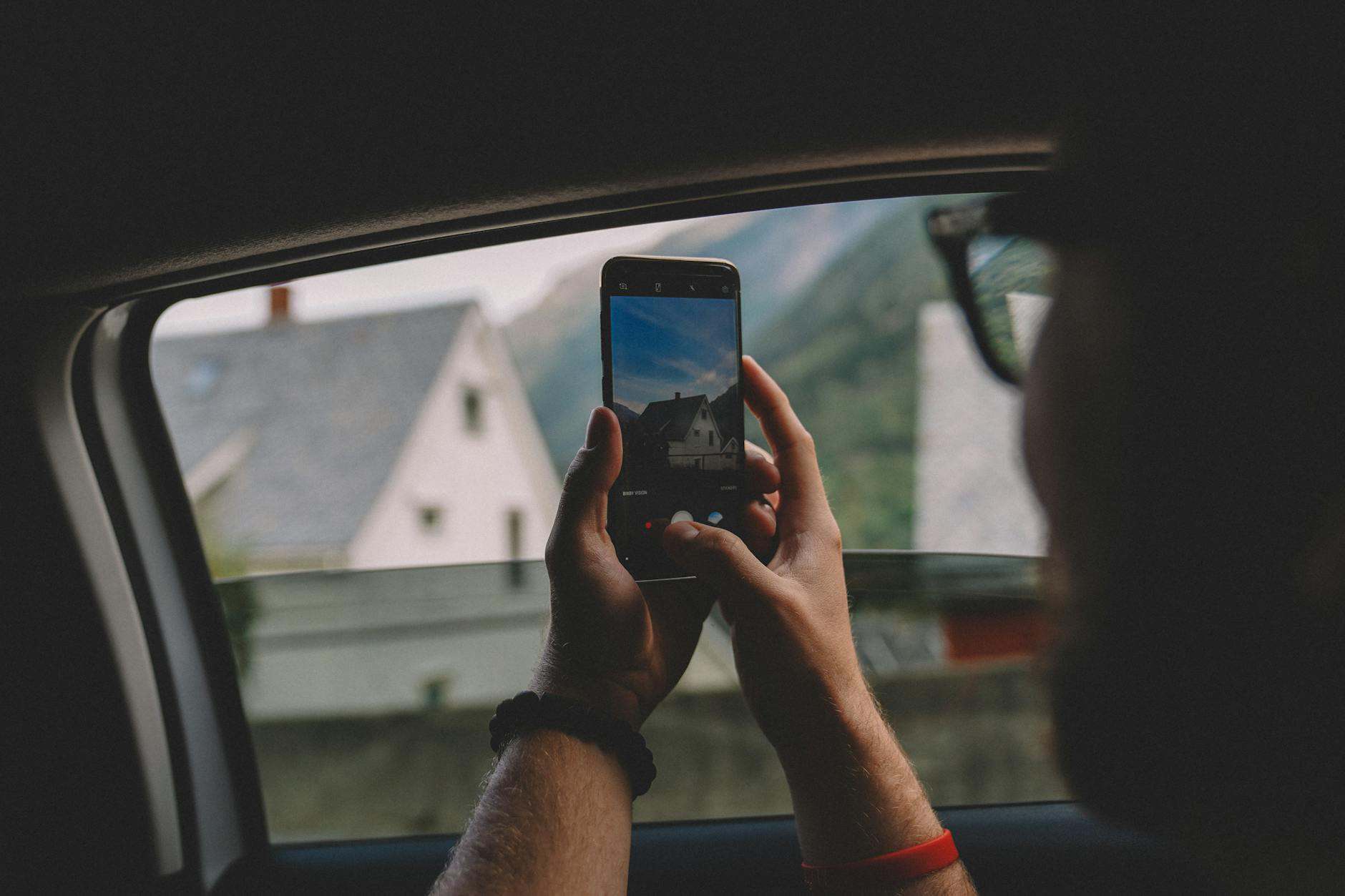
Social media travel content operates on a specific economic model: it sells places to visit by showing you photographs of those places. The implicit promise is that when you visit, you will have access to the experience in the photograph.
The photograph is almost always a best-case scenario: optimal lighting, minimal crowds, a specific angle that eliminates everything visually dissonant. The photograph was probably taken in the early morning before the crowds arrived, in the soft light that occurs for approximately forty minutes twice a day, from a specific position that excludes the parking lot, the construction, and the tourist infrastructure.
When you arrive and the experience doesn’t match the photograph — and it almost never does — you experience a deficit. The place is objectively beautiful. It just isn’t the place in the photograph. No place is.
More importantly, the photograph doesn’t capture what made the experience meaningful for the person who took it. The context — the conversation they had that morning, the weather the day before, the particular mood they brought to the location — is entirely absent. What’s left is a visual artifact that sets an expectation the actual place can’t meet.
People who have deliberately sought out less-photographed places — places that haven’t been pre-sold to them through social media — consistently report stronger emotional responses. The encounter has more room to be surprising.
The Kinds of Travel That Produce Lasting Change

Psychologists studying transformative experience in travel have identified several consistent features of trips that produce lasting subjective change:
- Genuine discomfort: Not suffering, but a level of unfamiliarity or challenge that requires adaptation. Trips that are entirely smooth and comfortable rarely produce the kind of self-knowledge that people report from more challenging travel.
- Meaningful human connection: A conversation with a local that went beyond the transactional, time spent in genuine social contact with people who live differently. Not a guided tour, but actual encounter.
- Time without agenda: Unstructured periods where nothing has been pre-booked and the experience unfolds from what’s present. This requires tolerating uncertainty, but produces the most frequently cited meaningful travel memories.
- Narrative processing: Writing about the experience, talking about it in depth, integrating it into one’s sense of self. Experiences that are never processed narratively tend to fade quickly.
What Novelty Without Challenge Actually Does
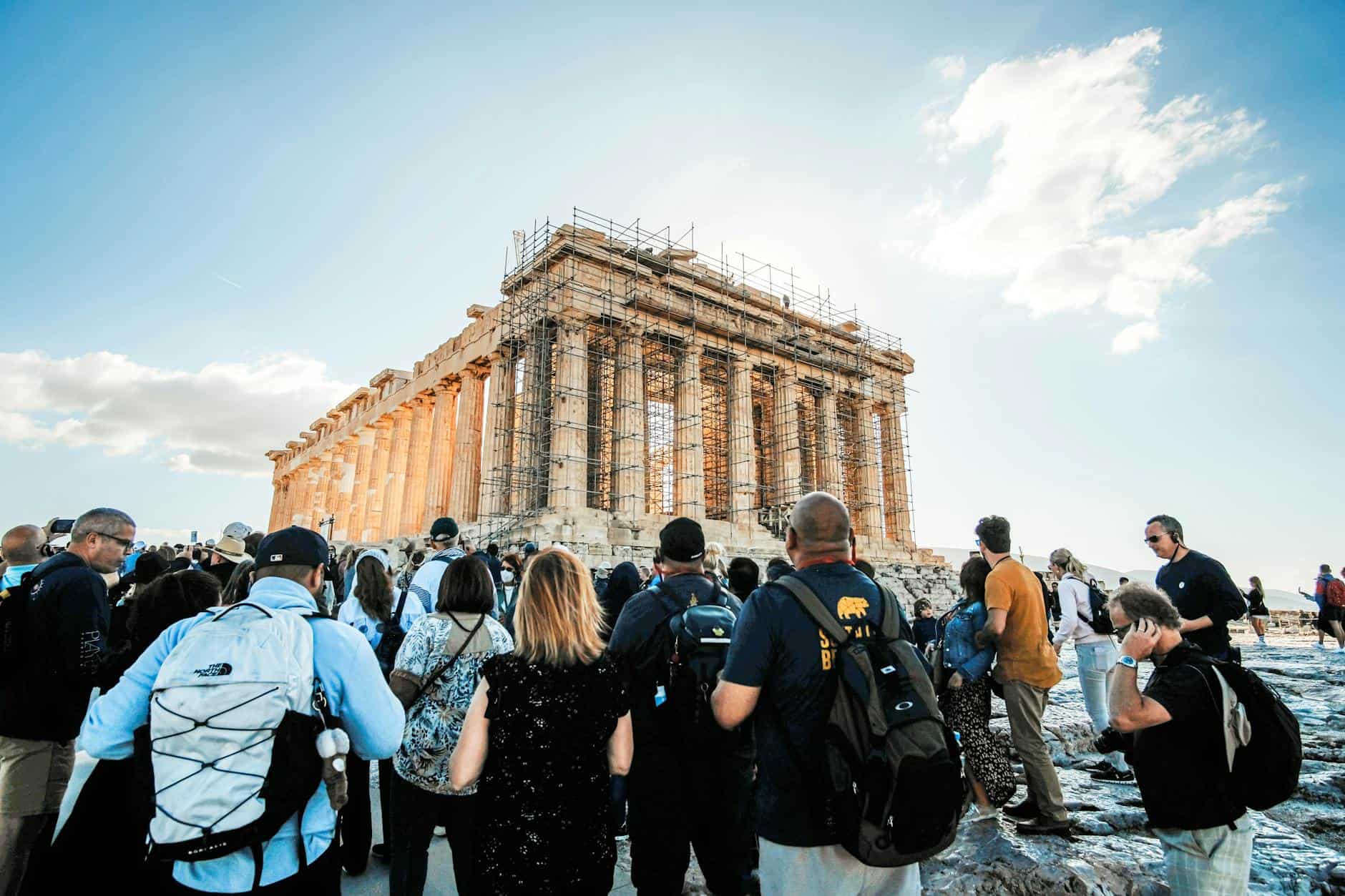
There is a category of travel that delivers novelty without challenge: the resort vacation, the heavily packaged tour, the all-inclusive in an exotic location. These are not bad. They are effective at relaxation and decompression. But they rarely produce what people describe as meaningful travel.
The reason is that novelty without challenge doesn’t require adaptation. You are surrounded by new things, but you don’t have to change in order to manage them. The resort has eliminated the friction — the language barrier, the navigational uncertainty, the unfamiliar social rules — that requires you to develop new responses.
Challenge, in this context, doesn’t mean danger. It means genuine cognitive and social effort: navigating an unfamiliar system, communicating across a language barrier, making decisions without sufficient information, being wrong and recovering. These small challenges are the engine of the subjective growth that people associate with meaningful travel.
How to Travel in a Way That Doesn’t Leave You Empty
The research converges on a picture of travel that is almost the opposite of how it’s marketed:
Underschedule. Leave significant portions of the trip genuinely open. The moments people remember and describe as meaningful almost always happened in unstructured time.
Seek encounter over consumption. One genuine conversation with a local who isn’t in the hospitality industry is worth more, neurologically and emotionally, than three famous landmarks.
Go somewhere that hasn’t been processed into content for you. Not necessarily remote or difficult — just somewhere you haven’t already absorbed through social media and travel guides.
Plan less in advance. The anticipation pleasure is real, but it borrows against the actual trip. Some uncertainty on the ground is not a problem to solve — it is the condition of genuine travel.
Process afterward. Write about it. Talk about it. Tell stories about it. The experience that is integrated into your narrative becomes part of you. The experience that isn’t tends to feel, in retrospect, like something that happened to someone else.
The emptiness some people feel after travel is not a sign that travel doesn’t work. It is a sign that the particular format of the trip wasn’t calibrated for the kind of experience they were looking for. The fix is adjusting the format, not abandoning the project.