Death Valley Hits 125 Degrees for Nine Days Straight in July. About 250,000 People Visit Anyway
We may earn money or products from the companies mentioned in this post. This means if you click on the link and purchase the item, I will receive a small commission at no extra cost to you ... you're just helping re-supply our family's travel fund.
Death Valley National Park recorded its hottest meteorological summer on record in 2024, with an average 24-hour temperature of 104.5 degrees Fahrenheit and nine consecutive days where the thermometer at Furnace Creek never dropped below 125 degrees, according to the National Park Service. The all-time record — 134 degrees, recorded July 10, 1913 — has never been matched anywhere else on the planet. And yet roughly 250,000 of the park’s more than 1.4 million annual visitors show up specifically during June, July, and August, according to reporting from The New York Times. They are not confused about the weather. The heat is the attraction.
Why People Choose the Worst Possible Time to Visit
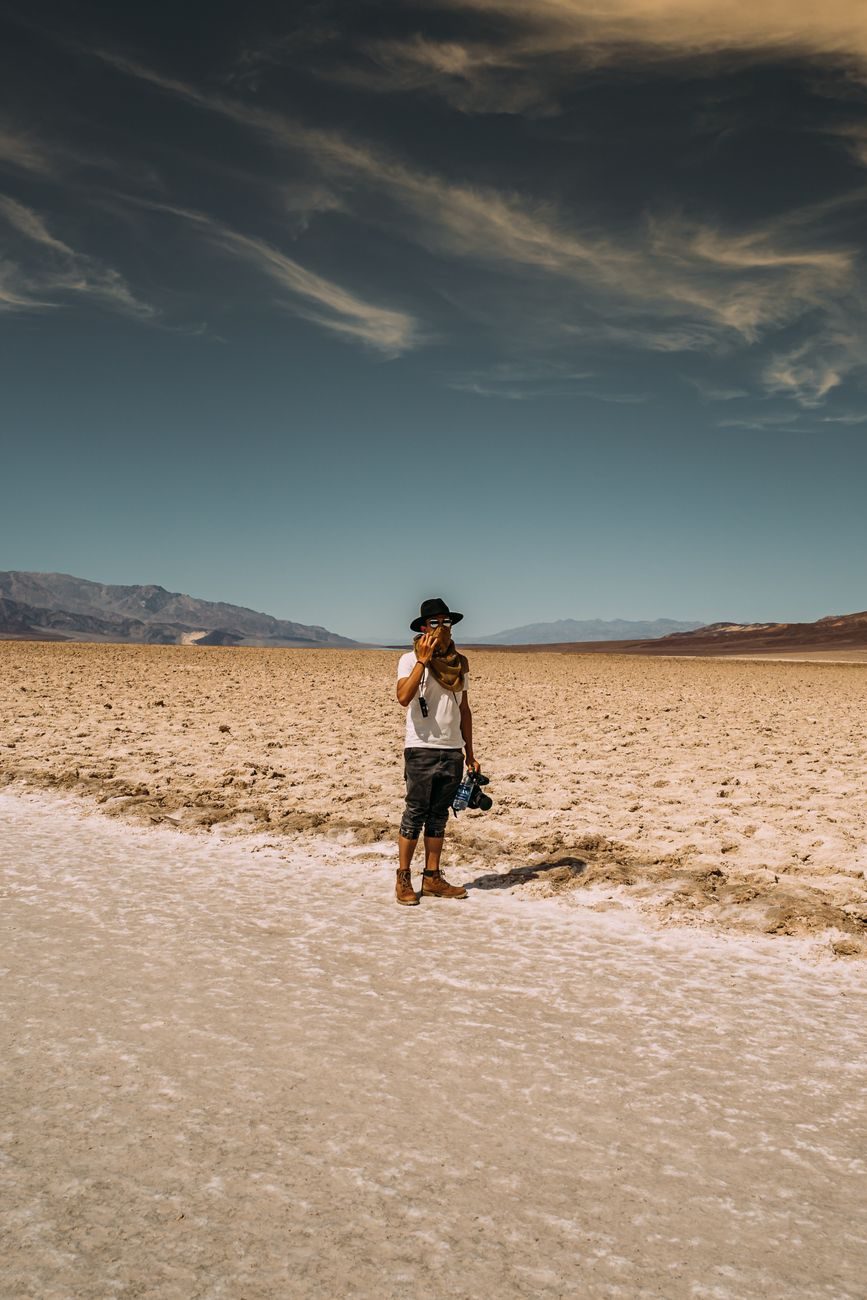
The demographics of summer visitors skew heavily European — the Times reports that tourists, particularly families on multi-week American vacations, make up roughly two-thirds of guests during July and August. The draw is specific and almost ritualistic: pose next to the digital thermometer outside the Furnace Creek Visitor Center, take a photo proving you survived a place that regularly outheats anywhere else on Earth, and post it. Park ranger Nico Ramirez described the appeal bluntly to reporters: people want to know what 120-degree air actually feels like, and no amount of description substitutes for standing in it (ABC7).
What It Actually Costs You — In Money and Risk
- Park entrance fee: $30 per vehicle, valid for seven days
- Only one lodging option stays open through summer — The Ranch at Death Valley; The Inn closes seasonally
- A gallon of water per person per day is the National Park Service’s minimum recommendation, not a suggestion
- Heat-related deaths occur in the park nearly every summer; four were recorded in 2024 alone
The Geography That Makes This Possible
Death Valley’s extreme heat isn’t random — it’s a function of specific topography. The valley floor sits 282 feet below sea level at Badwater Basin, the lowest point in North America, and is flanked by the Panamint Range to the west and the Black Mountains to the east. Heat rises during the day, gets trapped by the surrounding peaks, and recirculates back down at night rather than escaping, according to NPS ranger explanations reported by ABC7 News. Ranger Ramirez compared the effect to a convection oven. Ground surface temperatures in the valley routinely exceed 200 degrees Fahrenheit — hot enough to cause burns through the soles of ordinary shoes.
The Trade-Off Nobody Talks About: Solitude
The one genuine upside of visiting in July is emptiness. Roughly 95 percent of Death Valley’s annual visitors come between October and April, according to guides tracking park attendance patterns. That means in summer, you can stand alone at Zabriskie Point or have Badwater Basin entirely to yourself — a kind of solitude that has become nearly impossible to find in any other major national park, where crowding has become the defining visitor complaint of the past decade. The trade is straightforward: you get the park without anyone else in it, in exchange for a genuinely dangerous ambient temperature that requires you to plan your entire day around a four-and-a-half-hour window between roughly 4:30 and 9 a.m.
If You’re Actually Going in Summer
Rangers recommend staying within a ten-minute walk of an air-conditioned vehicle at all times, avoiding any hiking below 5,000 feet elevation after 10 a.m., and carrying more water than feels necessary — at least a gallon per person, more if you’re active. Salty snacks matter as much as water, since sweat pulls electrolytes out of your system faster than plain hydration can replace them. This is one of the only national parks in the country where the National Park Service’s own literature includes three-foot-tall warning signs that simply read “HEAT KILLS,” introduced in 2021 after rangers noticed visitors were skipping the standard multilingual warning postings entirely.
The Business Side of Extreme Heat Tourism
Local businesses in Death Valley have learned to treat record-breaking heat waves as a marketing opportunity rather than a liability. Souvenir shop managers near Furnace Creek have told reporters that sales roughly double during the most extreme heat events, as visitors specifically want proof — a photo, a receipt, a souvenir thermometer — that they were there when the mercury spiked (El País). That’s a strange inversion of how most tourism economies respond to extreme weather, which is usually to expect fewer visitors, not more.
Hotel operators face the opposite challenge: staffing a property that needs to run air conditioning at industrial capacity around the clock, with employees who often live in employee housing on-site because the nearest towns are more than 30 miles away in any direction. Furnace Creek’s year-round workforce essentially lives inside the extreme climate they’re managing for guests, a lifestyle that has its own dedicated subculture of seasonal park employees who return year after year specifically for the isolation and the strange camaraderie of working somewhere this remote and this hot.
What a Realistic Summer Day Actually Looks Like
Visitors who go in summer and do it well describe a heavily compressed schedule: wake before dawn, drive to Zabriskie Point or Badwater Basin for sunrise when temperatures are merely hot rather than dangerous, retreat to an air-conditioned vehicle or lodge by mid-morning, spend the heat of the day at the pool or indoors, then venture back out for a late-evening drive once the sun drops low enough to cut the intensity. It’s less a hiking trip than a carefully timed series of short excursions bracketing a long, air-conditioned midday retreat — a completely different rhythm than a spring or fall visit, and one that requires accepting upfront that this isn’t the version of Death Valley where you cover serious mileage on foot.
St. Louis remains a genuine test case for whether a mid-sized American city with world-class assets but a damaged national reputation can rebuild that reputation faster than it continues losing population. The next decade of census data will answer that question more definitively than any single redevelopment project currently underway.