St. Louis Has the Arch, the Cardinals, and a Metro Economy That Keeps Losing to Cities With Half Its History
We may earn money or products from the companies mentioned in this post. This means if you click on the link and purchase the item, I will receive a small commission at no extra cost to you ... you're just helping re-supply our family's travel fund.
St. Louis’s metro population has been shrinking or stagnant for decades, even as comparable Midwestern metros like Columbus, Indianapolis, and Nashville have grown substantially. The city of St. Louis itself has lost more than 60% of its peak 1950 population of roughly 857,000, and current municipal population estimates sit closer to 280,000. This isn’t a story about a city that never had anything — St. Louis has world-class institutions, a genuinely important place in American history, and infrastructure most cities would envy. It’s a story about why none of that has translated into sustained growth.
The Geography That Used to Be an Advantage
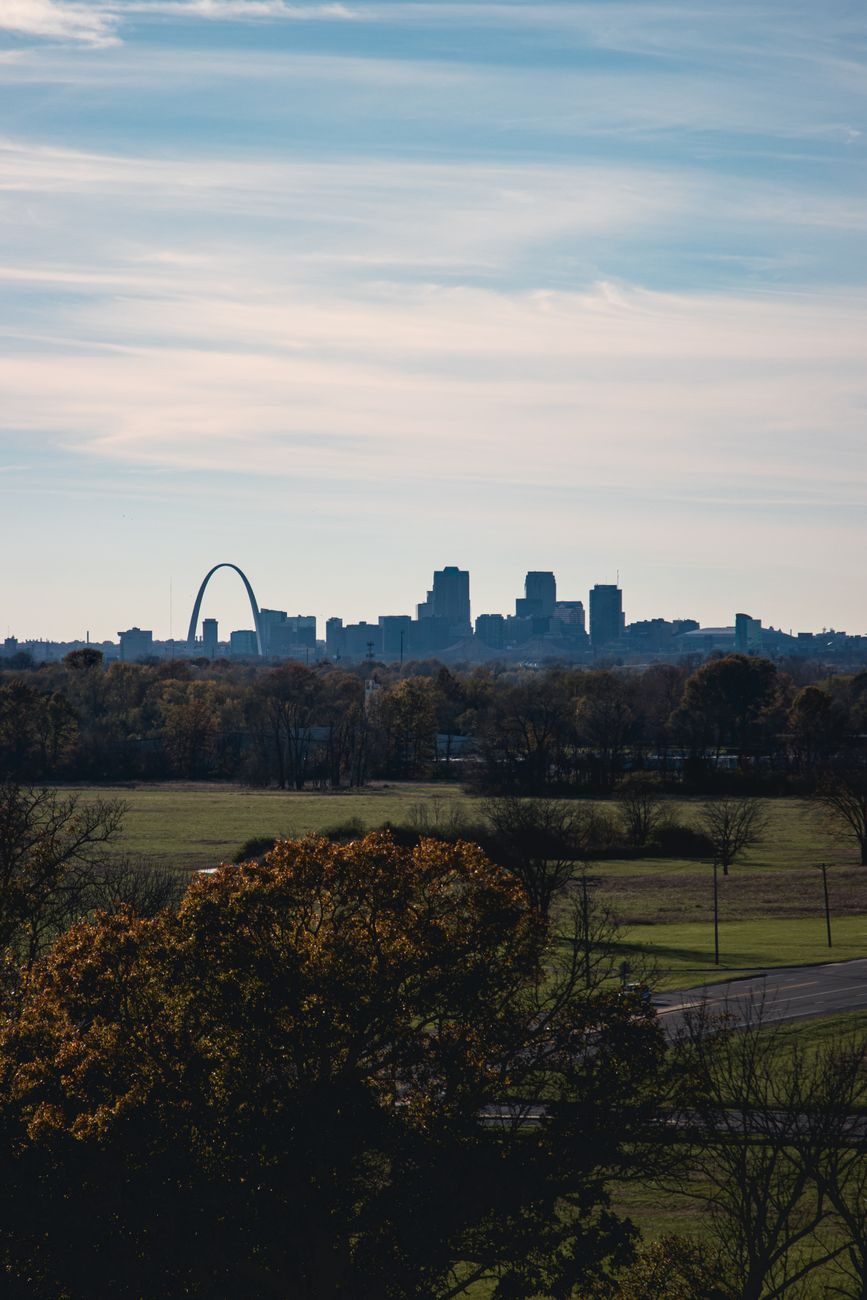
St. Louis’s entire reason for existing was its position at the confluence of the Mississippi and Missouri Rivers, which made it the gateway to westward expansion in the 19th century — hence the Arch. That geographic advantage stopped mattering once rail and then interstate highways reorganized American commerce around different hub cities. Chicago captured the rail advantage St. Louis once had on the river. The city’s economy never fully replaced what it lost, and unlike cities such as Denver or Atlanta that reinvented themselves around new industries — tech, logistics, finance — St. Louis’s rebuilding efforts have been slower and more fragmented.
The Specific Numbers Behind the Struggle
- City of St. Louis population: down from roughly 857,000 in 1950 to approximately 280,000 today
- Tourism ranking: 34th nationally among U.S. metros, and 57th for international visitor draw
- The city and surrounding county have historically operated as separate, non-consolidated governments — a structural fragmentation unusual among major U.S. metros
- Regional population growth has slowed enough that local economic groups have begun calling it a crisis requiring coordinated action
The Split Between City and County Made Everything Harder
Unlike most American metros, the city of St. Louis and St. Louis County have operated as entirely separate governmental entities since 1876, when the city voted to separate from the county in what’s known locally as “The Great Divorce.” That decision, made when St. Louis was booming and didn’t want to subsidize rural county growth, has haunted regional planning for a century and a half. It means the city and its suburbs compete for the same tax base rather than coordinating investment, a structural problem that regional economic groups have flagged repeatedly, including the STL Mosaic Project’s 2025 analysis of slowing regional population growth.
What Actually Works in St. Louis
None of this means St. Louis lacks appeal. The Missouri Botanical Garden is one of the oldest and most respected in the country. Forest Park is larger than Central Park and includes a free zoo, a free art museum, and a free science center — a level of accessible cultural infrastructure most cities can’t match. The Delmar Loop offers a walkable, independent-business strip that survived the decades other neighborhoods didn’t. Barbecue in St. Louis, particularly St. Louis-style spare ribs and the snoot sandwiches of neighborhoods like The Ville, represents its own distinct regional cuisine, separate from Kansas City’s more famous scene.
The Reputation Problem Is Real and Compounding
National perception of St. Louis has been shaped disproportionately by crime statistics and the 2014 unrest in nearby Ferguson, and that reputation has proven durable even as the city has invested in downtown redevelopment and neighborhood revitalization. Analysts tracking the city’s tourism underperformance note that image problems compound economically: fewer visitors means less private investment in hospitality and retail, which means fewer reasons for visitors to reconsider, which reinforces the original perception. Breaking that cycle requires sustained investment over a much longer horizon than most municipal budgets are built to sustain — which is precisely why the city keeps being discussed as a place with more potential than performance.
What a Genuine Turnaround Would Actually Require
Urban policy researchers who study St. Louis’s trajectory point to a specific structural fix that’s been discussed for decades but never implemented: reunifying the city and county governments, or at minimum creating stronger regional tax-sharing and planning coordination, the way metro areas like Indianapolis did through city-county consolidation (“Unigov”) in the 1970s. Indianapolis’s growth since that consolidation is frequently cited as a counterfactual for what St. Louis might have achieved with a different governmental structure, though any such change would require a level of political consensus that has not materialized in St. Louis for a century and a half.
Downtown St. Louis has seen genuine, if uneven, reinvestment in recent years — loft conversions, a revitalized Ballpark Village adjacent to Busch Stadium, and steady investment around the Cortex Innovation Community, a biotech and tech hub built near Washington University that some local boosters describe as the city’s best shot at a genuinely new economic sector rather than a defense of legacy industries. Whether that investment scales fast enough to reverse decades of population decline remains the open question hanging over every optimistic pitch about the city’s future.
The Case for Visiting Regardless
None of St. Louis’s structural challenges make it a bad place to visit — if anything, the city’s underperformance relative to its assets means visitors get world-class institutions, genuinely good and affordable food, and a walkable historic core with a fraction of the crowds you’d find in comparably resourced cities. Forest Park alone, with its free zoo, art museum, and science center, represents more free world-class cultural infrastructure than most American cities offer at any price. The Delmar Loop and the Grove neighborhood both offer the kind of independent restaurant and nightlife scene that took decades to rebuild after mid-century decline, and both are currently underrated relative to their quality.
Anchorage’s situation previews questions more of the country may eventually face as climate change reshapes which regions are livable year-round. For now, it remains one of the only genuinely urban experiences in the country that requires residents to plan their entire year around the return of daylight.