The Catskills Are Becoming the New Hamptons. The Prices Just Haven’t Fully Caught Up Yet
We may earn money or products from the companies mentioned in this post. This means if you click on the link and purchase the item, I will receive a small commission at no extra cost to you ... you're just helping re-supply our family's travel fund.
For decades, the Catskills carried a specific, slightly unglamorous reputation among New Yorkers: the borscht belt, faded mid-century resorts, a working-class alternative to the Hamptons for city dwellers who couldn’t afford the Long Island version of a weekend house. That reputation has been steadily dissolving since the pandemic pushed a wave of remote-capable New Yorkers to look for second homes within driving distance of the city, and towns throughout Greene, Ulster, and Sullivan counties have absorbed the resulting demand in ways that are only now showing up clearly in local price data.
Why the Catskills Instead of the Hamptons
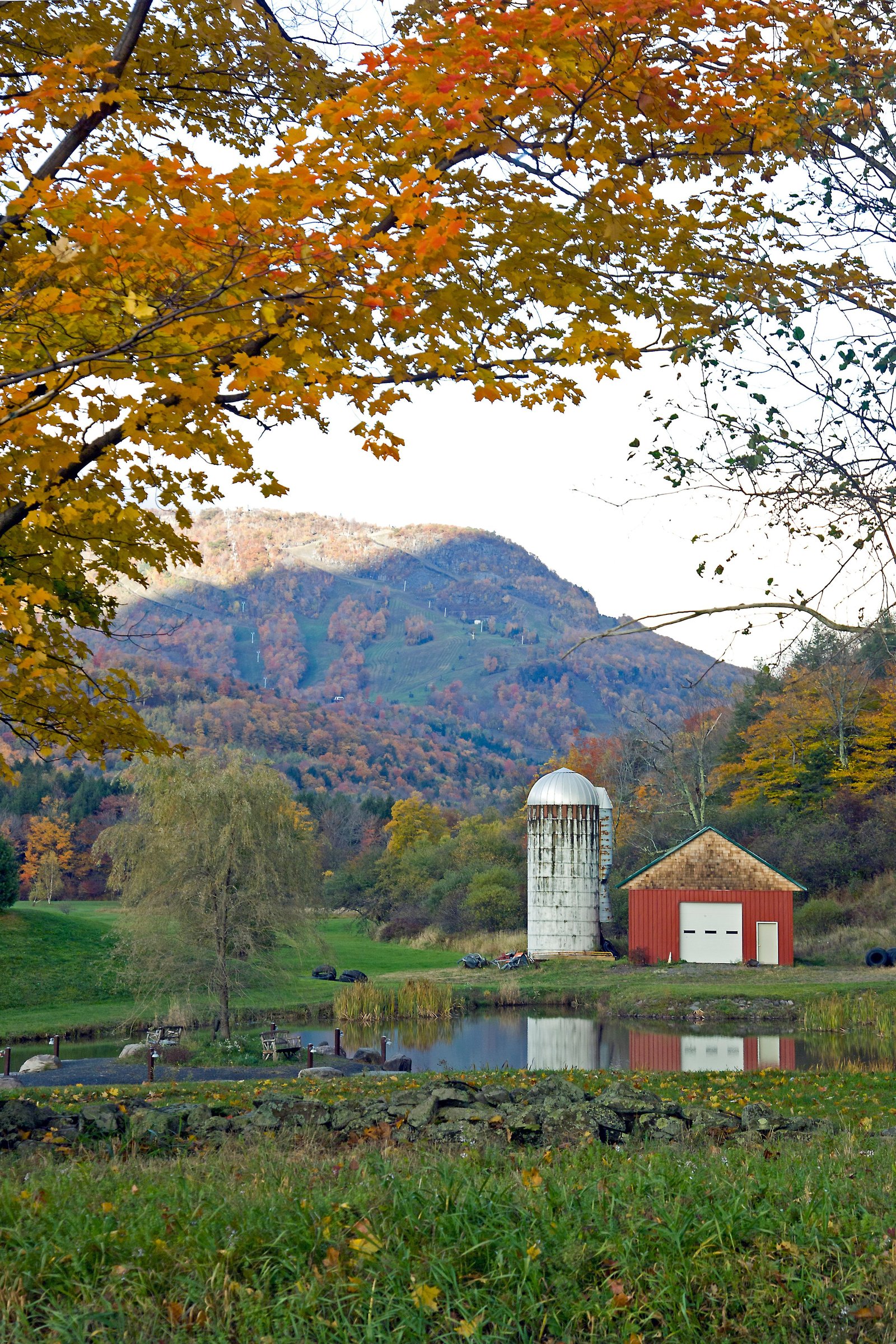
The comparison between the two second-home markets isn’t new, real estate agents have made the Hamptons-versus-Catskills pitch for years, but the framing has shifted from cost savings to genuine competition for the same buyer. A long-running comparison piece from [Village Green Realty](https://www.villagegreenrealty.com/blog/the-hamptons-vs-the-catskills.html) lays out the core case that’s only become more relevant: the Catskills offer mountains, hiking, and a quieter pace within roughly two hours of New York City, without the three-to-four-hour summer traffic crawl to the Hamptons or the seasonal price spikes that come with beach-town scarcity.
Even international buyers have taken notice. A 2026 feature in [The Times](https://www.thetimes.com/life-style/property-home/article/why-brits-are-eyeing-property-in-the-hudson-valley-new-york-s50nwm2d6) documented British buyers specifically eyeing Hudson Valley and Catskills property, citing the region’s combination of relative affordability, proximity to New York City, and a cultural scene, galleries, farm-to-table restaurants, small-batch distilleries, that has developed rapidly in towns that were considered economically depressed within the last fifteen years.
Specific Towns Driving the Shift
The town of Catskill itself, in Greene County, has become a frequently cited entry point for buyers priced out of more established second-home markets like Woodstock and Hudson, with median home listings still well under $500,000 in many searches, according to listings tracked on [Zillow’s Catskill, NY market page](https://www.zillow.com/catskill-ny/). Woodstock, Phoenicia, and Saugerties, all longer-established as weekend destinations, carry higher price tags and have seen the sharpest run-ups, while towns further from the Kingston-Woodstock corridor remain comparatively affordable, at least for now.
What’s Actually Different From a Decade Ago
- Restaurants and small hotels that would once have closed for the winter increasingly stay open year-round, evidence of a shift from a purely seasonal to a more year-round second-home economy
- Amtrak’s Empire Service and improved highway access have made the region more viable for hybrid remote workers who need occasional access to Manhattan
- Local Facebook groups and forums increasingly discuss the same affordability anxiety long familiar to Hamptons locals, worry that longtime residents will be priced out by second-home buyers
The Infrastructure Question Nobody’s Fully Answered
The Hamptons built out decades of infrastructure, private schools, boutique retail corridors, a dense network of caterers and contractors, specifically to serve a wealthy seasonal population, and the Catskills largely haven’t yet, which is both the region’s charm and its looming constraint. Towns like Phoenicia and Margaretville have small-scale infrastructure built for a much smaller year-round population than the one now buying up second homes, and local governments are only beginning to grapple with whether to expand services to match or actively limit growth to preserve the rural character that attracted buyers in the first place.
Broadband access, long a genuine obstacle for remote workers considering the region, has improved substantially in the past several years as internet providers responded to exactly this demand wave, removing one of the last practical barriers that used to push hybrid workers toward closer-in Hudson Valley towns instead of the more remote Catskills proper.
Local school enrollment data in several Catskills towns has started ticking upward for the first time in decades, a leading indicator real estate agents watch closely since it typically signals full-time family relocation rather than purely second-home buying. That shift, if it continues, would mark a genuinely different growth pattern than the Hamptons’, where school enrollment has stayed comparatively flat even as second-home values soared, since Hamptons buyers overwhelmingly keep their primary residence and voting registration in New York City rather than relocating full time.
The comparison to the Hamptons ultimately understates one advantage the Catskills have that Long Island’s East End never will: genuine four-season recreation, skiing and snowboarding at Windham and Hunter Mountain in winter alongside the hiking and swimming that define a Catskills summer, giving the region a year-round draw the Hamptons, largely a warm-weather beach destination, has never fully replicated despite decades of trying to extend its own season.
Farm-to-table restaurants opening across Sullivan and Greene counties in the past several years have specifically marketed themselves to the same weekend-visitor demographic the Hamptons pioneered decades earlier, sourcing directly from Hudson Valley farms and pricing menus closer to Manhattan than to the traditional Catskills diner fare that defined the region for most of the twentieth century, a shift longtime locals have mixed feelings about even as it drives new tax revenue into struggling town budgets.
Local zoning fights over short-term rental permits have started appearing in Catskills town meetings with increasing frequency, a sign the region is entering the same regulatory debate that mature vacation-home markets like the Hamptons worked through years earlier, and how individual towns resolve those fights will likely determine which parts of the Catskills end up preserving affordable year-round housing stock and which end up converting most heavily into a seasonal, investor-owned rental economy.
How that regulatory balance gets struck over the next several years will likely determine whether the Catskills stays affordable for its existing residents.
For now, the region still offers something increasingly rare within driving distance of Manhattan: genuine uncertainty about what it will become.
The Catskills-as-new-Hamptons framing is ultimately a story about a region absorbing demand it was never built for, much like Moab or Provincetown but at a much larger geographic scale and a slower burn. Whether the region ends up echoing the Hamptons’ extreme seasonal price gap between locals and second-home buyers, or finds a more sustainable equilibrium, depends largely on decisions individual towns make now about short-term rental regulation and new construction, the same policy questions playing out in nearly every American destination experiencing this kind of demand shift.