Sheridan, Wyoming Has 20,000 People and No Reason to Be a Tech Hub. Remote Work Made It One Anyway
We may earn money or products from the companies mentioned in this post. This means if you click on the link and purchase the item, I will receive a small commission at no extra cost to you ... you're just helping re-supply our family's travel fund.
Sheridan sits at the base of the Bighorn Mountains in northern Wyoming, a ranching and railroad town with roughly 20,000 residents and no obvious pull for the tech industry, no university research park, no venture capital scene, no direct flights beyond small regional connections. And yet Sheridan County posted the second-largest county-level population gain in Wyoming in 2025, driven overwhelmingly by out-of-state remote workers and retirees, according to a [WorldAtlas analysis of Wyoming migration data](https://www.worldatlas.com/cities/where-people-are-moving-to-in-wyoming-in-2026.html).
The Numbers Behind an Unlikely Migration
Sheridan’s population reached 19,813 in the 2024 Census estimate, up 230 residents, or 1.2%, in a single year, and Sheridan County has grown 7.5% since the 2020 Census, adding 2,318 residents, the third-fastest growth rate among Wyoming’s 23 counties, according to [WorldAtlas](https://www.worldatlas.com/cities/where-people-are-moving-to-in-wyoming-in-2026.html). Wyoming’s chief economist Wenlin Liu specifically identified Sheridan as one of a cluster of northern Wyoming counties absorbing pandemic-era relocation patterns that never reversed, mostly out-of-state remote workers and retirees rather than in-state movers.
Wyoming’s tax structure is a significant, if under-discussed, part of Sheridan’s appeal to remote professionals. The state has no personal income tax, no corporate income tax, and low property taxes, an attractive setup for a software engineer or consultant who no longer needs to live near an office and can suddenly optimize their address purely around quality of life and tax exposure rather than commute distance. That calculus, largely irrelevant before 2020, has become central to how a meaningful slice of remote professionals now choose where to live.
What Sheridan Actually Offers Beyond the Tax Math
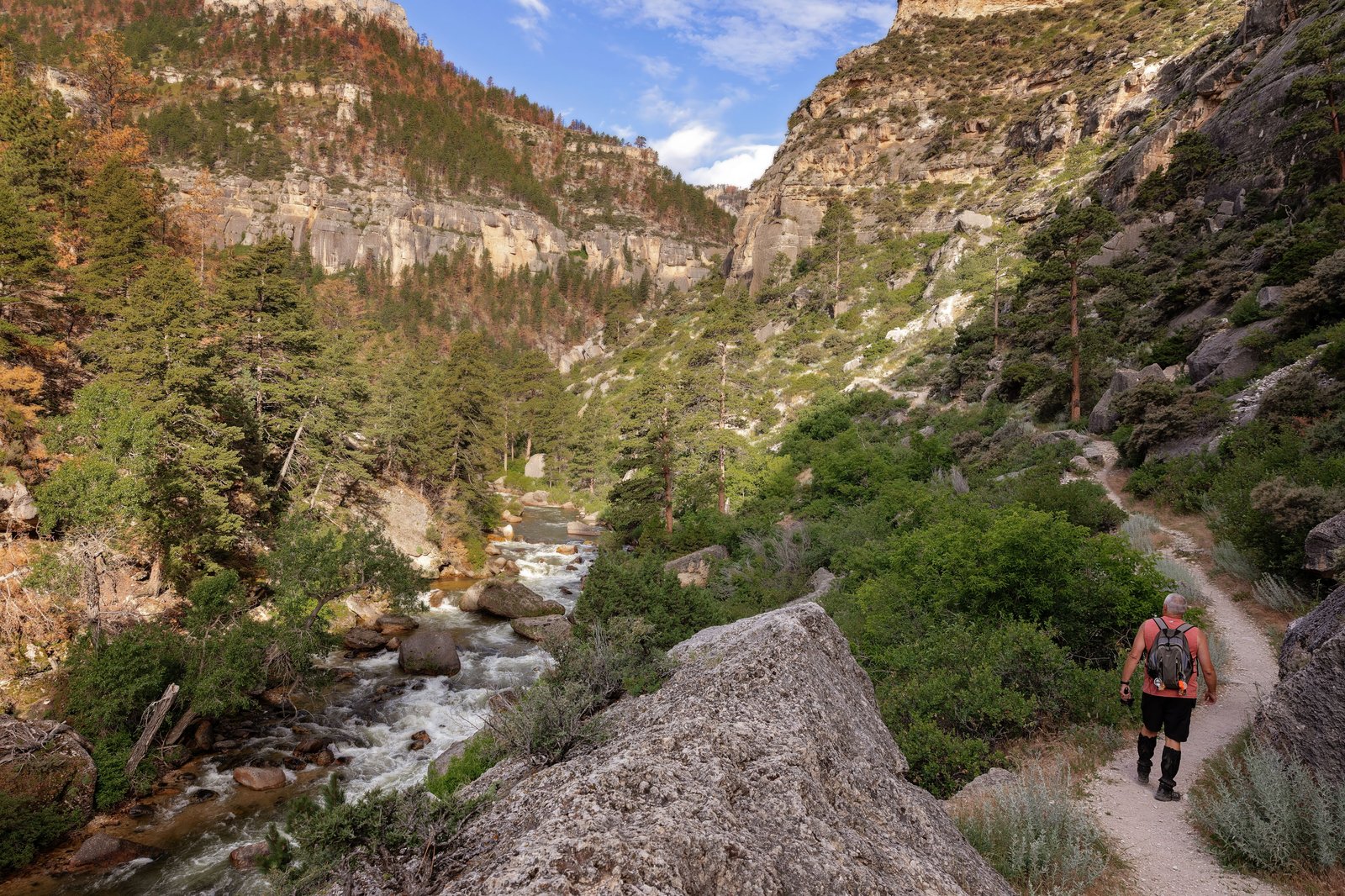
Sheridan’s draw isn’t purely financial. The town sits at the literal base of the Bighorn Mountains, offering immediate access to hiking, fishing, and skiing without the crowding or cost of more famous Mountain West destinations like Jackson or Bozeman, both of which have become prohibitively expensive for the same remote-worker demographic now discovering Sheridan. The town also retains a historic downtown with restored early-20th-century buildings, a legacy of its railroad and ranching-era prosperity, giving it an established, walkable core that many boomtowns lack.
The Tradeoffs That Come With the Move
- Sheridan’s airport offers limited commercial connections, meaning most air travel routes through Denver or Billings with an additional connection
- Winters are long and genuinely harsh, with average lows well below freezing for much of the year, a real adjustment for transplants from milder climates
- Healthcare and specialty services remain more limited than in larger metro areas, a common tradeoff across small Mountain West towns absorbing this migration wave
What Sheridan Offers That Bigger Remote-Work Magnets Don’t
Unlike Bozeman or Jackson, Wyoming towns that became remote-work destinations and then priced out much of their own workforce within a few years, Sheridan has managed its growth from a lower starting price point and a smaller initial spike in demand, giving the town more room to absorb new residents without the same immediate affordability crisis. Wyoming’s lack of a state income tax adds a further financial pull for remote workers relocating from higher-tax states, a factor that shows up repeatedly in relocation surveys of the mountain west.
Sheridan’s downtown has also benefited from historic preservation efforts that kept its early-20th-century brick storefronts intact, giving new arrivals a walkable, aesthetically distinct town center rather than the strip-mall sprawl that characterizes many small western cities experiencing similar population growth. Local business owners describe a steady, rather than explosive, arrival of new residents, a pace that has so far let the town add coffee shops, coworking spaces, and restaurants without the runaway price spikes seen in more famous remote-work destinations.
Sheridan’s proximity to the Bighorn Mountains gives new remote-work arrivals the same kind of outdoor-recreation lifestyle pitch that drew people to Bozeman or Jackson, hiking, fishing, skiing within a short drive, without the airport traffic and celebrity-driven price inflation that reshaped those more famous Wyoming and Montana towns. Local real estate agents describe buyers explicitly citing that combination, genuine outdoor access without the crowds, as the deciding factor over other mountain-west remote-work destinations they’d also considered.
Sheridan’s downtown revitalization has been aided by a handful of legacy local businesses, family-owned hardware stores, a historic hotel, longtime restaurants, that never closed during the town’s leaner decades and gave new arrivals an established commercial core to build around rather than an empty main street requiring redevelopment from scratch. That continuity is part of why longtime Sheridan residents describe the recent growth as additive rather than disruptive, a distinction many other boomtowns in the region can’t claim.
Sheridan College’s continuing presence as a community anchor has also helped the town avoid the hollowing-out effect that hits many small western towns once their traditional economic base, in Sheridan’s case historically ranching and energy extraction, declines. The college gives the town a built-in younger population and a steady stream of workforce training programs that new employers relocating to the area can tap into directly.
Sheridan’s healthcare infrastructure, anchored by Sheridan Memorial Hospital, has also expanded in step with the population growth, a detail relocation guides increasingly highlight since it distinguishes Sheridan from smaller Wyoming towns where limited healthcare access remains a genuine deterrent for remote workers weighing a permanent move, particularly those with young families or aging parents who might eventually need to relocate as well.
Local officials describe watching the same growth pressures that transformed other Wyoming towns approach Sheridan gradually rather than all at once, giving the town a rare chance to plan ahead rather than react.
Whether that measured pace holds as more remote workers discover the town remains the open question shaping Sheridan’s next decade.
Sheridan’s growth is part of a broader pattern across Wyoming’s northern counties, from Sheridan to Crook County, all absorbing similar waves of remote workers and retirees looking for mountain access without Jackson Hole’s price tag, according to the same [WorldAtlas migration analysis](https://www.worldatlas.com/cities/where-people-are-moving-to-in-wyoming-in-2026.html). Whether Sheridan can absorb this growth without pricing out the ranching and blue-collar families who’ve anchored the town for generations remains an open question, and one that mirrors exactly the tension playing out in dozens of small Western towns discovering, sometimes to their own surprise, that they’ve become desirable.