Moab Has 5,000 Residents and 3 Million Annual Visitors. That Ratio Runs the Entire Town’s Economy and Breaks It at the Same Time
We may earn money or products from the companies mentioned in this post. This means if you click on the link and purchase the item, I will receive a small commission at no extra cost to you ... you're just helping re-supply our family's travel fund.
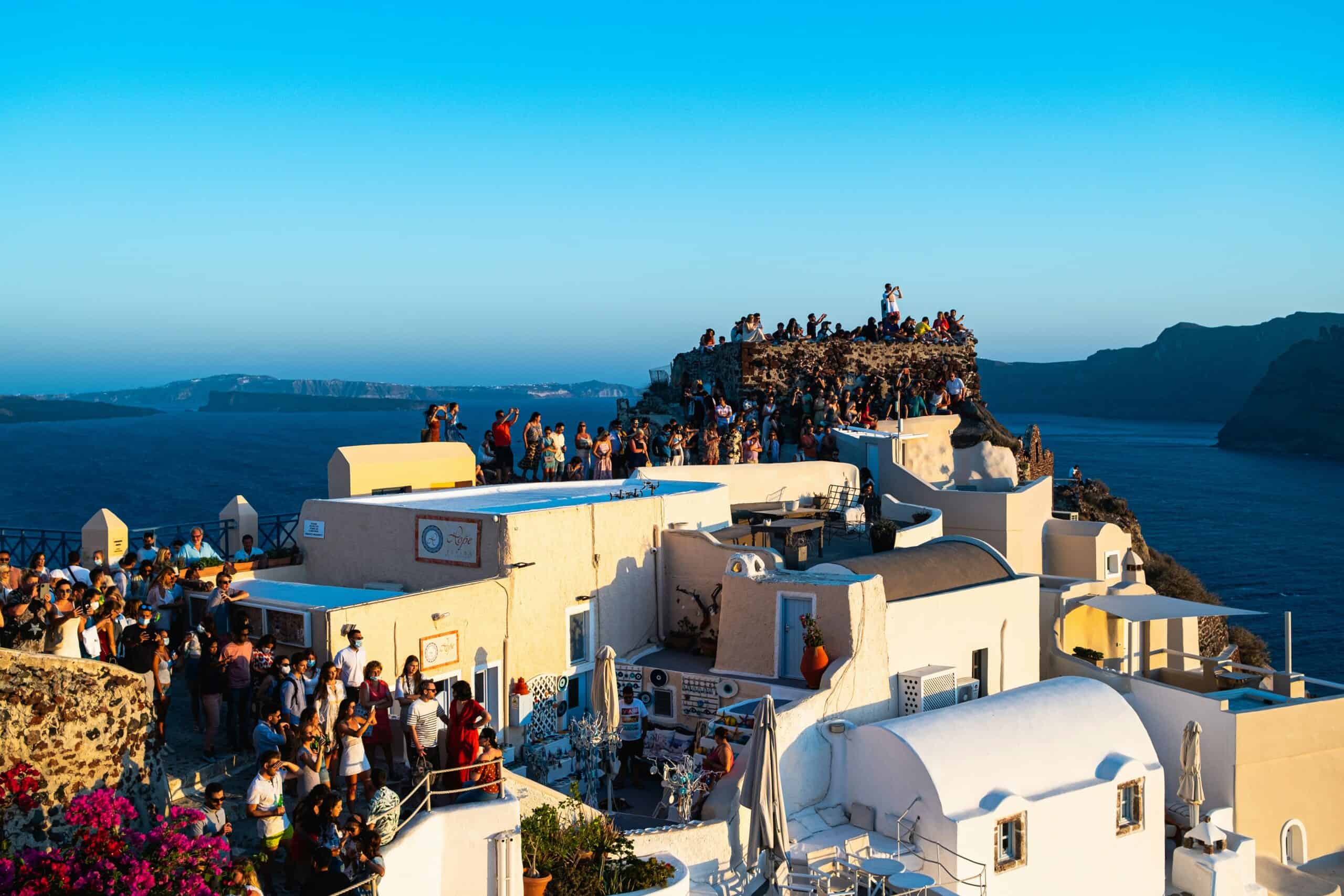
Moab, Utah, has a permanent population of roughly 5,000 to 5,500 people, and somewhere between 3 million and 5 million visitors pass through every year, drawn by Arches and Canyonlands national parks sitting right at its edges, according to figures cited across multiple sources including [Utah Stories](https://utahstories.com/2019/10/moab-500-tourists-for-every-resident/) and the [Deseret News](https://www.deseret.com/utah/2020/2/1/21056981/moabs-do-it-like-a-local-travel-campaign-promotes-sustainable-tourism-grand-county-national-parks/). That works out to roughly 500 to 600 visitors for every year-round resident, one of the most extreme tourist-to-local ratios of any town in the country, and it shapes literally every part of how Moab functions, from its housing market to its water system to its emergency services.
The Housing Math That Doesn’t Work
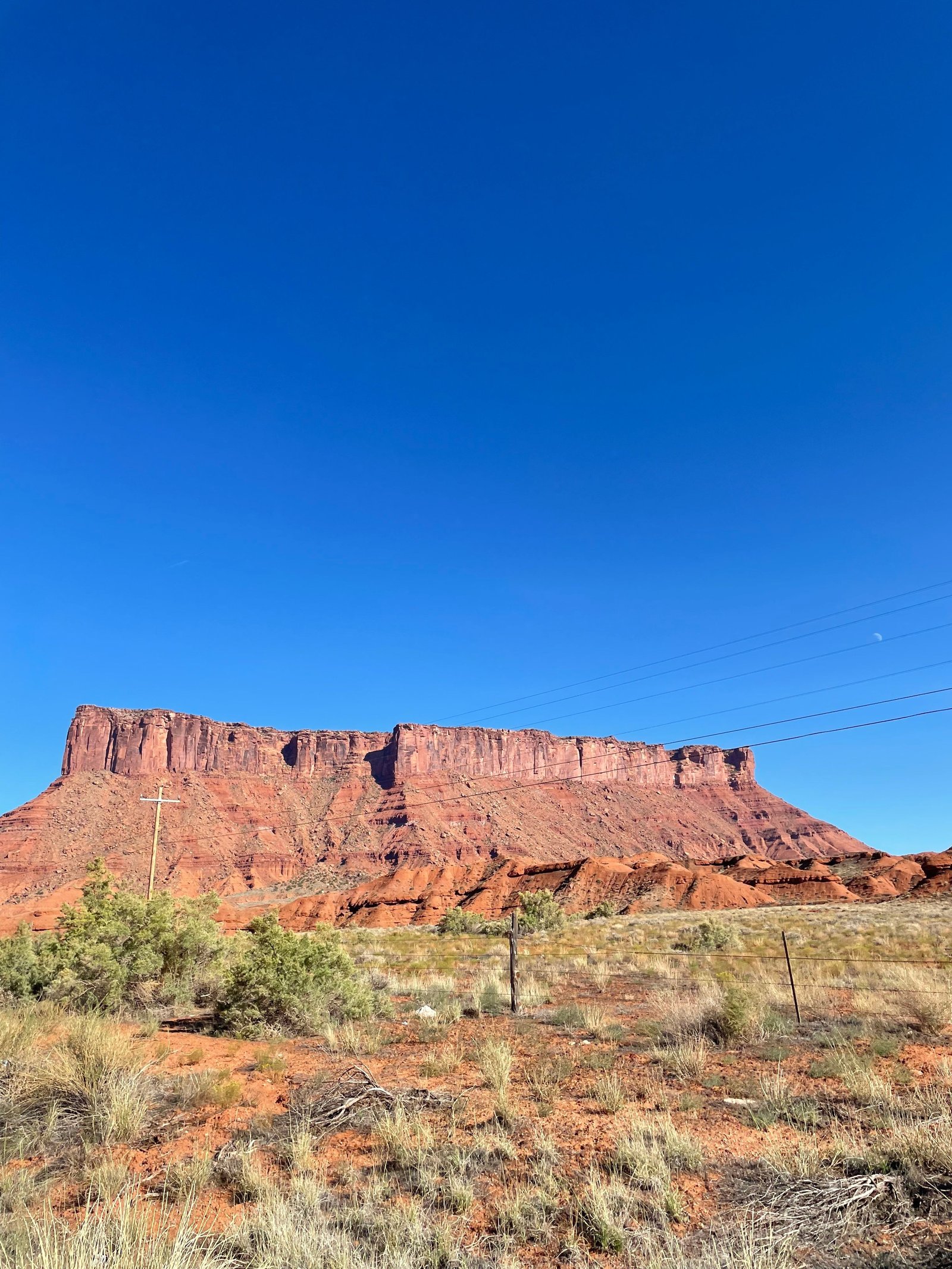
A town of Moab’s size would typically have a housing stock built for a stable, modest resident population, but the economics of short-term vacation rentals, which can fetch $300 or more a night during peak season, make converting a long-term rental into a nightly tourist unit dramatically more profitable than renting it to one of the thousands of service workers Moab’s economy depends on. That dynamic pushed the city council to impose a moratorium on new overnight rental construction back in 2019, an attempt to slow the conversion of the town’s limited housing stock away from its own workforce, according to [Utah Stories](https://utahstories.com/2019/10/moab-500-tourists-for-every-resident/). The math hasn’t gotten easier since: at peak season, Moab’s visitor population can add the equivalent of 20,000 to 40,000 extra people to a town built for 5,300, according to [TheTravel’s reporting on Moab’s tourism strain](https://www.thetravel.com/most-welcoming-destinations-moab-utah/).
Moab’s population history explains part of why this crunch feels so acute. The town grew from about 1,275 residents in 1950 to 4,682 by 1960 during a uranium mining boom, then largely stagnated for decades before tourism took over as the dominant economic driver in recent decades, according to figures compiled by [Wonder’s research summary](https://start.askwonder.com/insights/want-understand-tourism-began-moab-utah-0sn92j82e). The town’s physical footprint and infrastructure, built for a mining-era population, were never designed to flex for millions of annual visitors.
Grand County’s Answer: Ask Tourists to Behave Like Locals
Facing a resident population that was increasingly burned out on tourist congestion, Moab and Grand County launched a “Do It Like a Local” campaign in 2020, aimed at educating visitors on sustainable behavior, staying on trails, respecting water limits, avoiding peak-hour congestion, rather than simply trying to cap or reduce visitor numbers outright, according to the [Deseret News](https://www.deseret.com/utah/2020/2/1/21056981/moabs-do-it-like-a-local-travel-campaign-promotes-sustainable-tourism-grand-county-national-parks/). The campaign reflects a broader tension in how Moab’s leadership approaches the problem: tourism is by far the dominant force in the local economy, so outright limiting it risks the town’s financial base, even as residents increasingly describe daily friction, traffic, water strain, service worker shortages, tied directly to visitor volume.
What This Means for a Visitor Planning a Trip
- Arches National Park now uses timed-entry reservations during peak months specifically because unrestricted access became unmanageable
- Lodging books far in advance and at premium prices during spring and fall shoulder seasons, which have become as busy as summer used to be
- Service industry staffing shortages mean restaurant hours and availability can be inconsistent even during peak season, since the workers who’d staff them often can’t find anywhere affordable to live
The Service Workers Who Make the Ratio Function
Every one of Moab’s 3 million annual visitors needs somewhere to eat, sleep, rent gear, and get a flat tire fixed, which means the town’s tiny resident population has to supply an outsized service workforce relative to its size. Restaurant owners and outfitter shops routinely report struggling to fill shifts because there simply isn’t enough affordable housing within a reasonable commute for the workers the tourism economy requires, forcing many employees into long drives from Green River or Monticello just to clock in.
Grand County has experimented with employer-assisted housing programs and deed-restricted affordable units specifically to keep the tourism economy staffed, but the fundamental math remains difficult: a town built to comfortably house a few thousand residents is being asked to generate hospitality-sector labor for millions of annual visitors, and no amount of municipal housing policy fully closes a gap that wide without either capping visitor numbers or building housing stock the town’s geography and water supply can’t easily support.
Grand County’s National Park Service partnership, formalized through Arches and Canyonlands’ visitor management planning, has increasingly focused on timed-entry reservation systems specifically to cap the peak-season surge that most strains the town’s service capacity. Those caps help the parks themselves but don’t directly solve Moab’s housing math, since even a capped visitor number in the low millions still vastly outstrips what a town of 5,000 residents can staff without importing labor from well outside the immediate area.
Short-term rental regulation has become one of the town’s most contested political issues precisely because of this math, some residents want caps on vacation rentals to free up housing stock for local workers, while business owners dependent on visitor spending worry that overly aggressive restrictions could dent the tourism revenue the entire local economy runs on. Grand County’s ongoing debate over exactly where to draw that line has no clean resolution, since every regulatory lever pulls the town’s finite housing supply in a different direction depending on who benefits.
Water rights add another layer most visitors never consider: Moab sits in a genuinely water-constrained high desert environment, and every new housing unit or hotel room approved competes for an already limited municipal water allocation, a hard physical ceiling on growth that no amount of political will or investment capital can simply build around, unlike the more solvable financing and zoning challenges that constrain housing supply in most American towns.
Moab’s situation is frequently cited in academic and planning circles as one of the starkest American examples of a small gateway community absorbing a national park’s popularity without the infrastructure or tax base of a larger city to support it. Unlike a city the size of Bozeman or Jackson, Moab never had the diversified economic base to build out municipal capacity ahead of the tourism surge, leaving a town of 5,000 people functionally running the hospitality operations of a small city every single day of tourist season.