That $299 Flight to Europe Is a Lie — Here’s What It Actually Costs by the Time You Board
We may earn money or products from the companies mentioned in this post. This means if you click on the link and purchase the item, I will receive a small commission at no extra cost to you ... you're just helping re-supply our family's travel fund.
How the Base Fare Game Works

Understanding why this happens requires understanding airline revenue management at a basic level. Airlines operate in a brutally competitive market where fares are instantly visible and comparable across dozens of booking platforms. Google Flights, Kayak, Expedia, and Skyscanner all display fares side-by-side, creating enormous pressure to advertise the lowest possible number. The solution the industry landed on: minimize the base fare (the number that shows up in comparison searches) and recover margin through unbundled ancillary fees that aren’t always displayed until deep in the booking flow.
US Department of Transportation rules technically require that the total price be displayed by the final checkout stage — but they do not require it to be shown at the search result stage where most purchase decisions are made. When you see “$299” in a Google Flights search result, that number may or may not include carrier-imposed surcharges, airport taxes, and fuel surcharges — and it definitely does not include the seat selection fees, bag fees, or priority boarding fees you may need to add. The total is assembled piece by piece, like a receipt at the worst restaurant you’ve ever been to.
Budget carriers have taken this architecture to its logical extreme. Frontier, Spirit (before its bankruptcy in 2024), and their international equivalents Ryanair and Wizz Air built their entire business model around stripping the product to a bare minimum “fare” and charging separately for everything — the seat you want, the bag you need, the boarding position that gets you overhead bin space before it runs out, the food if you didn’t bring your own. The system is legal, it’s designed intentionally, and most casual travelers have no idea it’s happening until they’re at the checkout screen.
The Fee Stack: Every Charge Between You and Your Seat
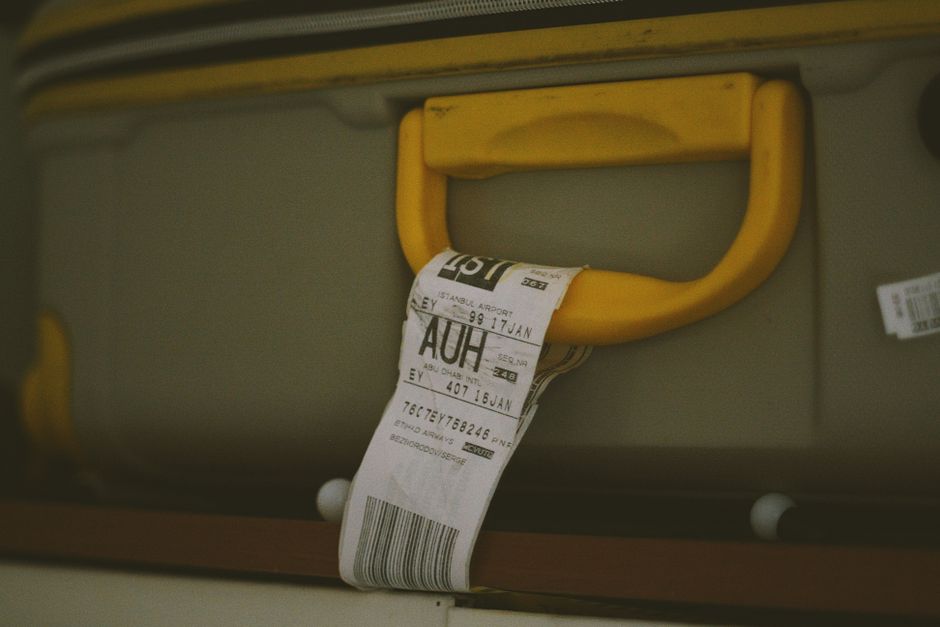
Let me build the stack so you can see exactly what “$299 to Europe” can become. These are real, current fee ranges as of mid-2026.
Seat selection: $25-75 per person, per direction. On budget carriers, unselected seats may be randomly assigned — middle seats, scattered from your travel companion, last rows that don’t recline. A couple wanting to sit together on a roundtrip should budget $100-150 in seat fees. A family of four wanting to sit in the same rows: $200-300 roundtrip.
Carry-on bag (full-size overhead bin bag): On budget carriers (Frontier, Ryanair, Wizz Air, Spirit-era model), a full-size carry-on costs $40-75 per person per direction. This is the fee that blindsides people most often, because the instinct is that you’d “just” bring a carry-on instead of checking a bag to save money. Wrong. On strict budget carriers, your personal item (under-seat bag) is free — the full-size overhead bag is not.
Checked bag: $35-75 per person, per direction, on airlines that charge for checked bags. On international flights, even airlines that normally allow a free carry-on may charge for checked bags depending on fare class.
Airport check-in fee: On some budget carriers, checking in at the airport counter instead of online costs $25-45 extra. This catches people who didn’t check in online within the window (usually 24-48 hours before departure).
Priority boarding: $15-30. Relevant if you want to ensure overhead bin access before the bins fill up — which on budget carriers is essentially guaranteed to happen.
In-flight meals and drinks: $12-18 for a sandwich. $4-8 for a drink. These costs are trivial relative to the others but add up on longer flights, especially with kids.
Airport transportation: Here’s where budget European routes commit their biggest deception. Ryanair famously flies into “London Stansted” (60 miles from London), “Paris Beauvais” (55 miles from Paris), and “Brussels South Charleroi” (40 miles from Brussels). Wizz Air uses similar secondary airports. The bus to the city from these airports costs $25-50 and takes 1-2 hours. A taxi is $80-120+. You booked a flight to Paris. You landed in a different region of France.
The Worst Offenders and Their Playbooks

Ryanair is the undisputed world champion of ancillary fee revenue. In fiscal year 2025, Ryanair reported €3.1 billion in ancillary revenue — fees and add-ons — representing 32% of total revenue. Their playbook is thoroughly documented: strict 10kg cabin bag limit (which they enforce by weighing bags at the gate on problematic routes), €50-per-bag airport check-in fee for passengers who didn’t prepay, and secondary airports that are as far from their name cities as they can manage. Their base fares are genuinely low. Their total fares, once you’ve added a bag and transportation, often aren’t.
Frontier Airlines before and after its various restructurings became the American template for the same model. Gate-checked carry-on bags at Frontier cost $75 — more than the base fare on many routes. Free carry-on bags do not exist in Frontier’s product. The $39 base fare to Denver becomes a materially different purchase once you understand what the $39 is actually purchasing: a specific human body in a specific seat, and nothing else.
Spirit Airlines, which filed for bankruptcy in November 2024 and was acquired, built the most extreme version of this model — $9 Fare Club membership to unlock certain prices, then fees on everything else. Its ghost lives on in the industry practices it normalized: the separation of “fare” from “product” is now mainstream across the industry, with American Airlines’ Basic Economy, Delta’s Basic Economy, and United’s Basic Economy all following the same unbundling logic at legacy carriers.
Wizz Air, serving Eastern and Central European routes, has a carry-on policy so strict that agents have tape measures at the gate to verify bag dimensions. Stories of passengers in Wizz Air gate areas desperately stuffing jacket pockets with items from their bag to get under the limit have become a budget travel meme — not because people are careless, but because 40x30x20cm is genuinely tiny.
The True Cost Calculator: A Family of Four to Europe

Let’s do the real math for a family of four (two adults, two children ages 10 and 13) flying from New York to London and back on a budget-ish carrier offering $299 base fares.
Base fare (4 tickets, roundtrip): $299 x 4 x 2 = $2,392.
Seat selection ($35/person/direction, to keep the family together): $35 x 4 x 2 = $280.
Carry-on bags ($55/person/direction, because the teenagers absolutely have things they need): $55 x 4 x 2 = $440.
One checked bag for the family ($50/bag/direction): $50 x 2 = $100.
Airport transportation London side (Stansted Express train): $35/person each way = $35 x 4 x 2 = $280.
Airport transportation New York side (Newark AirTrain + NJ Transit if using Newark): $25/person x 4 x 2 = $200.
In-flight snacks for four people each way, conservatively: $15 x 4 x 2 = $120.
Total: $3,812 — or $953 per person, for a flight advertised at $299. If you skip some of these line items — don’t select seats, accept a checked bag that arrives separately on a connecting flight, take a cheaper airport bus — you can compress the total. But the baseline “add-ons you will almost certainly need” scenario for a family lands well above $800 per person, and can easily hit $1,200 depending on the route and carrier.
When Budget Airlines Are Actually Worth It

I want to be fair here, because budget airlines are not inherently bad — they’re a product that makes sense in specific use cases. When does a budget carrier make sense? When your flight is 2 hours or less (the per-hour pain of basic economy seating is tolerable on a short hop), when you’re traveling carry-on only (a single carry-on worth of stuff, packed in a bag that genuinely fits under the seat), and when the secondary airport it flies into is actually convenient to your destination. Ryanair Dublin to London Stansted at £35 with a carry-on backpack? Completely reasonable. Ryanair “Paris” with four people and normal luggage? A trap.
Budget carriers are also worth considering when the total-cost comparison still works in their favor — if the true all-in cost of the budget carrier is still $200 less than the legacy carrier with bags and seats included, that’s $200 saved. The mistake is failing to do the true-cost comparison and just reacting to the base fare.
The Strategies That Actually Find You Cheap Flights

Now for the genuinely useful part. Real cheap flight strategies, ranked by how much effort they require.
Google Flights price calendar (low effort, high value): Go to flights.google.com, search your route, and switch to the calendar view. You’ll see a month grid of prices — it immediately reveals which days are cheapest. Transatlantic flights on Tuesday-Wednesday departures are consistently 15-25% cheaper than Friday-Sunday. This single tool has saved our family hundreds of dollars per trip.
Going.com alerts (low effort, occasionally extraordinary value): Going (formerly Scott’s Cheap Flights) sends email alerts for mistake fares and genuine sale fares — transatlantic flights that legitimately appear at $200-350 roundtrip due to airline pricing errors or sale windows. These require flexibility (you get an alert, you have a window to book, you book) but when they hit they are real. A premium membership is $49/year and pays for itself on a single alert for a family.
Be flexible on origin airport: Major hubs charge hub premiums. If you’re in the Northeast, JFK, EWR, BOS, and PHL all serve transatlantic routes — fares can vary $100-200 one-way between them for the same week. If you’re willing to drive an extra hour, that difference can be significant for a family.
Position flights: This is the move serious budget travelers use. Instead of flying direct from your home city to your destination, fly to a major hub first — either domestically or by connecting through an international hub city — and then take the cheap transatlantic leg. Flying Denver to London direct is expensive. Flying Denver to New York on a cheap domestic fare ($80-120) and then New York to London at the best transatlantic rate can save $200-400 per ticket.
The “Positioning Flight” Move That Serious Travelers Use
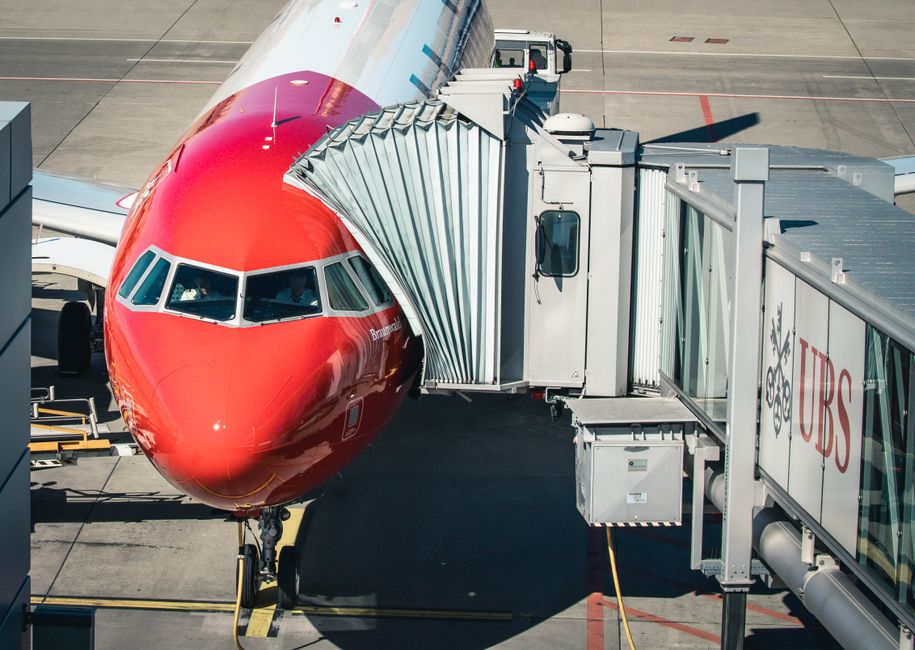
The positioning flight strategy deserves its own section because it’s underused and genuinely powerful. The concept: transatlantic and transpacific flight prices vary enormously based on origin city. New York, London, and a handful of other gateway cities have fierce competition and low fares. Mid-size and smaller American cities have far fewer options and much higher prices.
If you live in, say, Nashville, Indianapolis, or Salt Lake City, your options for cheap transatlantic flights are limited — you’re dependent on one or two carriers who know you have limited alternatives. But if you buy a cheap Southwest or Frontier flight to JFK or Newark first, you can then shop the full, competitive New York market for the transatlantic leg. Done correctly, the position + transatlantic combo can be $150-300 cheaper per person than a direct routing from your home city.
The key rules for positioning flights to work: book the positioning flight and the international flight as separate tickets (not a connecting itinerary — that defeats the purpose and eliminates the price advantage). Leave adequate time between the positioning flight’s arrival and the international flight’s departure — at least 3-4 hours, preferably a full day if you’re doing it day-of. Never book a positioning flight on the same calendar day as a tight international connection without a buffer; if the domestic flight is delayed, you miss your international flight and have no airline protections because they were separate bookings.
The bottom line is this: cheap flights exist. Genuinely, surprisingly cheap transatlantic fares appear regularly, and with Google Flights and Going alerts you can find them without living on flight deal forums all day. But your strategy has to include the full cost — seats, bags, ground transportation — before you click buy. A flight that looks like $299 and works out to $950 is not a deal. A flight that looks like $450 and works out to $480 with everything included is an excellent deal. Run the math first, every time, before you get excited.