The Rental Car Industry Is Running 5 Scams on Every Tourist — And One of Them Almost Got Me
We may earn money or products from the companies mentioned in this post. This means if you click on the link and purchase the item, I will receive a small commission at no extra cost to you ... you're just helping re-supply our family's travel fund.
The Rental Car Industry Has a Secret — And It’s Costing You Hundreds

I want to tell you about the moment I stood at an Alamo counter in Miami International Airport, exhausted after a red-eye flight, watching a $212 reservation balloon to $431 before my very eyes. The agent was friendly, efficient, and quietly terrifying. She spoke in a calm voice about scratches and deductibles and “your card freezing” until I was too brain-fogged to argue. I signed. I paid. I was furious with myself for three days.
That was four years ago. Since then, I’ve rented cars in 19 countries and made it my personal mission to understand every single line on those rental agreements. What I found should genuinely make you angry — not because the fees are always illegal (they’re usually not), but because they’re designed specifically to exploit tired, distracted travelers who don’t know the rules. These five scams are running at virtually every major rental counter in the world, and at least one of them is almost certainly going to be attempted on you during your next trip.
Scam #1: The Security Deposit Hold That Can Freeze Your Finances

Here’s something the rental car industry never advertises: when you pick up your car, the agency places an authorization hold — not a charge, but a hold — on your credit or debit card. For economy cars, this might be $500. For SUVs, sedans, or any vehicle rented internationally, this hold can reach $1,500 to $2,500. It’s frozen immediately and stays frozen until the car is returned, plus an additional 3–10 business days for the agency to process the release.
Why does this matter? Because that frozen amount counts against your available credit. If you have a $3,000 credit limit and the agency holds $1,500, you now have $1,500 to cover the rest of your trip — hotels, meals, activities, emergencies. I’ve personally spoken to travelers who arrived at a hotel and had their card declined because the rental hold wiped out their available balance. This is even more brutal with debit cards: most major international agencies will flat-out reject debit cards at pickup, and those that accept them often require a larger hold plus a credit check at the counter.
The solution is simple: always use a dedicated travel credit card with a high limit and no foreign transaction fees. Keep a second card in reserve specifically for hotel incidentals and emergencies. Never use a debit card at a rental counter. And before you travel, check your credit limit and make sure you have breathing room above and beyond your expected rental hold amount.
Scam #2: The Insurance Upsell — The Most Profitable 90 Seconds in Travel

The insurance upsell is where rental companies make a significant portion of their profit, and the agents who push it are often incentivized to do so. The script goes something like this: “Just so you’re aware, if there’s any damage to the vehicle — even a single scratch — you’d be looking at a $2,000 deductible. Our Super CDW package covers everything and it’s only $34.99 per day.” Sounds reasonable in the moment. But that $34.99 per day adds up to $245 on a week-long trip, on top of whatever you originally paid for the car.
Here’s the thing they don’t tell you: if you booked with a Chase Sapphire Reserve or Sapphire Preferred card, you have primary rental car coverage up to the cash value of the vehicle when you decline the counter CDW and pay with that card. Amex Platinum and Amex Gold cards also offer secondary coverage (meaning they cover what your personal auto insurance doesn’t). You must pay for the entire rental with the qualifying card and formally decline the rental company’s insurance at the counter. “Primary” coverage is the gold standard — it means you never have to file through your personal auto insurance first, so your personal premiums don’t go up.
Before your next rental, call the number on the back of your travel credit card and ask specifically: “Do I have primary or secondary rental car collision coverage, and does it apply in the country I’m visiting?” Some cards exclude certain countries or car types (luxury, trucks, motorcycles). Get the answer in writing if possible. Then walk up to that counter and confidently decline every insurance product they offer.
Scam #3: The Fuel Policy That’s Never as Simple as It Sounds

There are two fuel policy options at most counters: “full-to-full” (you receive the car full, return it full) and “prepay” (you pay for a full tank upfront at the agency’s per-gallon rate, and return the car at any fuel level). The prepay option is consistently marketed as “the convenient choice” — and it’s consistently a terrible deal.
Think about the math: if you prepay for a full tank and return the car with a quarter-tank remaining, you’ve gifted the rental company an entire quarter-tank of fuel. Since you already paid for it, you get nothing back. The agency’s fuel price is also often above market rate. And if you skip prepay but return the car without filling it up yourself, they’ll charge you a premium “refueling service fee” plus fuel at rates that can be three times the local gas station price. I once saw a $38 refueling fee on a return that involved approximately two gallons of fuel. Two gallons.
Always choose full-to-full. Always. Find a gas station within 10 kilometers of the return location — Google Maps makes this trivial — fill the tank completely, and keep your receipt. If the agency tries to tell you the tank “isn’t quite full,” show them the receipt with timestamp. It’s your proof. Some locations, particularly in busy airports, have partner gas stations directly on the rental return road for exactly this reason.
Scam #4: Cross-Border Rules and Mileage Caps Hidden in Fine Print

Planning a road trip from Portugal into Spain? Driving from Germany to Poland? Or renting in Florida and driving to Georgia? The rental agreement almost certainly has specific cross-border clauses, and violating them has consequences that range from voidance of your insurance coverage to a fine charged to your card after the fact. In international rentals, crossing into an unauthorized country can leave you completely uninsured — which means if you have an accident, you are personally liable for the full cost of the vehicle and any damages.
Mileage caps are another trap that catches road-trippers off guard. Some luxury vehicles and certain European rental categories come with daily mileage limits — often 200 miles per day — with overages charged at $0.30 to $0.50 per mile. On a 10-day road trip across Europe, this can quietly add hundreds of dollars to your final bill that you won’t see until your credit card statement arrives. Always ask the words “Is this vehicle unlimited mileage?” out loud at the counter and confirm it in writing before you drive away.
The fix: declare your complete itinerary — every country, every region — at the time of booking, not at pickup. Most agencies offer authorized cross-border extensions for a small fee per country. Budget and Avis (through Costco Travel) have notably straightforward cross-border policies for pre-approved countries. AutoSlash, the price-monitoring app, also allows you to search with cross-border filters and alerts you to policy changes in your booking.
Scam #5: Dynamic Currency Conversion — The Fee That Hides in Plain Sight
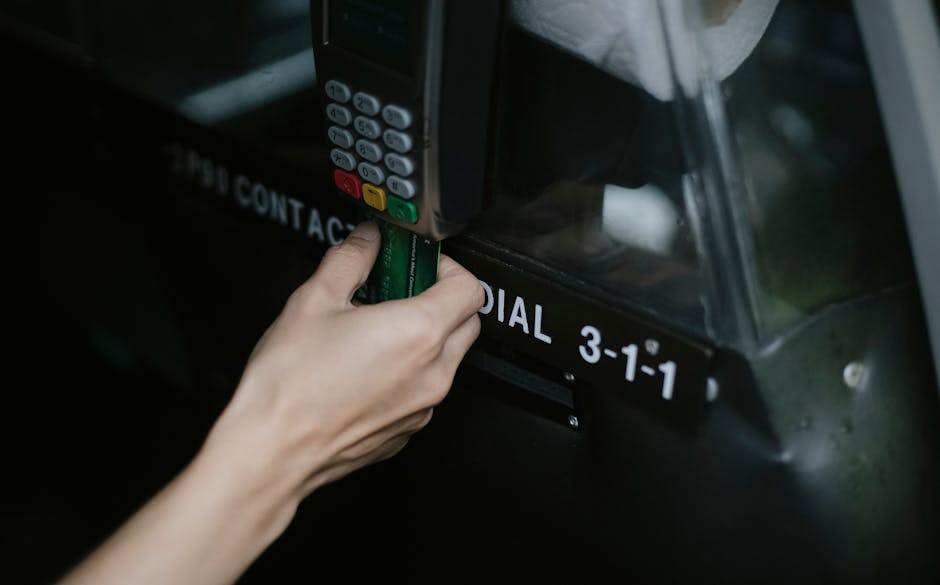
You’re returning the car in Athens or Barcelona or Tokyo. The agent slides the terminal toward you and it asks: “Would you like to pay in USD today?” This is called Dynamic Currency Conversion (DCC), and it is one of the cleanest, most elegant financial traps in modern travel. The exchange rate being used is set by the rental company, not by your card network, and the markup is routinely 5 to 10 percent above the interbank rate.
On a $400 rental, choosing your home currency at a 7% DCC markup costs you an extra $28. For absolutely nothing. The terminal makes it feel like you’re doing something smart by paying in a currency you recognize, but you are paying significantly more than you would if you simply chose the local currency and let your travel card (which should have no foreign transaction fees) handle the conversion at the Visa/Mastercard network rate.
The rule is permanent and simple: at any payment terminal anywhere in the world, always choose to pay in local currency. Immediately. Without hesitation. If the terminal defaults to your home currency, scroll back and change it. Never let a merchant, rental agent, or hotel set the exchange rate for you.
The Retroactive Damage Claim: The Scam That Hits You After You’re Home

This one is the most maddening because it arrives as a surprise days or even weeks after your trip ends. You returned the car with no drama, the agent waved you through, and then a charge appears on your statement for $340 for a “windshield chip” or “wheel curb rash” or some other damage you are 100% certain you did not cause. Rental companies have been known to file damage claims for pre-existing wear that wasn’t properly documented at pickup — and proving you didn’t do it is extraordinarily difficult after the fact.
The solution takes four minutes at pickup and four minutes at return: shoot a complete 360-degree video of the entire vehicle, including all four wheels, the windshield (check for chips with phone flashlight), all four bumper corners, under the front and rear bumpers, and the roof if you can reach it. Do this the moment you receive the keys — before you move the car one inch — and again the moment you park it at return. Make the video timestamped, narrated, and saved immediately to cloud storage. Most importantly, request a signed Vehicle Condition Report from the agent at both pickup and return. If they’re reluctant to provide one, that itself is a red flag.
How to Actually Get a Fair Rental Car Price

Beyond avoiding scams, there are legitimate ways to reduce what you pay. Miami International Airport, as of May 2026, carries one of the highest airport surcharge rates in the United States — up to $35 per day on top of your base rental rate, plus Florida’s 6% state rental surcharge. Booking off-airport (there are rental lots near MIA accessible by a short rideshare) can cut those surcharges significantly.
Costco Travel’s partnership with Avis and Budget frequently waives certain fees for members and includes some basic insurance coverage in the bundle pricing. The AutoSlash app is genuinely valuable — you input your existing reservation and it monitors for price drops, automatically rebooking you if the rate falls. Since rental car prices are dynamic and fluctuate daily, this can save you $30–80 on a week-long rental with zero effort on your part. Set it up the moment you book and let it work in the background until your pickup date.
The rental car industry isn’t going to change its playbook. But now that you know every move on the board, you can walk up to that counter calm, prepared, and completely impossible to upsell.