Anthony Bourdain Convinced an Entire Generation of Travel Writers That Street Food Was the Real Cuisine. Fine Dining Never Recovered
We may earn money or products from the companies mentioned in this post. This means if you click on the link and purchase the item, I will receive a small commission at no extra cost to you ... you're just helping re-supply our family's travel fund.
Before the 2000s, the default measure of a serious food travel writer was how many Michelin-starred restaurants they could get into. That hierarchy did not disappear, but it was permanently cracked open by one person eating noodles at plastic tables in Vietnam on television, and the shift traces back almost entirely to Anthony Bourdain, whose television work spent two decades systematically arguing that the truest version of a country’s food was standing at a cart or sitting on a plastic stool, not seated at a white tablecloth.
The Bourdain Argument: Street Food Is Not the Backup Plan
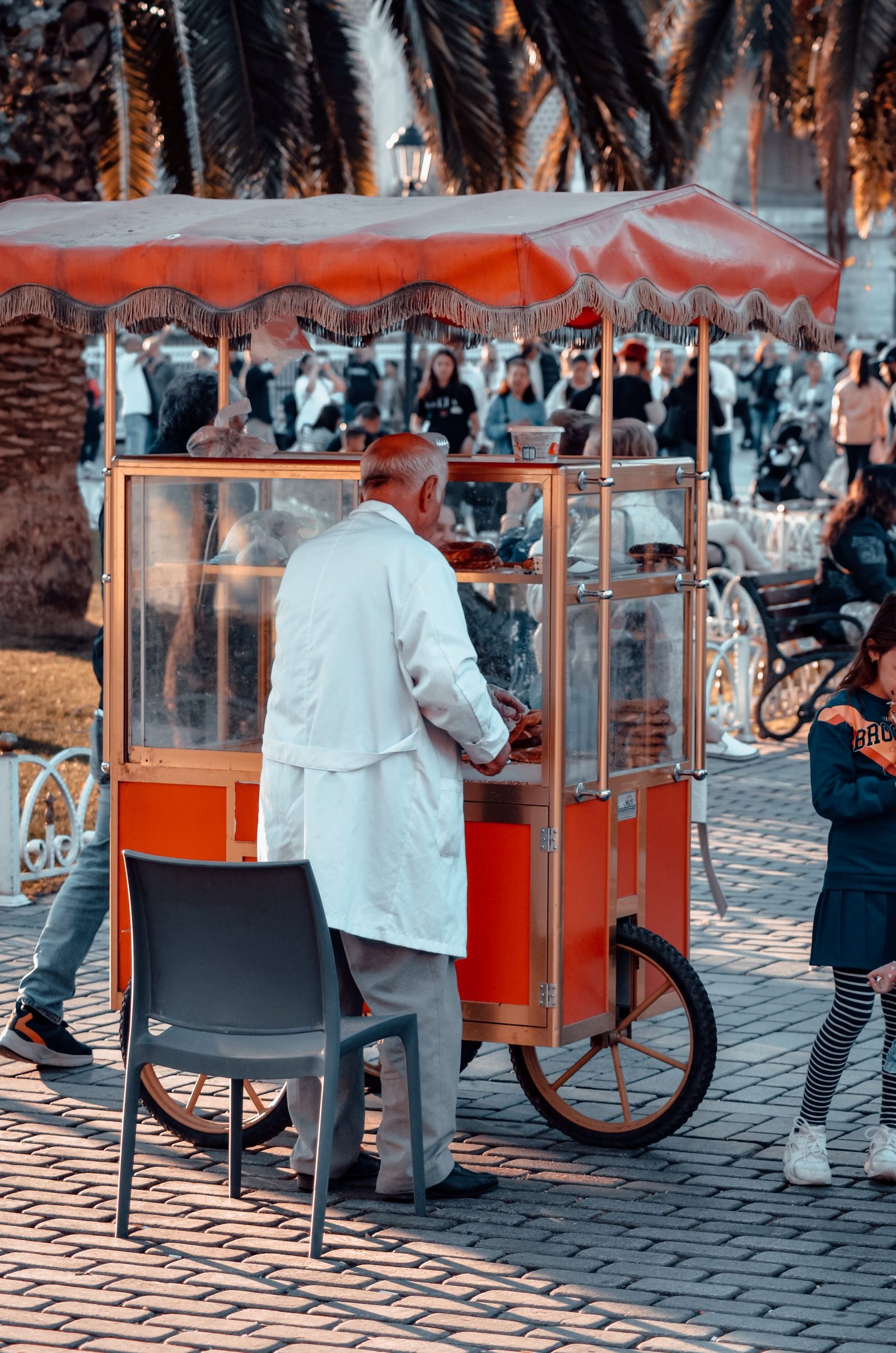
According to a retrospective on the Anthony Bourdain effect on street food culture, Bourdain’s television work across “A Cook’s Tour,” “No Reservations,” and “Parts Unknown” was built on a consistent thesis: that street vendors, night market stalls, and family-run noodle shops frequently produced more honest and more skillful cooking than expensive restaurants, because the vendors had spent a lifetime perfecting one or two dishes rather than a sprawling menu designed to impress. A separate retrospective on ways Bourdain changed the food world credits him specifically with making it culturally acceptable, even aspirational, for serious food travelers to prioritize a plastic stool over a maître d’.
Bourdain’s clearest articulation of this came through his relationship with Singapore’s hawker centers, government-built and regulated complexes that house dozens of independent food stalls under one roof. In an interview covered by the Harvard Business Review, Bourdain argued that eating where locals actually eat, rather than at establishments built for visitors, was close to a professional obligation for anyone trying to understand a place, a philosophy he extended into a broader argument about leadership and travel. He went further in comments reported by the Straits Times, praising Singapore’s hawker center model specifically as the right template for preserving street food culture against the pressures of rising real estate costs and gentrification that have wiped out informal food vending in many other major cities.
What Street Food’s Rise Displaced
The elevation of street food in travel media did not happen in a vacuum. It coincided with, and arguably accelerated, a decline in interest in the mid-tier, white-tablecloth international restaurant that had defined food tourism for decades prior, the kind of place with a wine list and a dress code that once signaled a traveler taking a destination’s food culture seriously. As street carts and night markets became the marker of food-travel credibility, that older restaurant category increasingly got recast in travel writing as a tourist trap or a compromise, undercutting a whole tier of the hospitality industry that had built its identity around formal dining for visitors.
- Bourdain’s shows argued street vendors often produced more skillful cooking than expensive restaurants
- He publicly praised Singapore’s government-built hawker centers as a model for preserving street food against gentrification
- His approach reframed eating where locals eat as close to a professional obligation for serious travelers
- The street food boom coincided with declining prestige for the mid-tier international restaurant aimed at visitors
An Ambition That Never Quite Landed
Bourdain’s belief in street food culture was significant enough that he spent years trying to build a permanent home for it in New York. A profile in the New Yorker details his long-planned Bourdain Market, a proposed indoor market at Manhattan’s Pier 57 modeled directly on Singapore’s hawker centers and the night markets of Asia, meant to bring dozens of international street food vendors under one New York roof. The project stalled for years amid financing and permitting issues and ultimately never opened as originally conceived, a reminder that translating an organic street food ecosystem into a built, permanent Western institution turned out to be far harder than filming it for television.
The Commercial Machine That Grew Up Around the Idea
Bourdain’s street food thesis did not stay confined to television. It spawned an entire commercial ecosystem, food tour companies built specifically around street vendor visits, guidebooks and apps that rank cities by their street food scenes, and a wave of imitator food travel shows that adopted his basic formula of finding the most unglamorous-looking stall with the longest local line and treating it as the real destination. Food halls in American and European cities, many explicitly modeled on the Asian night markets Bourdain popularized, have become a standard feature of urban redevelopment projects, offering a curated, cleaned-up version of street food culture to customers who might never seek out an actual street vendor in an unfamiliar country.
That commercialization carries its own irony. The food hall model Bourdain’s influence helped popularize in Western cities is, in its polished, developer-funded form, closer to the fine dining establishment he spent his career arguing against than to the actual improvised, family-run street stalls he filmed in Vietnam, Singapore, and Mexico. The philosophy traveled successfully. The literal economics of street vending, low overhead, family ownership, decades of single-dish specialization, mostly did not, at least not in the markets where his influence proved most commercially profitable.
Social media platforms have accelerated the same trend Bourdain started on television, since a single viral video of a street vendor can now generate lines around the block within days, a phenomenon that has created its own tension between the small-scale, single-family economics that made street food appealing in the first place and the sudden scale demands that internet fame places on a vendor with one cart and one recipe. Some vendors have thrived under the attention, expanding into second locations or supplying restaurants, while others have found viral fame actively disruptive to a business model built around modest, sustainable daily volume.
Culinary schools and food criticism have adjusted accordingly, with several major food writing programs now including street food and informal vending traditions as legitimate subjects of serious study rather than treating them as a lesser category beneath professional restaurant cuisine, a shift in institutional respect that traces directly back to the credibility Bourdain’s television work built for the format over two decades of prime-time coverage.
Bourdain died in 2018, but the food travel media he helped build has only leaned further into his original thesis, according to NPR’s retrospective on his career, which frames his central, lasting contribution as convincing an entire audience that a place’s most honest food, and often its most interesting story, was standing at a cart rather than seated in a dining room.