Summer 2026 Flights Just Got More Expensive — But These Deals Are Hiding in Plain Sight
We may earn money or products from the companies mentioned in this post. This means if you click on the link and purchase the item, I will receive a small commission at no extra cost to you ... you're just helping re-supply our family's travel fund.
What Happened to Jet Fuel — And Why Your Flights Cost More

On February 28, 2026, US and Israeli forces struck Iran. What followed was a cascade of geopolitical and energy market disruptions that the aviation industry is still trying to absorb. Iran’s effective blockade of the Strait of Hormuz — through which a substantial portion of global crude oil moves — sent jet fuel prices into territory not seen since the 2022 energy crisis. By March 2026, according to the International Air Transport Association, jet fuel prices had surged 106.6% year-on-year. The average price of Jet A-1 fuel globally hit $160-$197 per barrel during peak volatility, before easing somewhat. For context, normal pre-war levels were approximately $80-$90 per barrel.
Fuel represents the single largest operating cost for most airlines — typically 20-30% of total expenses, rising to 35-40% when prices spike. Airlines have limited ability to absorb that kind of cost increase without passing it through to passengers. Airlines that hedged aggressively before the conflict — Lufthansa, for example, had hedged approximately 80% of its jet fuel requirements — are better protected in the short term. But even Lufthansa’s projected 2026 fuel bill rose by $2 billion USD (24% above previous forecasts) because of the conflict. Airlines with lighter hedging programs saw even more severe exposure.
The knock-on effects have been visible everywhere. United Airlines told investors in late April that it aims to pass through 50-67% of its fuel cost increase via higher fares and surcharges in the near term, rising toward 100% pass-through by year-end if fuel prices stay elevated. Air France-KLM announced surcharges of up to €50 ($58) on long-haul flights. EasyJet and Ryanair both warned that fares would continue rising. IATA Director General Willie Walsh said plainly in a May 2026 Guardian interview: “Over time, it’s unavoidable that elevated oil prices will translate into higher fare prices.” And Allianz Trade estimated that international airfares had already risen 5-15% across most markets — with some routes seeing far steeper increases.
The Airlines Cutting Routes and Raising Prices
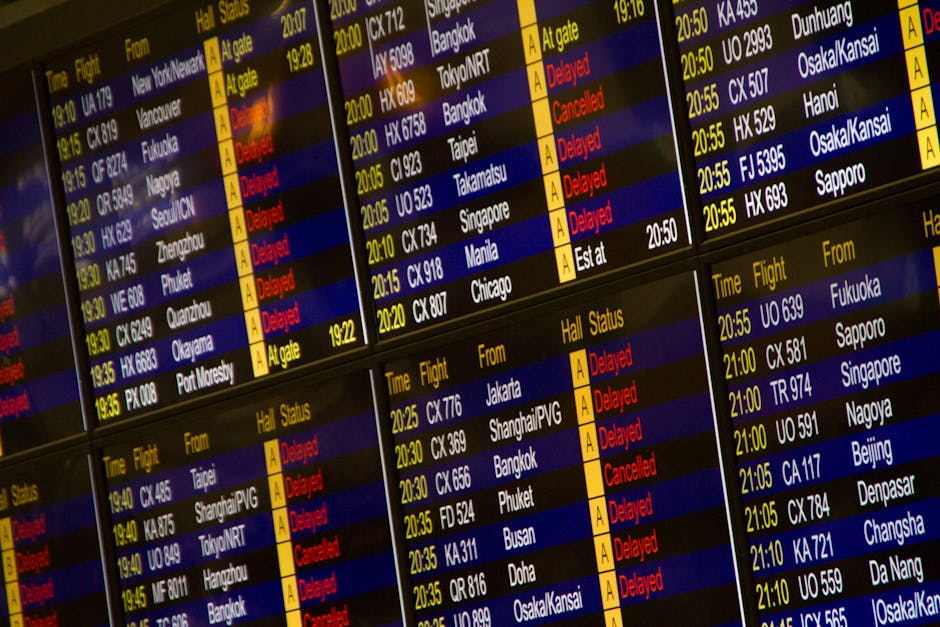
The route-cutting has been dramatic and global. Aviation analytics firm Cirium tracked 9.3 million seats removed from June through September 2026 schedules by airlines across the US, Japan, Australia, and Europe. The Middle East is the worst-affected region — not just because of the conflict itself, but because major Gulf hubs (Dubai, Doha, Abu Dhabi) handled an enormous volume of connecting traffic between Europe, Asia, Africa, and Australasia.
Qatar Airways alone cut 2 million seats from its June-October 2026 schedule. Emirates and Etihad reduced capacity by 700,000 and 450,000 seats respectively, per Cirium data. British Airways suspended its London Heathrow services to Dubai, with restart pushed back to August 1, 2026 after multiple earlier target dates were missed. Lufthansa Group pushed its Dubai route restart to September 13, 2026, and kept at least eight other Middle East destinations — including Abu Dhabi and Riyadh — suspended through late October.
Delta, Singapore Airlines, KLM, Aegean Airlines, and Pegasus have all announced Dubai suspensions running through summer 2026. The combination of airspace restrictions over Iran, Iraq, Jordan, Kuwait, and parts of the UAE, plus a temporary cap limiting non-Emirati carriers to a single daily round-trip into Dubai International Airport, has made many routes commercially unviable. A carrier that previously operated three daily frequencies to Dubai has been cut to one — and at one flight per day, many long-haul routes don’t generate enough revenue to cover the higher fuel costs from rerouted flight paths.
Rerouting itself has become a significant cost driver. Airlines that previously flew the efficient polar or Middle East corridor from Europe to Asia now have to fly south, over Saudi Arabia, adding 2-5 hours to journey times and dramatically increasing fuel burn. Emirates estimates it’s spending $3-5 million per day in extra fuel and rerouting costs. Those costs go somewhere. They go onto your ticket.
Spirit Airlines Is Gone: What That Means for Budget Travelers
Spirit Airlines announced permanent cessation of operations in 2026, with the soaring jet fuel costs cited as a major contributing factor in the final decision. Spirit had already been through a bankruptcy filing in late 2024 and failed merger attempts with JetBlue and Frontier. The relentless rise in fuel costs, which disproportionately affect ultra-low-cost carriers because they operate on extremely thin margins and have limited capacity to hedge, was the final stress that broke the business model.
Spirit’s disappearance matters beyond just Spirit passengers. Ultra-low-cost carriers (ULCCs) like Spirit and Frontier act as pricing anchors in the domestic US market — when Spirit offered $29 fares from Fort Lauderdale to Atlanta, every other carrier on that route faced pressure to stay competitive. With Spirit gone and Frontier consolidating its network, the competitive pressure on major carriers to offer genuine budget fares on domestic routes has diminished. The Kayak data tracking US average fares tells the story: average international fares from the US were up 16% year-on-year in the week analyzed post-conflict. Domestic fares rose an even steeper 24% year-on-year.
For budget travelers who built itineraries around ultra-low-cost carriers, the realistic alternatives in 2026 are Frontier (focused on leisure routes and now the dominant ULCC), Allegiant (limited route network, primarily Sun Belt leisure destinations), and Southwest (not truly ULCC but often competitive on domestic fares with its point-to-point model). None of them are Spirit. Spirit’s network — which stretched into Central America and the Caribbean at price points that made international travel accessible to millions of Americans for whom $300 round trips were aspirational — is genuinely gone, and that void will not be filled quickly.
The Dubai Paradox: Chaos Above, Discounts Below

Here is the most counterintuitive travel story of 2026: while airlines are suspending flights to Dubai and the airspace above the UAE has been a geopolitical battleground, Dubai’s luxury hotels are offering some of the most aggressive discount pricing they’ve shown in a decade. The logic is straightforward economics. When airline capacity to a destination collapses, tourist arrivals collapse with it. When tourist arrivals collapse, hotel occupancy craters. When occupancy craters, hotels discount to survive.
Dubai’s hotel sector was running near full capacity during peak season before the conflict — the city had become a global tourism powerhouse, attracting 17 million international visitors in 2024. The sudden collapse in airlift has left properties that cost $400-$600 per night pre-conflict now offering rooms at $200-$280 to lure back the tourists who can still access the city. Resorts on Palm Jumeirah, properties on the Dubai Marina, and hotels that were reliably expensive are competing for a dramatically shrunken pool of visitors.
For travelers who can get to Dubai — meaning those flying on carriers that are still operating routes, primarily Gulf carriers (Emirates itself continues to fly, operating rerouted paths at higher cost), Turkish Airlines, EgyptAir, and a handful of others — the hotel side of the equation has inverted completely. You may pay more to fly there. But you will pay significantly less to stay there than at any point in the past three years. A five-night trip to Dubai right now costs more in airfare and less in accommodation than it did in 2024. The net effect depends on your origin city, but travelers from North America with access to direct or connecting flights through Istanbul or Cairo are finding total trip costs comparable to pre-conflict prices.
Which Routes Are Hit Hardest — And Which Are Surprisingly Affordable

The routes bearing the worst price increases in summer 2026 are concentrated in two categories: anything that previously routed through Middle East hubs (Dubai, Doha, Abu Dhabi), and long-haul routes between Europe and Asia or Australasia that can no longer use Middle East corridors.
Europe to India: prices on some itineraries have increased 50-100% compared with early February, per reports from aviation analytics firms, as passengers who previously connected through Dubai or Doha must now compete for seats via Istanbul, Cairo, or indirect European hubs. London to Mumbai, which could be booked for $650-$800 round trip pre-conflict, is now regularly showing $1,200-$1,500 for comparable travel periods. Europe to Australia/New Zealand: particularly brutal. Fares via alternative hubs are up dramatically, and the loss of the Dubai stopover has forced many travelers to accept 30+ hour journeys with awkward connections.
The routes seeing more manageable price increases — and even some relative value — are intra-Americas (the US domestic surge doesn’t affect, say, US to Mexico or Central America as severely), North Atlantic routes (transatlantic service is only marginally affected by Middle East disruptions), and Asia to Asia routes that don’t route through Gulf corridors.
For domestic US travelers, the honest news is that the 24% year-on-year increase cited by Kayak means that a $300 round trip domestic flight you planned in 2025 is now $372. That stings but doesn’t constitute a crisis. For international travelers with summer 2026 plans involving Southeast Asia, Japan, Australia, or India via the Middle East, repricing now is worth doing. The seat you’re looking at today may be $150 more than it was in January. It may also be $200 more in two weeks.
The Booking Window That’s Saving Travelers Money Right Now

Airline pricing in 2026 is more volatile than at any point since the 2022 energy crisis, and the conventional wisdom about booking windows — book 2-3 months out for domestic, 3-6 months for international — needs to be revised for this environment.
A March 2026 survey by aviation consultancy Winair found that 11% of passengers reported booking flights sooner than anticipated for April-August travel, specifically because of fears that prices would continue rising. That early-booking behavior is broadly correct strategy right now. Airlines are pricing based on current fuel costs plus a pass-through margin. If fuel prices stay elevated or rise further — which IATA’s Walsh has predicted is likely through at least the end of 2026 and possibly into 2027 — then fares will not come down to pre-conflict levels before your travel date arrives. Waiting for a sale that isn’t coming is expensive.
For travelers with firm plans: book now, buy flexible tickets (most airlines are offering change-fee waivers for tickets purchased in this period, as flight schedule uncertainty remains high), and consider travel insurance with Trip Cancellation coverage specific to schedule changes and airline disruptions. For travelers with flexible plans: alternative departure cities are delivering significant savings. Flying from a secondary hub rather than a primary hub can cut 20-30% off international fares. New York to Tokyo via Los Angeles with Alaska Airlines and Japan Airlines, for example, is showing meaningfully lower fares than JFK direct options.
Lastly: airline miles and points are having a moment. Several frequent flyer programs have not yet adjusted their award pricing to reflect the cash fare increases, creating temporary arbitrage windows where a redemption that was marginally worth it in 2025 is now clearly valuable. American AAdvantage, United MileagePlus, and Chase Ultimate Rewards transfer partner redemptions to Japan Airlines, ANA, and Cathay Pacific are delivering 3-4 cents per point in value on routes where cash prices have surged.
Budget Alternatives That Are Genuinely Worth Considering

If your summer 2026 plans were built around a destination that’s now expensive to reach, here are the alternatives that are genuinely delivering value — not just “settling.”
Portugal remains one of the most accessible and genuinely excellent budget alternatives in the Western world. Flights from the US East Coast to Lisbon are less affected by Middle East disruptions than other European gateways, and Lisbon and Porto consistently rank among Europe’s highest-value cities for accommodation, food, and culture. Summer 2026 flights from New York to Lisbon on TAP Air Portugal and other carriers are running $500-$700 round trip — comparable to 2024 prices because this route doesn’t depend on Gulf corridor capacity.
Japan’s yen remains historically weak against the dollar, meaning that even if flights cost somewhat more, your in-country spending goes significantly further. Tokyo is offering an extraordinary value proposition for American travelers right now: world-class cuisine, exceptional transportation infrastructure, unique cultural experiences, and a currency exchange that makes the country feel dramatically more affordable than it did three years ago. Flights via Korean Air or Asiana through Seoul remain competitively priced.
Mexico — World Cup caveats noted — remains the most affordable international destination from most US cities by a significant margin. Flights to Mexico City, Cancún, and Cabo San Lucas from US gateways are barely affected by the Middle East fuel situation (short flights on less fuel-intensive routes), and the depth of travel options across the country means there’s something for every travel style and budget. And for those willing to look at Central America: Costa Rica and Guatemala are getting overlooked right now while everyone discusses Thailand and the Middle East. Costa Rica’s adventure tourism infrastructure is world-class. Guatemala’s culture and cuisine are extraordinary. Flights are short and relatively cheap. It’s the closest thing to a travel secret hiding in plain sight in summer 2026.