The US Embassy Just Issued a World Cup Warning for Mexico — Here’s What Americans Aren’t Reading Carefully Enough
We may earn money or products from the companies mentioned in this post. This means if you click on the link and purchase the item, I will receive a small commission at no extra cost to you ... you're just helping re-supply our family's travel fund.
What ‘Level 3’ Actually Means — And Why Guadalajara Is on the List
The US State Department uses a four-level travel advisory system, and most Americans have never needed to understand the difference between them. That changes when you’re one of the 5.5 million visitors expected in Mexico for the 2026 FIFA World Cup. Let’s break down what the levels actually mean, because the language matters.
Level 1 is “Exercise Normal Precautions” — basically, it’s fine, go enjoy your trip. Level 2 is “Exercise Increased Caution” — there are real risks, stay alert, make smart choices. Level 3 is “Reconsider Travel” — this is serious. The State Department is telling you that the risks of travel to this area are significant enough that you should genuinely weigh whether the trip is worth it. Level 4 is “Do Not Travel” — the government is explicitly advising Americans not to go there. Six Mexican states — Colima, Guerrero, Michoacán, Sinaloa, Tamaulipas, and Zacatecas — are currently at Level 4. None of the World Cup host cities are in those states. But one of them — Guadalajara — is in the state of Jalisco, which is at Level 3.
The specific language from the US Embassy guidance issued in late May 2026 is stark: “In Guadalajara, battles between criminal groups have happened in tourist areas. Shootings between these groups have injured or killed innocent bystanders. U.S. citizens and lawful permanent residents have been kidnapped.” The threat is attributed to “violence from terrorist groups, cartels, gangs, and criminal organizations.” The Jalisco New Generation Cartel (CJNG) — one of the most powerful and violent criminal organizations in Mexico — is based in Jalisco. Earlier in 2026, the state was temporarily the site of serious unrest following the killing of a cartel leader, which triggered retaliatory violence across the region.
That said, the State Department has explicitly not placed any travel restrictions on the Guadalajara metropolitan area or Puerto Vallarta specifically. Guadalajara will host four World Cup matches at Estadio Akron (renamed Guadalajara Stadium for the tournament), located in the Zapopan district of the metro area. The fact that the US Embassy is warning you to reconsider travel while simultaneously not restricting access to the stadium means: go with open eyes, not blinders.
Mexico City and Monterrey: Level 2 Is Not a Green Light
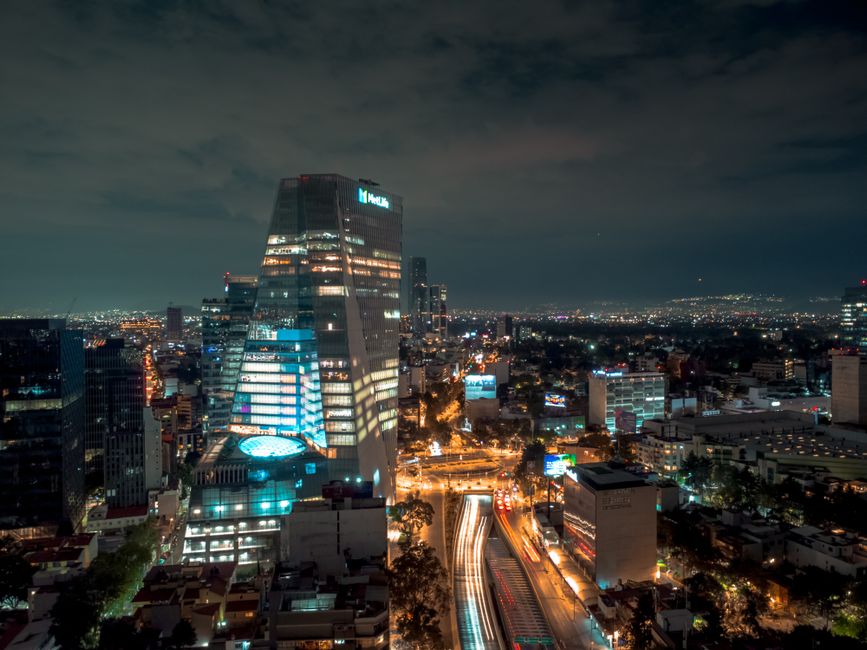
Mexico City and Monterrey are both in Level 2 advisory areas — “Exercise Increased Caution” due to terrorism, crime, and kidnapping. That’s a lower warning level than Guadalajara, but do not mistake it for reassurance. Mexico City will host five World Cup matches including the tournament’s opening match on June 11. Monterrey will host four matches at Estadio BBVA. Together, those 13 matches across three cities are expected to draw hundreds of thousands of American fans.
Mexico City’s risk profile in Level 2 is primarily urban in nature — pickpocketing, scams, robberies in crowded areas, and incidents in nightlife zones and transit hubs. The Roma Norte and Condesa neighborhoods, popular with tourists and expats, are generally well-patrolled and relatively low-risk for daytime and early evening activity. The challenges multiply after midnight, in poorly lit streets, and in areas further from established tourist corridors. At major event capacity — hundreds of thousands of fans streaming out of Estadio Azteca after a match — the density of people creates exactly the kind of chaos that opportunistic crime thrives in.
Monterrey’s specific warning is about the drive getting there. The State Department explicitly warns travelers using highways 85/85D, 54, and 40/40D — the main routes from the US border to Monterrey — to exercise extreme caution and avoid nighttime travel, as armed robberies and carjackings have occurred along those routes even during daylight hours. In plain terms: if you’re planning a road trip from Texas to Monterrey for a match, the State Department is telling you that route has real danger. Flying into Monterrey’s General Mariano Escobedo International Airport is a fundamentally different risk profile than driving in from Laredo or McAllen.
Mexico is responding with its largest security operation in modern tournament history. The government’s Plan Kukulkán deploys nearly 100,000 police, military, National Guard, and private security personnel across all three host cities, covering stadiums, airports, hotels, fan zones, and surrounding areas. Anti-drone systems, detection dogs, and military vehicles are part of the operation. Security will be visible. That is meaningful, but it is not a guarantee.
The E-Cigarette Trap That Could Ruin Your Entire Trip

This is the part of the travel advisory that most Americans are skimming over — and it could land them in a Mexican jail. Mexico has banned e-cigarettes and vaping liquids under federal law. This is not a local ordinance or a gray-area rule. Bringing a vape pen, a pod device, e-liquid, or any vaping equipment into Mexico is a criminal offense, and the penalties are serious.
The US Embassy guidance states plainly: “Check your bags and clothing pockets before travel if you regularly use items prohibited in Mexico. Bringing in banned items can result in serious penalties even if accidental.” Multiple news outlets covering the World Cup guidance have highlighted this specifically because of how easy it is to forget. Millions of Americans vape daily. Those devices live in coat pockets, backpacks, purses, laptop bags. If you throw your carry-on together quickly for a three-day match trip and forget your vape pen is in the side pocket, you have committed a federal crime in Mexico at the point of crossing the border.
The ban covers electronic cigarettes, vape pens, pods, juices, and related accessories. Mexico’s Health Ministry classified these as prohibited products in 2020, and the ban has been actively enforced since. Customs inspections at Mexican airports do scan for these items. Travelers have been detained and faced charges. While penalties can vary depending on the quantity and circumstances, “serious consequences” — as the Embassy puts it — can include fines, confiscation, and detention.
If you’re a vaper, leave every device at home. Not in a checked bag. Not in a zippered pocket you’ll clean out later. Not “somewhere in the car.” Leave them at home before you cross into Mexico. The World Cup experience is absolutely not worth a Mexican criminal charge over a Juul pod you forgot to unpack.
What Cartel Violence Actually Looks Like Near Tourist Areas
There is a persistent and dangerous myth that cartel violence only targets rival cartel members and therefore tourists are essentially invisible to it. The 2025 and 2026 State Department advisories make clear this is no longer reliably true — if it ever was. The specific language about Guadalajara — “shootings between these groups have injured or killed innocent bystanders” — acknowledges that cartel activity is producing collateral casualties in areas where tourists move.
What cartel violence near tourist areas typically looks like is not a dramatic Hollywood ambush. It tends to be fast, chaotic, and concentrated. A dispute between factions in a neighborhood, a targeted hit that turns into a gun battle, or territorial violence that spills from a back street into a restaurant area. The 2023 killing of two American tourists in Matamoros — who were caught in cartel crossfire — was a high-profile reminder that proximity to violence doesn’t require seeking it out. Bystander injuries and deaths happen because violence doesn’t respect tourist corridors.
In Guadalajara specifically, the CJNG has historically been willing to use extreme, public violence as a show of force in ways that other cartels have avoided. Roadblocks, burning vehicles, and open firefights in urban areas have occurred in Jalisco at higher rates than in Mexico City or Nuevo León. The heightened security presence during the World Cup will almost certainly suppress this during the tournament itself — no cartel benefits from international attention focused on their violence during a global event. But the underlying conditions that created the Level 3 designation don’t disappear because FIFA is in town. They are managed, suppressed, and managed again.
Practical advice from security analysts covering the 2026 tournament is consistent: stay in established hotel zones and fan areas, use app-based rideshares (Uber and Cabify, not street taxis), don’t make late-night moves between neighborhoods, and know your embassy’s emergency contact before you land.
Travel Insurance and Your World Cup Tickets: What You Need to Know

Here is a question thousands of Americans with World Cup tickets haven’t asked yet: does your travel insurance actually cover you in a Level 2 or Level 3 advisory zone? The answer depends entirely on your policy’s fine print, and it matters more than you think.
Many standard travel insurance policies contain exclusions for travel to areas under US State Department Level 3 or Level 4 advisories. If the advisory was in place before you purchased your insurance and before the event requiring a claim occurred, your insurer may deny a medical claim, an evacuation claim, or a trip interruption claim on the basis that you knowingly traveled to a high-risk area. Jalisco’s Level 3 advisory predates the tournament. If you bought your policy after the advisory was public and something goes wrong in Guadalajara, check the fine print before you assume you’re covered.
For Mexico City and Monterrey (Level 2), most standard policies should remain valid, but Cancel for Any Reason coverage is worth having for any trip to Mexico right now given how fluid the situation is. The State Department updates advisories at any time — a significant cartel event in Jalisco in the days before your flight could trigger an advisory upgrade that affects your plans, and only CFAR coverage guarantees you a refund in that scenario.
As for your World Cup tickets: FIFA’s official Exchange Marketplace is the only authorized secondary market for selling or transferring tickets if you need out. Scalpers and third-party resellers exist, but FIFA’s terms and conditions allow ticket deactivation of any ticket transferred outside the official system. Buy through FIFA only. Sell through FIFA only. The secondary market risk is significant enough that multiple consumer advisories have already flagged this.
The Practical Safety Playbook for Each City
Let’s get specific about what the US Embassy actually wants you to do — not just the scary parts, but the operational guidance.
For Guadalajara: stay in the metropolitan core, specifically neighborhoods like Providencia, Chapultepec, and the area immediately surrounding Estadio Akron in Zapopan. Use Uber or Cabify exclusively — not street taxis, not rideshares arranged through hotel staff you don’t know. Avoid traveling after dark outside the central fan and hotel zones. Do not drive to Guadalajara from the US. Fly into Miguel Hidalgo y Costilla International Airport. Know the number for the US Consulate in Guadalajara before you land: +52 (33) 3268-2100.
For Mexico City: the risk profile is more urban and manageable. Roma Norte and Polanco are the safest neighborhoods for tourists. Estadio Azteca is in Tlalpan — use the Metro (Line 2 blue toward Tasqueña, transfer to Tren Ligero light rail) or official shuttles from designated zones. Avoid Metro late at night with valuables visible. The US Embassy in Mexico City is at Paseo de la Reforma 305 in Cuauhtémoc borough. Emergency number in Mexico: 911.
For Monterrey: fly in. Do not drive from the US border. Stick to the San Pedro Garza García district (San Pedro), which is Monterrey’s safest and most affluent area, or the Tec district near the university. Estadio BBVA is in Guadalupe — use official tournament transportation. Monterrey’s US Consulate is at Avenida Alfonso Reyes 150, Colonia Valle Oriente: +52 (81) 8047-3100.
Sign up for the State Department’s free Smart Traveler Enrollment Program (STEP) at step.state.gov before departure. It takes ten minutes and means the Embassy can reach you directly if conditions deteriorate rapidly in any of these cities. It is the single most useful thing an American going to the 2026 World Cup in Mexico can do beyond buying good travel insurance.