Sitka, Alaska Has 8,300 People, No Road Out of Town, and a Cost of Living 37% Above the National Average
We may earn money or products from the companies mentioned in this post. This means if you click on the link and purchase the item, I will receive a small commission at no extra cost to you ... you're just helping re-supply our family's travel fund.
Sitka sits on Baranof Island in Alaska’s Southeast panhandle, and there is no road connecting it to anywhere else. The only ways in or out are by air, primarily through Alaska Airlines, or by the Alaska Marine Highway ferry system, a reality that shapes literally everything about daily life for the roughly 8,300 people who live there, according to recent population data. Groceries, building materials, cars, furniture — anything not produced locally has to be flown or shipped in, and the cost of that logistics chain shows up directly on price tags.
What Isolation Actually Costs
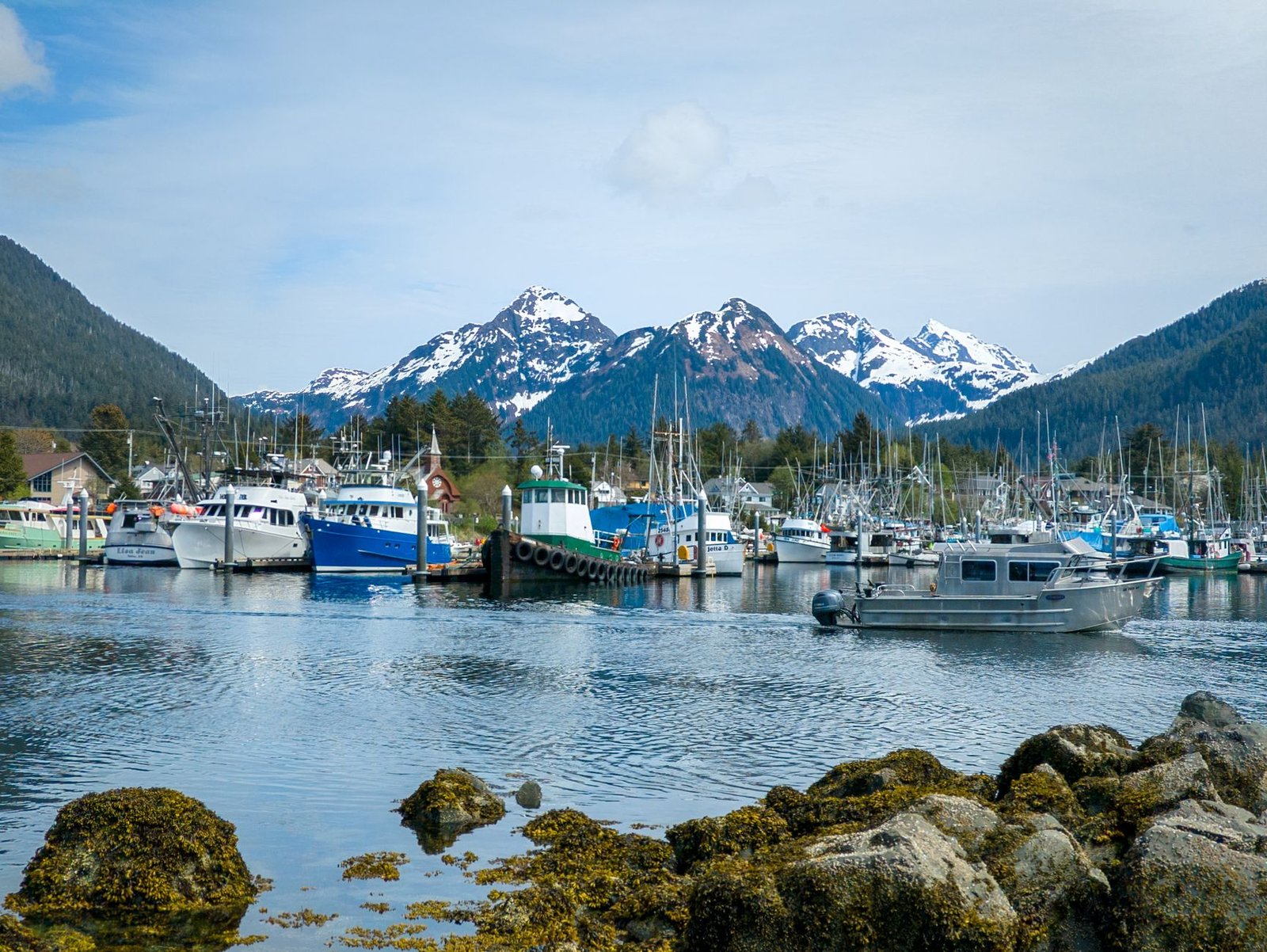
Sitka’s overall cost of living runs about 37.5% higher than the national average, according to figures from the Sitka Tribe of Alaska. Grocery prices reflect the shipping reality most directly: a gallon of milk or a head of lettuce routinely costs noticeably more than in Seattle, the regional hub most Sitka freight passes through before making the final trip north. Housing costs are similarly elevated relative to what the local wage base would predict, constrained by limited buildable land on an island where much of the terrain is mountainous, forested, or protected.
The Economy That Keeps People There Anyway
Sitka’s economy runs on commercial fishing, government employment, and a growing tourism sector tied to its role as a cruise ship port of call and its history as the former capital of Russian Alaska. The town’s fishing fleet targets salmon, halibut, and herring, and the seasonal, weather-dependent nature of that work shapes the local economy’s rhythm as much as any single employer does. Sitka is also home to Sitka Sound Science Center and a Coast Guard air station, both of which provide a base of stable government-adjacent employment that most similarly sized fishing towns in the region lack.
The Sitka Tribe of Alaska, with an enrollment of more than 4,000 tribal citizens, many of whom still live locally, plays a substantial role in the town’s civic and economic life, reflecting Sitka’s long history as a Tlingit settlement before Russian and later American colonization.
The Fifteen Miles That Are the Whole Road System
- Sitka’s entire road network spans roughly fifteen miles, all contained within the island
- Access is exclusively by air (Alaska Airlines and smaller regional carriers) or the Alaska Marine Highway ferry
- Sitka sits within the Tongass National Forest, the largest temperate rainforest in the world
- Cost of living runs approximately 37.5% above the national average
Why People Stay Despite the Cost
Residents who talk publicly about life in Sitka tend to describe a trade-off rather than a simple hardship: yes, everything costs more and getting anywhere requires either a plane ticket or a multi-day ferry ride, but the town offers a level of natural access — brown bear viewing, world-class fishing, glaciers and fjords within a short boat ride — that would be effectively unattainable to an average income in almost any road-connected American town. Sitka also has an unusually strong arts and cultural institution for its size, including the Sitka Fine Arts Camp and the Alaska Day Festival, which locals point to as evidence the isolation hasn’t produced the kind of cultural thinness outsiders might expect. The tension the town faces isn’t whether people want to live there — it’s whether the wage base, heavily dependent on seasonal fishing and modest government salaries, can keep pace with costs driven by a supply chain that runs entirely through boats and planes with no road alternative to fall back on.
The Ferry and Flight Reality
Sitka’s airport receives regular Alaska Airlines jet service, typically several flights daily connecting through Juneau or directly to Seattle, which functions as the primary practical link to the rest of the country for anyone who can’t spare the days required for a ferry trip. The Alaska Marine Highway ferry system, a state-run service that connects dozens of coastal Southeast Alaska communities, offers a slower and more scenic but considerably more time-consuming alternative, with a single one-way trip to a hub like Juneau or Bellingham, Washington potentially taking a full day or more depending on the route and stops. Both options are also weather-dependent in a region known for frequent rain and fog, meaning travel plans in and out of Sitka carry a built-in unpredictability that residents of road-connected towns rarely have to plan around.
A Town That Doesn’t Market Itself as a Hardship Post
Despite the genuine logistical and financial challenges, Sitka does not present itself, and its residents generally do not describe it, as a place people endure rather than choose. Its setting on Baranof Island, framed by the peaks of the Tongass National Forest and the open water of Sitka Sound, is considered one of the most dramatic in all of Southeast Alaska, and the town’s relatively rich set of cultural institutions for its size — a fine arts camp, a historical Russian Orthodox cathedral, a national historical park focused on Tlingit and Russian history — gives it a cultural density that surprises visitors expecting a bare-bones fishing outpost. The math of living there is genuinely difficult, but it’s a difficulty residents describe choosing deliberately, in exchange for a version of Alaska that a road-connected town simply cannot offer.
Sitka’s math won’t work for everyone, and that’s precisely the point residents make when asked about it: the town isn’t trying to be an affordable, convenient option for the masses. It’s trying to remain a specific, hard-won way of life for the people who’ve decided the trade-off is worth making.
Sitka’s city government has taken some concrete steps to address the affordability squeeze, including support for a community land trust aimed at building housing outside the reach of speculative buyers, though the scale of any single intervention remains small relative to the town’s overall housing shortfall. Employers tied to the fishing and tourism seasons have also begun experimenting with employer-assisted housing arrangements, a sign that the same private-sector intervention seen in other expensive small towns has started showing up even in a market as unusual and isolated as Sitka’s.