Buckhead Gets All the Attention. Old Fourth Ward, West End, and Kirkwood Are Where Atlanta Actually Changed
We may earn money or products from the companies mentioned in this post. This means if you click on the link and purchase the item, I will receive a small commission at no extra cost to you ... you're just helping re-supply our family's travel fund.
Buckhead dominates outsiders’ image of wealthy Atlanta, with its glass towers and luxury malls, but the neighborhoods that best explain what happened to Atlanta over the past fifteen years sit closer to downtown, in areas most tourists never see: Old Fourth Ward, West End, and Kirkwood. Each tells a different version of the same story — historically Black neighborhoods, some tied directly to the civil rights movement, that have undergone rapid, uneven transformation as Atlanta’s population and investment surged.
Old Fourth Ward: The Beltline Changed Everything
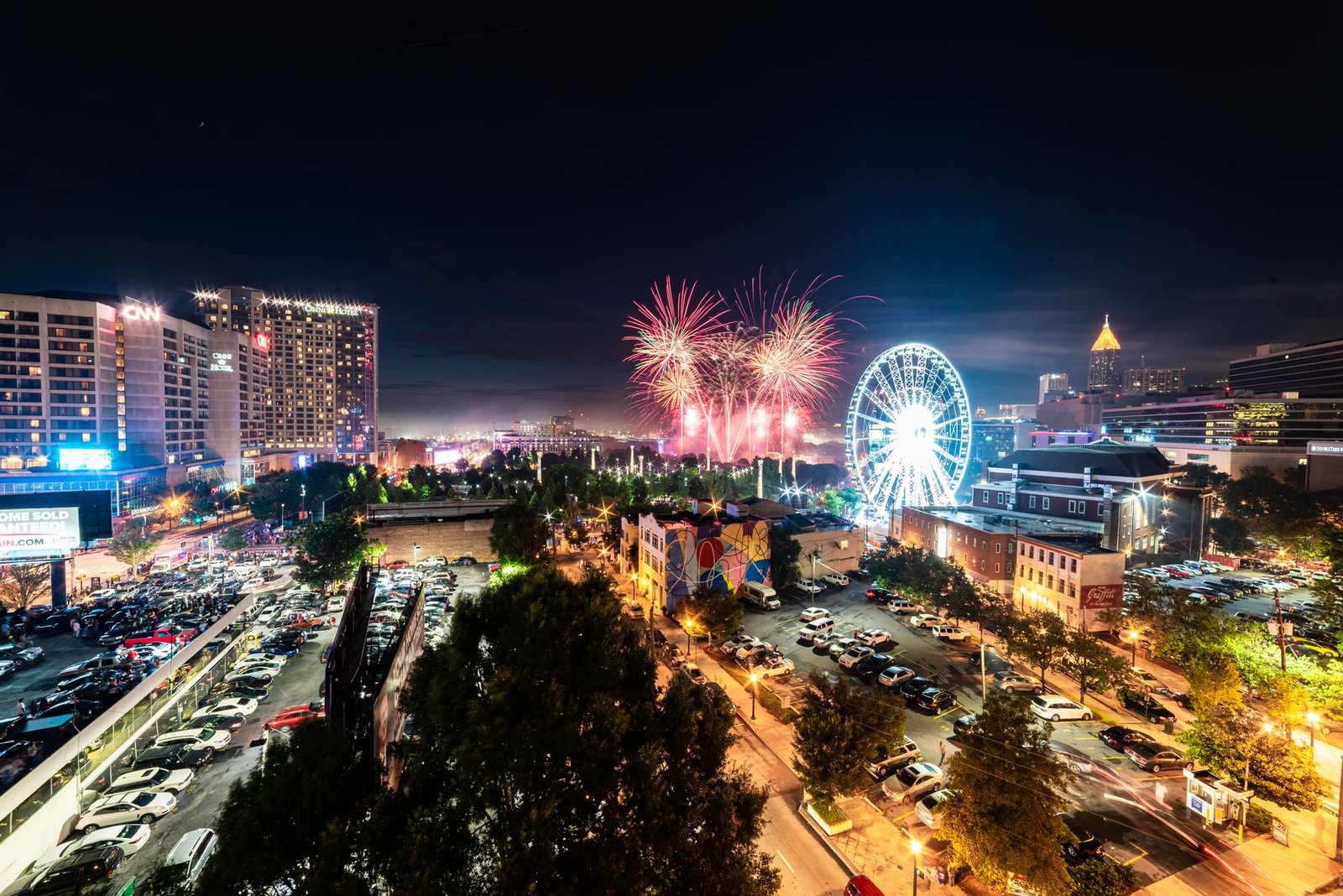
Old Fourth Ward is the birthplace and childhood neighborhood of Martin Luther King Jr., and it remained a historically Black, largely working-class neighborhood well into the 2000s. The Atlanta Beltline, a former rail corridor converted into a multi-use trail connecting dozens of neighborhoods, runs directly through Old Fourth Ward, and its opening in the early 2010s triggered one of the most dramatic real estate transformations in the city. Median home prices in the neighborhood now run in the $400,000s to $800,000s depending on the specific pocket and property type, according to local real estate data, a level that would have seemed implausible to residents there twenty years ago.
The Ponce City Market development, a converted Sears distribution warehouse turned upscale food hall and office space, anchors the neighborhood’s new identity and draws visitors from across the city, most of whom have no idea they’re standing in a neighborhood with deep civil rights history just blocks away at the King Center and Ebenezer Baptist Church.
West End: Atlanta’s HBCU Anchor Neighborhood
West End sits adjacent to the Atlanta University Center, home to Morehouse College, Spelman College, and Clark Atlanta University, and the neighborhood has historically served as a center of Black intellectual and cultural life in Atlanta going back generations. It has changed more slowly than Old Fourth Ward, retaining a stronger working and middle-class Black population, though the extension of the Beltline’s westside trail and targeted redevelopment investment have begun accelerating change there too. Residents and community organizers in West End have been notably more vocal about resisting displacement than in some other rapidly gentrifying Atlanta neighborhoods, pushing for affordable housing commitments tied to new development.
Kirkwood: The Bungalow Boom
Kirkwood, east of downtown near Decatur, was a historically Black, moderate-income neighborhood of early-20th-century bungalows that experienced one of the sharpest home price increases in the entire Atlanta metro over the past decade, driven substantially by its proximity to Oakhurst and downtown Decatur’s schools and walkable commercial strips. Young families, many white and higher-income than the neighborhood’s historical demographic, moved in steadily through the 2010s, and Kirkwood is now frequently cited in Atlanta gentrification research as one of the clearest examples of rapid demographic and economic turnover within a fifteen-year window.
- Old Fourth Ward: MLK’s birthplace neighborhood, transformed by the Beltline and Ponce City Market
- West End: anchored by the Atlanta University Center, changing more slowly with more organized resistance to displacement
- Kirkwood: rapid bungalow-era home price growth driven by proximity to Decatur schools
The Pattern Underneath All Three
What connects these three neighborhoods is not just gentrification in the generic sense, but the specific mechanism of Atlanta’s growth: infrastructure investment, particularly the Beltline, has consistently preceded and predicted where prices rise fastest, and that infrastructure has disproportionately run through historically Black neighborhoods that had been previously overlooked for public investment. Longtime residents in all three areas describe a similar arc — decades of underinvestment followed by a rapid pivot to intense investment once a trail, transit line, or major development arrived, with rising property taxes and rents often outpacing the ability of existing residents, especially longtime homeowners on fixed incomes, to keep up. Atlanta’s civic leadership has acknowledged the pattern publicly and has attached some affordable housing requirements to newer Beltline-adjacent development, but critics argue those measures have consistently lagged the pace of actual displacement happening on the ground.
How Atlanta’s City Government Has Responded
Atlanta’s government has attempted several policy responses to displacement pressure in Beltline-adjacent neighborhoods, including inclusionary zoning requirements for new development near the trail and a dedicated affordable housing trust fund tied specifically to Beltline tax revenue. Housing advocates have generally credited these measures as directionally correct but insufficient in scale relative to the pace of price increases, particularly in Old Fourth Ward, where market pressure has consistently outrun the pipeline of new subsidized units actually being delivered. The city’s own planning documents acknowledge the gap, citing thousands of affordable units promised versus a much smaller number actually completed and occupied years into the Beltline’s build-out.
What Visitors Actually Encounter
A visitor walking the Beltline through Old Fourth Ward today encounters a genuinely pleasant mix of new restaurants, breweries, and public art alongside older churches and homes that predate the trail by decades, without any obvious signage explaining the tension underneath that pleasant surface. West End offers a different kind of encounter, centered more around the Atlanta University Center’s campuses and a still-strong sense of community institutions, while Kirkwood presents almost entirely as a renovated, family-friendly residential neighborhood with little visible trace of its more modest, working-class recent past. Understanding the difference between these three neighborhoods, and what’s actually happened within each of them, offers a far more accurate picture of contemporary Atlanta than a trip that never leaves Buckhead or the tourist-oriented stretch of downtown near the aquarium and World of Coca-Cola.
Atlanta’s neighborhood story, ultimately, is a story about where infrastructure investment lands and who was already living there when it arrived — a pattern repeating across American cities, with Atlanta simply offering an unusually well-documented, still-unfolding version of it.
Atlanta’s population growth shows no sign of slowing, with the metro area consistently ranking among the fastest-growing in the Southeast, which means the pressure on these three neighborhoods and others like them is more likely to intensify than ease over the next decade. Community land trusts and nonprofit housing developers have become increasingly active in Old Fourth Ward and West End specifically, attempting to preserve pockets of permanently affordable housing within neighborhoods where market-rate prices have otherwise climbed well beyond what many longtime families could ever afford to buy back into.