People Who Travel for Two Weeks With Only a Carry-On Are Not Showing Off. They’re Avoiding a Specific Kind of Math.
We may earn money or products from the companies mentioned in this post. This means if you click on the link and purchase the item, I will receive a small commission at no extra cost to you ... you're just helping re-supply our family's travel fund.
Checked bag fees on U.S. domestic and many international carriers now routinely run $35 to $75 per bag each way, and that’s before accounting for the real cost of checked luggage: lost bags, delayed arrivals, and the roughly 20 to 30 minutes added on both ends of a trip waiting at baggage claim. Multiply a $60 round-trip bag fee across a two-week international itinerary with two or three flight segments, and the math starts to look less like a minor inconvenience and more like a genuine several-hundred-dollar line item that carry-on-only travelers simply avoid paying, on top of avoiding the time and risk costs.
What actually fits in a carry-on for two weeks
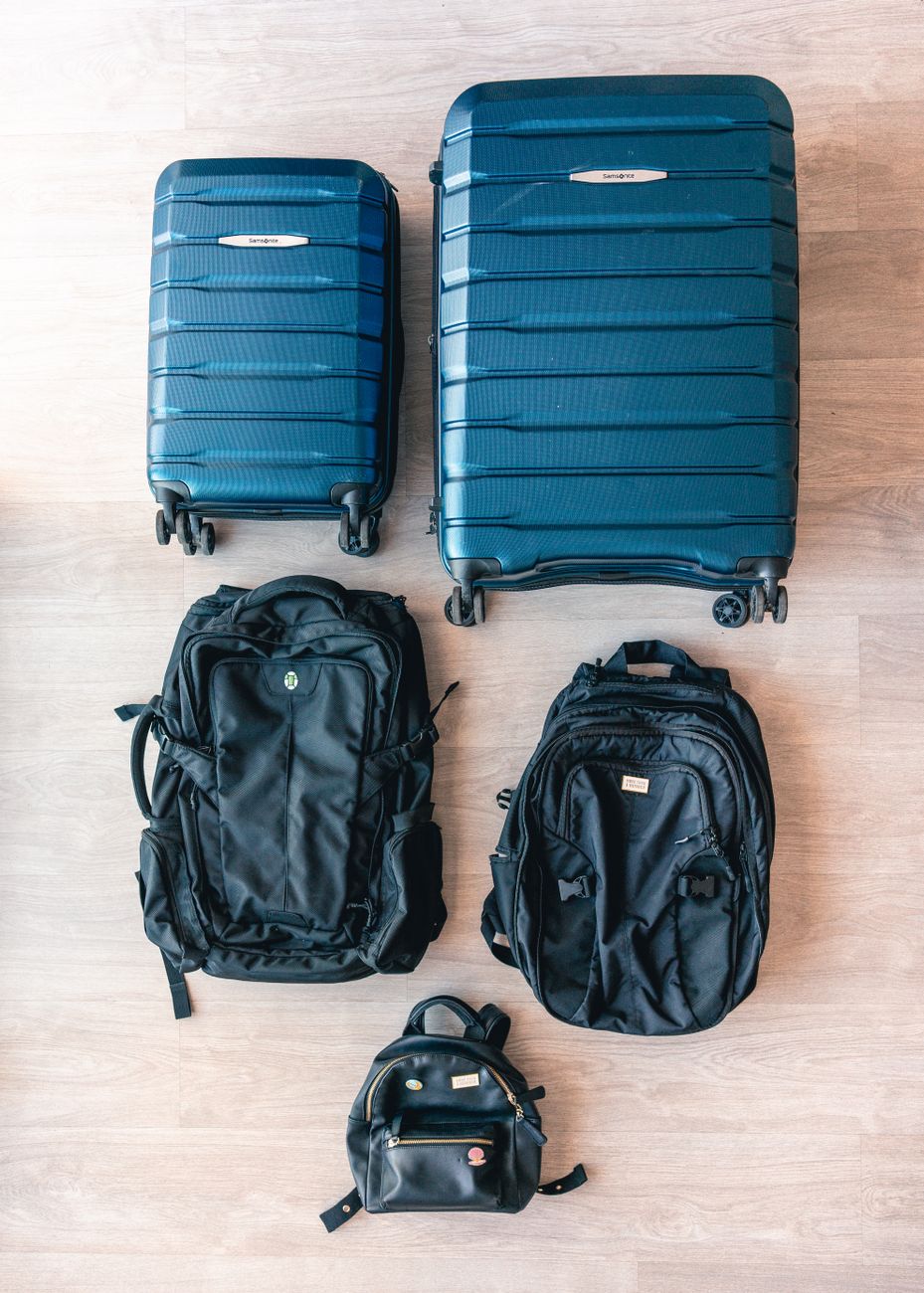
The core strategy that makes two weeks in a carry-on possible isn’t a packing trick — it’s laundry. Nearly every serious carry-on-only traveler plans on doing at least one load of laundry mid-trip, either at a hotel, a laundromat, or via a hand-wash-in-the-sink routine with quick-dry synthetic fabrics designed specifically for travel. That single decision cuts the required wardrobe roughly in half: instead of packing 14 days of clothes, a traveler packs 5 to 7 days and repeats. Merino wool and technical synthetic fabrics have become standard in this approach specifically because they resist odor buildup far longer than cotton, meaning a single shirt can realistically be worn two or three times between washes without becoming a problem.
Airlines’ actual carry-on size limits vary more than most travelers realize — U.S. domestic carriers generally allow roughly 22 x 14 x 9 inches, but many international and budget carriers enforce smaller limits, and some low-cost European carriers like Ryanair charge fees for anything beyond a small “personal item,” effectively eliminating the standard rolling carry-on as a free option entirely. Anyone planning a multi-leg international trip with different carriers needs to check each airline’s specific policy rather than assuming the most generous limit applies throughout.
Business travelers were early adopters of the carry-on-only approach for reasons entirely separate from cost — a missed connection or delayed checked bag can genuinely derail a work trip in a way that a lost weekend of vacation clothing usually can’t, since a business traveler often needs specific documents, a laptop, and presentable clothing available immediately upon arrival regardless of what happens to any checked luggage. That professional-travel origin is part of why the practice carries a certain competence signal independent of its more recent adoption by budget-conscious leisure travelers and social media packing-hack culture, since it was originally a risk-management decision made by people whose income depended on trips going according to plan.
Where the real savings and real friction both show up
Beyond the direct bag fees, carry-on-only travel eliminates a category of trip stress that’s hard to quantify but very real: the anxiety of watching a baggage carousel not produce your bag, the logistics of filing a lost-luggage claim in a country where you don’t speak the language, and the practical problem of being stuck without clothes or toiletries for a day or more while an airline tracks down a missing suitcase. For solo travelers or anyone doing multiple city stops in one trip, the mobility advantage compounds — no waiting for bag claim means faster transitions between flights, trains, and connections, which matters disproportionately on tight layovers.
The tradeoffs that make it genuinely harder
- Formal events or business trips requiring dressier clothing are harder to pack for without a second bag
- Cold-weather trips genuinely strain carry-on capacity since bulky layers take up disproportionate space
- Souvenir shopping becomes a real constraint, since there’s no spare capacity for anything bought mid-trip
- Liquids restrictions (3-1-1 rule on U.S. flights) mean toiletries require more planning or purchasing at the destination
Why it’s become a status signal despite the practical roots
Packing cubes and compression bags have become the standard tools that make the two-week carry-on approach actually workable, compressing soft goods enough to roughly double effective luggage capacity compared to loose packing, and organizing a bag well enough that finding a specific item doesn’t require unpacking half the suitcase at a hostel or hotel room. Travel gear companies have built entire product lines around this specific packing philosophy over the past decade, a market response to a travel style that started as a frugal workaround and has since become mainstream enough to support dedicated retail categories in outdoor and luggage stores nationwide.
Carry-on-only travel has picked up a secondary identity as a marker of travel sophistication, amplified heavily by travel influencers who film “what fits in my carry-on for three weeks” content that frames minimalist packing as a skill worth performing rather than simply a cost-saving habit. That performative layer is real, but it shouldn’t obscure the underlying, genuinely practical math: for most travelers on most trips, the combination of avoided bag fees, avoided lost-luggage risk, and faster airport transitions adds up to a real, calculable benefit that has nothing to do with impressing anyone and everything to do with a two-week trip simply running more smoothly.
Airlines themselves have steadily tightened carry-on enforcement in recent years as overhead bin space has become a genuine operational bottleneck, with gate agents on full flights increasingly forced to check bags at the gate for free specifically because too many passengers assumed carry-on space would be available. That enforcement shift has, somewhat ironically, made disciplined, minimalist carry-on packing more valuable than ever, since a bag that reliably fits under the seat in front rather than in the overhead bin all but guarantees a traveler avoids the boarding-group lottery that determines who gets forced to check a bag at the last minute.