People Who Travel Alone for Long Stretches Come Back Different. Not in the Way Instagram Captions Suggest.
We may earn money or products from the companies mentioned in this post. This means if you click on the link and purchase the item, I will receive a small commission at no extra cost to you ... you're just helping re-supply our family's travel fund.
Solo travel gets marketed almost entirely around confidence and self-discovery, the kind of language that shows up in caption form under a sunset photo taken alone on a beach somewhere. The actual psychological research on extended solo travel points to something more specific and less glamorous: sustained time alone in unfamiliar environments forces a kind of decision-making and self-reliance that most people rarely practice at home, where routines, relationships, and familiar environments handle a huge share of daily cognitive load without anyone noticing.
What actually happens cognitively when you travel alone for weeks
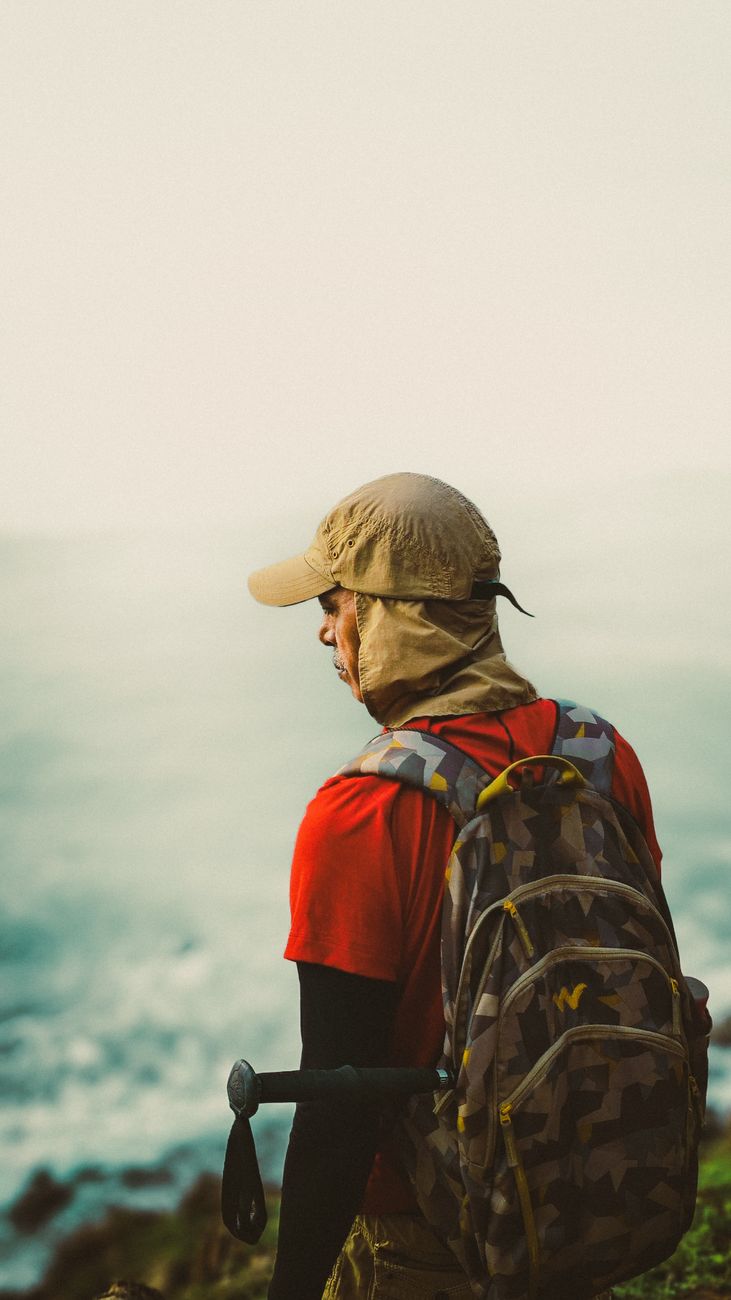
Every decision on a solo trip — where to eat, which train to take, whether a situation feels safe, how to handle a language barrier — falls entirely on one person, with no default deferral to a travel companion’s opinion or a partner’s judgment. Psychologists who study travel and identity describe this as an accelerated version of normal adult decision-making practice, similar to what happens when someone moves to a new city alone for the first time, except compressed and repeated daily rather than settling into a routine after the first few weeks. That repetition is what produces the commonly reported outcome: people describe feeling measurably more comfortable with ambiguity and unplanned change after extended solo travel, not because the trip was inherently transformative but because they practiced tolerating discomfort and uncertainty at a much higher frequency than normal life requires.
There’s also a well-documented social effect that runs opposite to what people expect going in: solo travelers report talking to strangers far more than they do at home or when traveling with companions, precisely because there’s no built-in conversation partner filling that social need. Hostels, communal dining tables, and shared transportation become the default social structure, and many solo travelers describe this as the actual highlight of long trips — not the landmarks, but the specific, often brief conversations with other travelers or locals that wouldn’t have happened with a travel partner already providing social contact.
Digital nomad culture has complicated what “solo travel” even means over the past several years, since a growing share of people traveling alone for extended stretches are actually working full-time jobs remotely rather than existing purely in vacation mode, which changes the psychological experience considerably. A remote worker traveling solo through multiple countries while maintaining regular work hours experiences far more day-to-day structure and far less of the constant novelty-driven decision fatigue than a backpacker moving between cities every few days, even though both would describe themselves using the same “solo travel” label in a social media caption.
The parts that don’t make it into the highlight reel
Extended solo travel also produces real loneliness, particularly in the second or third week of a longer trip, once the initial novelty wears off and the accumulated fatigue of constant decision-making and self-reliance starts to register. Solo travelers describe a specific low point that tends to arrive around the ten-day to two-week mark on trips longer than that — a point where the absence of a familiar person to process the day with becomes genuinely difficult rather than liberating, before it often resolves into a more sustainable rhythm on longer trips. Safety calculations also fall entirely on one person without a second set of eyes, which is a real, unglamorous cognitive burden that disproportionately affects women traveling solo, who report constantly running background risk assessments — which street to take, which accommodation reviews to trust, when to share a location with someone back home — that male solo travelers report doing far less of.
What tends to actually change, according to people who’ve done it repeatedly
- Increased comfort making decisions quickly without seeking outside validation first
- A lower baseline anxiety around unfamiliar social situations after repeated practice
- Genuine skill at reading unfamiliar environments for safety cues quickly
- A recalibrated sense of how much company they actually need day to day, which sometimes changes relationships back home
The honest summary
Age and life stage change how solo travel actually lands psychologically. A 24-year-old backpacking through Southeast Asia for two months and a 55-year-old traveling solo through Europe after a divorce or retirement are having recognizably different experiences of the same underlying mechanism, since the older traveler is often actively unlearning decades of routine and shared decision-making rather than building independence for the first time. Researchers who study travel motivation increasingly treat these as distinct categories rather than a single “solo travel” phenomenon, since the psychological starting point, and therefore the actual change produced by the trip, differs enormously based on what kind of company or routine a person is stepping away from in the first place.
Solo travel changes people less through scenery and more through repetition — the accumulated practice of making decisions alone, tolerating discomfort without an outlet to immediately vent to, and initiating conversations with strangers because there’s no other social option available. That’s a genuinely different mechanism than the self-discovery-through-sunset-photography version that gets marketed, and it’s also a mechanism that applies whether the solo trip happens in Southeast Asia or a genuinely unfamiliar part of one’s own country — the distance traveled matters far less than the sustained solitude and unfamiliarity that force the adjustment in the first place.
Return adjustment gets far less attention than the trip itself, but many repeat solo travelers describe a genuine reverse culture shock upon coming home, needing to relearn the specific rhythms of shared decision-making with roommates, partners, or family after weeks or months of answering only to themselves. That readjustment period, sometimes lasting several weeks, is rarely discussed in travel content focused on the trip itself, but frequent solo travelers increasingly treat it as a real, expected phase of the overall experience rather than a surprising afterthought.