Titusville Sits Across From Cape Canaveral—Rocket Launches Helped Build Its Economy, but They Also Complicated It
We may earn money or products from the companies mentioned in this post. This means if you click on the link and purchase the item, I will receive a small commission at no extra cost to you ... you're just helping re-supply our family's travel fund.
Titusville, Florida sits on the western shore of the Indian River directly across from Kennedy Space Center and Cape Canaveral Space Force Station, close enough that residents can watch rocket launches from their own backyards, and the city’s entire economic identity has been shaped by seven decades of proximity to America’s space program, through boom periods, painful contractions, and a recent commercial spaceflight resurgence.
A City Built and Nearly Broken by One Employer
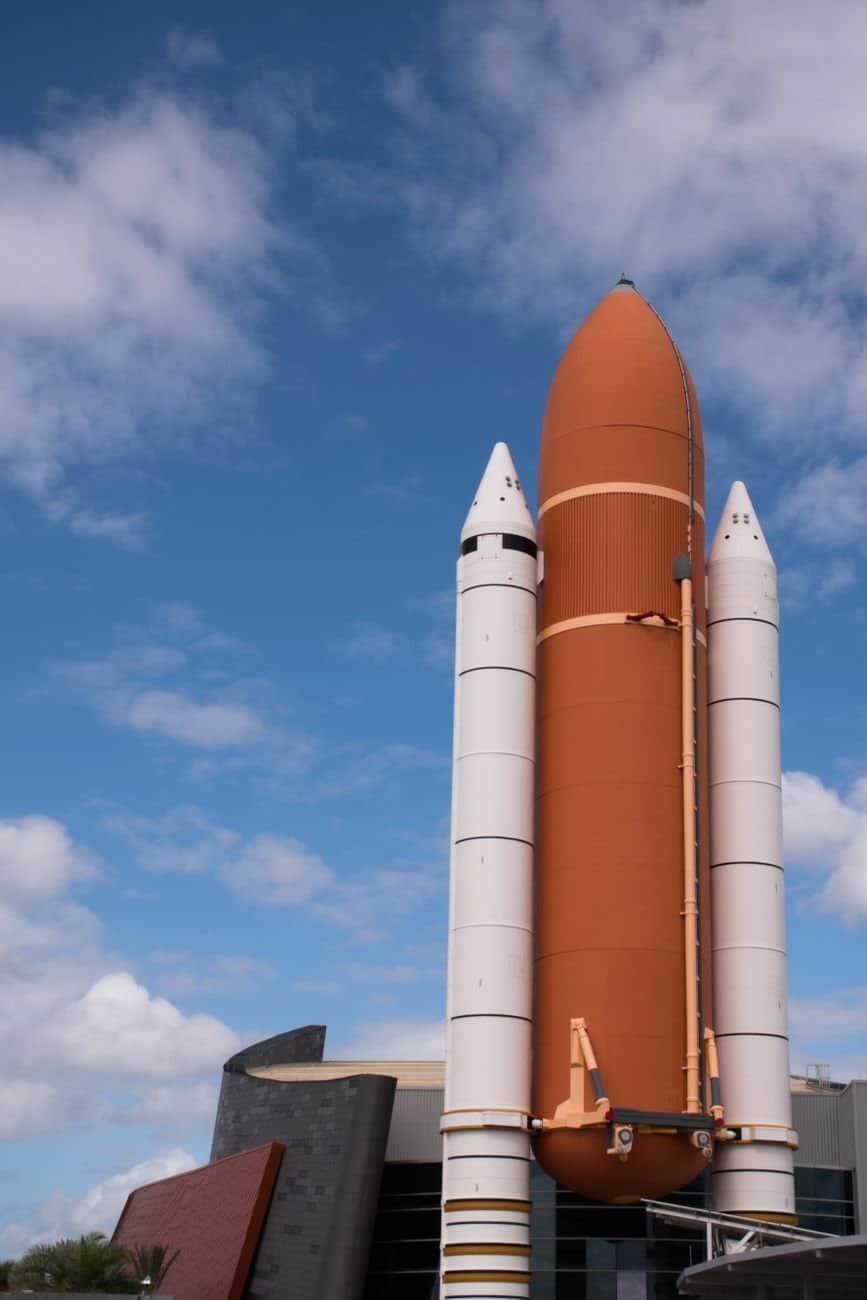
Titusville’s population and economy expanded dramatically during the Apollo program in the 1960s, as NASA and its contractors hired tens of thousands of workers for the moon program, and then contracted sharply when Apollo ended and later again when the Space Shuttle program was retired in 2011, an event that eliminated thousands of jobs across the Space Coast region almost overnight. Brevard County’s unemployment rate spiked into double digits following the shuttle program’s end, and Titusville, more dependent on space-sector employment than neighboring cities like Melbourne with more diversified tech and defense industries, felt the contraction especially hard.
Home values in Titusville dropped substantially during that post-shuttle period, and the city’s downtown, already struggling before the contraction, saw further vacancy as the local economy absorbed the shock of losing its primary employer’s demand for goods and services.
The Commercial Spaceflight Recovery
- SpaceX’s growing launch cadence from Cape Canaveral and Kennedy Space Center has driven a substantial employment recovery across the Space Coast since the mid-2010s
- Blue Origin has built a significant manufacturing and launch presence in the area as well, adding another major private-sector space employer
- Titusville’s median home price has risen substantially from its post-shuttle lows, reflecting renewed regional economic confidence tied to the commercial space boom
- Rocket launches have themselves become a tourism draw, with viewing areas along the Indian River in Titusville marketed specifically to visitors coming to watch launches
The shift from a single government-program-dependent space economy to a more diversified commercial spaceflight sector, with SpaceX, Blue Origin, and other private companies now sharing the launch cadence NASA alone once provided, has given Titusville’s economy a more resilient foundation than it had during the shuttle-era boom-and-bust cycle, though it remains fundamentally tied to the launch industry’s continued growth. Brevard County’s broader Space Coast branding effort, developed specifically in the years following the shuttle program’s retirement, has tried to diversify the region’s economic identity beyond aerospace alone, promoting beach tourism, the Kennedy Space Center Visitor Complex’s own standalone attraction revenue, and a growing advanced manufacturing sector that supplies components to the same commercial space companies now driving the launch cadence recovery. Titusville specifically has benefited less from this diversification than neighboring Cocoa Beach or Melbourne, since its downtown and housing stock remain more directly tied to the historic space-worker demographic than to newer tourism or tech-sector growth. Local schools in Titusville and across Brevard County saw enrollment volatility tied directly to the shuttle program’s workforce swings, a pattern educators still reference when discussing how deeply the space program’s employment cycles have historically shaped even institutions, like public schools, that aren’t directly part of the aerospace industry itself. That sensitivity to a single sector’s employment cycles remains one of the clearer lingering vulnerabilities in Titusville’s economy even amid the current commercial spaceflight boom. The Kennedy Space Center Visitor Complex itself generates substantial standalone tourism revenue independent of actual launch activity, drawing visitors year-round to view historic Apollo and shuttle-era hardware, a museum-style attraction that gives the broader Space Coast region at least some tourism revenue insulated from the specific timing and frequency of active launches. Titusville’s city government has specifically pursued waterfront redevelopment along its Indian River shoreline in recent years, hoping to capitalize on unobstructed launch viewing as a differentiator from Cocoa Beach’s more crowded oceanfront viewing areas, a strategy still in relatively early stages compared to the more fully developed tourism infrastructure elsewhere on the Space Coast. Local business groups have specifically pushed for state and county tourism marketing dollars to promote Titusville’s viewing locations more aggressively, arguing the city has a genuine geographic advantage that remains underutilized relative to its commercial potential. How quickly that advocacy translates into actual funded marketing campaigns remains to be seen, given competing priorities across Brevard County’s broader tourism budget. For now, the viewing spots along the Indian River remain a mostly word-of-mouth attraction, found by visitors through online launch-tracking communities rather than official tourism campaigns.
What Life Looks Like Away From the Launch Pads
Titusville’s downtown historic district, along U.S. 1, has seen modest but real revitalization efforts in recent years, including restored storefronts and a small but growing restaurant scene, though it remains considerably less developed than the tourist-oriented commercial strips closer to Kennedy Space Center’s visitor complex. Merritt Island National Wildlife Refuge, sharing land with the space center, gives the area a substantial nature tourism draw as well, protecting habitat for manatees, alligators, and a large population of migratory birds within sight of active launch pads.
The juxtaposition of rocket launches and wildlife refuge is, in fact, not accidental: NASA’s massive buffer zone around its launch facilities, maintained originally for safety and security reasons, has functioned as an unusually effective wildlife preserve simply by keeping large tracts of Florida coastline undeveloped for seven decades, a side effect of space program land use that has produced one of the more significant wildlife refuges on the Atlantic coast.
Why Titusville’s Story Matters Beyond Florida
Titusville offers one of the clearest American examples of a company town built around a specific government program rather than a private corporation, and its history of boom, painful contraction, and partial recovery mirrors what happens to communities anywhere that grow around a single dominant employer subject to political and budgetary cycles outside local control. The current commercial spaceflight boom has given the city a second chance at the kind of growth Apollo once provided, but residents who lived through the shuttle program’s end tend to remain cautious about assuming this growth cycle will be permanent, having already watched one space-driven boom collapse within their own working lifetimes.