These Tourist Scams Are So Sophisticated That People Fall for Them Even After Reading About Them
We may earn money or products from the companies mentioned in this post. This means if you click on the link and purchase the item, I will receive a small commission at no extra cost to you ... you're just helping re-supply our family's travel fund.
Let me tell you about a couple from Ohio — smart, well-traveled, the kind of people who read travel blogs obsessively before every trip. They’d read about the Barcelona scarf scam. They knew what it was called, how it worked, where it happened. Three days into their Spain trip, they got hit by it anyway.
This isn’t unusual. It’s not stupidity. It’s the core feature of how these scams work — they’re designed to neutralize your awareness. The con artists in Barcelona’s La Rambla and Rome’s Termini station and the steps of Sacré-Cœur aren’t amateurs. They are professionals running systems that have been refined by thousands of repetitions. Your one read-through of a Reddit thread is not a fair fight.
Here’s what actually happens — mechanics first, psychology second.
Why Smart People Fall For Scams They Already Know About

There’s a concept in behavioral psychology called “the illusion of invulnerability.” The moment you believe you’ve inoculated yourself against something — by reading about it, by telling yourself you’re too smart — you actually lower your guard in the specific situation where the scam lives.
You walk into La Rambla thinking: “I know about the scams. I’ll spot them.” That mental confidence shifts your attention. You’re scanning for the Hollywood version of a scammer — someone shifty, clearly watching you, maybe too friendly. You’re not scanning for a grandmotherly woman who seems confused, or two men having what looks like a genuine argument nearby.
The second problem is cognitive load. You’re in an unfamiliar city, possibly jet-lagged, holding a phone open to maps, trying to read signs in another language, managing luggage, watching for traffic on the wrong side of the road. Your brain’s working memory is full. The scam doesn’t happen when you’re fresh and alert at a hotel breakfast. It happens at 4pm on day three when your decision-making is degraded.
The third problem: these scams weaponize social norms. Refusing to engage feels rude. Pulling away feels aggressive. The discomfort of confrontation is exactly what keeps the hook in.
The Barcelona Scarf Scam: How a Gift Becomes a $40 Robbery

La Rambla is ground zero. Here’s the sequence:
- A woman — often older, dressed ordinarily — approaches you holding a scarf or a small woven bracelet. She smiles warmly and, with a gesture more than words, places it over your shoulders or around your wrist. It feels like a gift.
- She then starts asking you to pay. The amount begins vague — she might say “five euros” — but quickly escalates when you hesitate.
- If you try to give it back, she refuses. She acts wounded. Nearby bystanders (who are in on it) might stare. The social pressure to just pay and leave becomes enormous.
- While this is happening, an accomplice lifts your wallet or phone from a bag or jacket pocket. The scarf is the distraction. The theft is the actual crime.
What makes this impossible to simply “know about”: the woman who approaches you doesn’t look like a scammer. She looks like someone’s grandmother. The social script she’s activating — gift giving, gratitude, don’t be rude — is so deeply wired that your knowledge of the scam and your in-the-moment behavior are stored in different parts of your brain. Reading a warning is intellectual. Being handed a gift activates emotion.
What actually helps: Hands go up, palms out, the moment anyone approaches with an object. Not a word. No eye contact. Keep walking. Physical preemption before the social script even starts.
Rome’s Fake Police: The Scam That Punishes You Twice
This one is genuinely terrifying because it inverts the one thing you think you can trust.
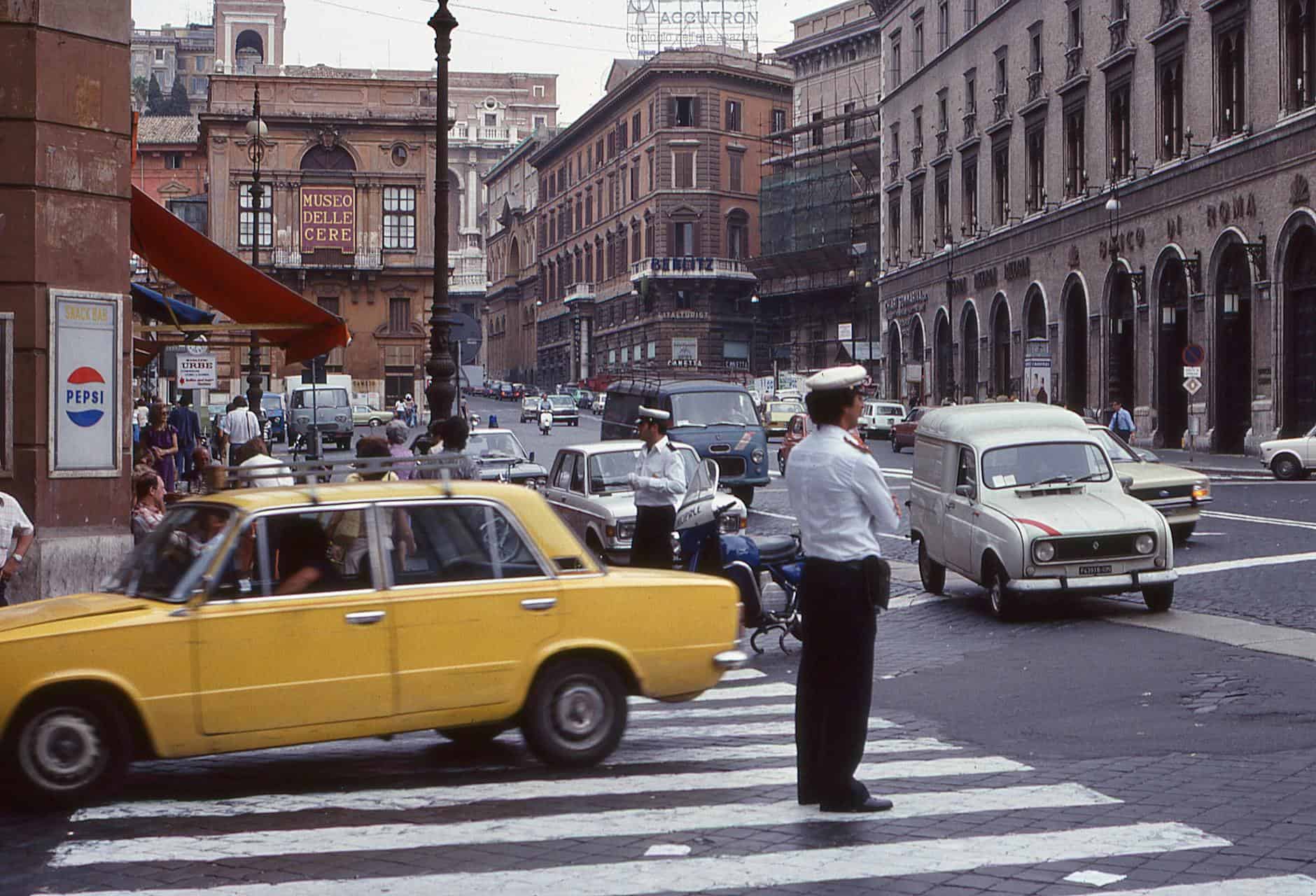
The setup: You’re near a popular site — the Colosseum, Termini station, the Vatican. A man in plain clothes approaches and shows what appears to be a badge. He says he’s an undercover police officer and that there’s been counterfeit money in the area. He needs to check your wallet.
Here’s where it gets sophisticated: there’s often a second man who approaches simultaneously and shows his “badge” too. The presence of two apparent officers makes it feel official. One might speak better English while the other hovers. The transaction feels bureaucratic, which is deeply disarming.
If you hand over your wallet for inspection, a portion of your cash disappears into a palm before the wallet is returned. Some victims report the entire wallet being taken, with the “officers” explaining they need to take it to a station for processing.
- Real Italian police do not operate this way. Plain-clothes officers cannot demand wallet inspections on the street without cause.
- Real police officers will not object if you say “I’ll come with you to the station.” Fake ones will vanish.
- Always ask to see identification slowly, then say you’ll call the tourist police number — 113 in Italy — to confirm their badge. Legitimate officers welcome this. Scammers don’t.
The reason people fall for this even knowing it exists: the authority override is nearly automatic. We are conditioned from childhood to comply with police. The scam targets a reflex, not a decision.
The Paris Friendship Bracelet Trap at Sacré-Cœur

The steps leading up to the Sacré-Cœur in Montmartre are beautiful and absolutely crawling with a specific operation. Men — usually working in groups of four to eight — line the railing at the top of the stairs.
As you pass, one will grab your hand, hold it firmly, and begin weaving a string bracelet around your finger before you’ve had time to process what’s happening. He’s talking the entire time — complimenting you, asking your name, telling you it’s a gift from Paris. He ties it off in under twenty seconds.
Then he demands money. €10, €20. If you refuse, he calls over his friends. The group surrounds you. The social and physical intimidation is the point.
The mechanics that defeat awareness:
- The grab happens before you’ve decided to engage. He’s already holding your hand. You’re playing defense before you knew you were in a game.
- The word “gift” is stated explicitly before the demand for money. Cognitive dissonance makes you doubt your own perception of what’s happening.
- The group surrounds you in seconds. What began as one interaction becomes a crowd.
The only defense: don’t stop moving on those steps. Hands in pockets or crossed. If someone grabs your hand, pull it back immediately and firmly — no hesitation, no apology. The moment you stop to figure out what’s happening, you’ve lost.
The Flower and Rose Handoff: Romantic Until It Isn’t

This one plays out in Paris near the Eiffel Tower, by romantic restaurants, near outdoor cafés. A man approaches a couple with a rose and hands it directly to the woman with a flourish. She accepts it naturally — it’s a flower, it’s Paris, it’s romantic.
Now he turns to the man in the couple and demands money. “For your beautiful wife, only €10.” The social dynamic is devastating: refusing to pay for the rose your partner is now holding feels cheap and unromantic, especially in public.
Sometimes the scammer doubles down on refusal by loudly shaming the man for not appreciating his partner. Passersby look.
The fix is the same: don’t accept objects from strangers. An outstretched hand returning a flower or a scarf communicates more than words.
What Actually Protects You (Hint: It’s Not Just Reading About It)

Reading about these scams makes you feel prepared. What actually prepares you is behavioral rehearsal — actually practicing your physical response before you’re in the situation.
- Pre-decide your physical response: hands up, palms out, walk through anyone who approaches with an object. Don’t improvise this in the moment. Decide it now.
- Anti-distraction positioning: Bag in front of your body, not on your back. Money in a front pocket or a money belt under your shirt. Your phone in your hand or a dedicated pocket — not dangling in a back pocket.
- The “no eye contact” rule: In high-scam zones (La Rambla, the Sacré-Cœur steps, Termini station), look through people rather than at them. Eye contact is an invitation to engage.
- Travel with a card, not cash: Use a travel card like Wise or Charles Schwab. Keep a decoy wallet with a small amount of local currency. Your real cards stay inaccessible.
- Accept that refusal feels rude: It does. That’s the design. Practice being okay with feeling briefly rude. The alternative is worse.
The Ohio couple I mentioned at the beginning? They got the scarf placed on the husband’s shoulders while the wife was approached by someone asking for directions — a classic two-vector distraction. His wallet was gone before either of them registered what happened. They knew the scam. They just hadn’t practiced the physical response.
That’s the gap awareness doesn’t close.