A Week Camping in Moab, Canyonlands, and Arches Costs Less Than 2 Ski-Resort Nights—Here’s How the Budget Breaks Down
We may earn money or products from the companies mentioned in this post. This means if you click on the link and purchase the item, I will receive a small commission at no extra cost to you ... you're just helping re-supply our family's travel fund.
A full week camping through Moab, Utah and the surrounding national parks — Arches, Canyonlands, and nearby Dead Horse Point State Park — can realistically be done for under $600 per person including campsite fees, food, gas, and a few gear rentals, a fraction of what a comparable week at a Western ski resort would cost, and the red rock desert scenery rivals anything the more expensive Mountain West destinations offer.
The Actual Daily Cost Breakdown
National park entrance fees are the first cost, and they’re modest by comparison to lodging: a seven-day pass to Arches National Park runs $30 per vehicle, and Canyonlands charges the same, though an $80 America the Beautiful annual pass covering all federal recreation sites pays for itself quickly for anyone visiting more than two or three parks in a year. Dead Horse Point State Park, offering some of the most photographed canyon overlooks in Utah, charges a separate modest state park entrance fee.
Campground costs vary widely depending on how developed a site is. Sites inside Arches and Canyonlands themselves are limited and often booked months in advance through the recreation.gov reservation system, running $25 to $30 per night, while BLM-managed dispersed camping along the Colorado River corridor just outside Moab, including the popular Sand Flats Recreation Area, offers primitive sites for a fraction of that cost or, in some dispersed areas, no fee at all.
The Full Week Math
- Campsite fees for seven nights, mixing developed and dispersed sites: $100 to $180 total
- Park entrance fees (or single annual pass): $30 to $80
- Groceries for a week of camp cooking, for two people: $150 to $200
- Gas for driving between parks and trailheads: $60 to $100 depending on starting location
- Optional gear rental (if not bringing your own tent and cooking equipment): $50 to $100
That puts a realistic total for two people at somewhere between $450 and $700 for the entire week, or roughly $225 to $350 per person, dramatically less than the cost of a single weekend at most Colorado or Utah ski resorts during peak winter season, where lodging alone can exceed $400 a night.
What the Week Actually Looks Like
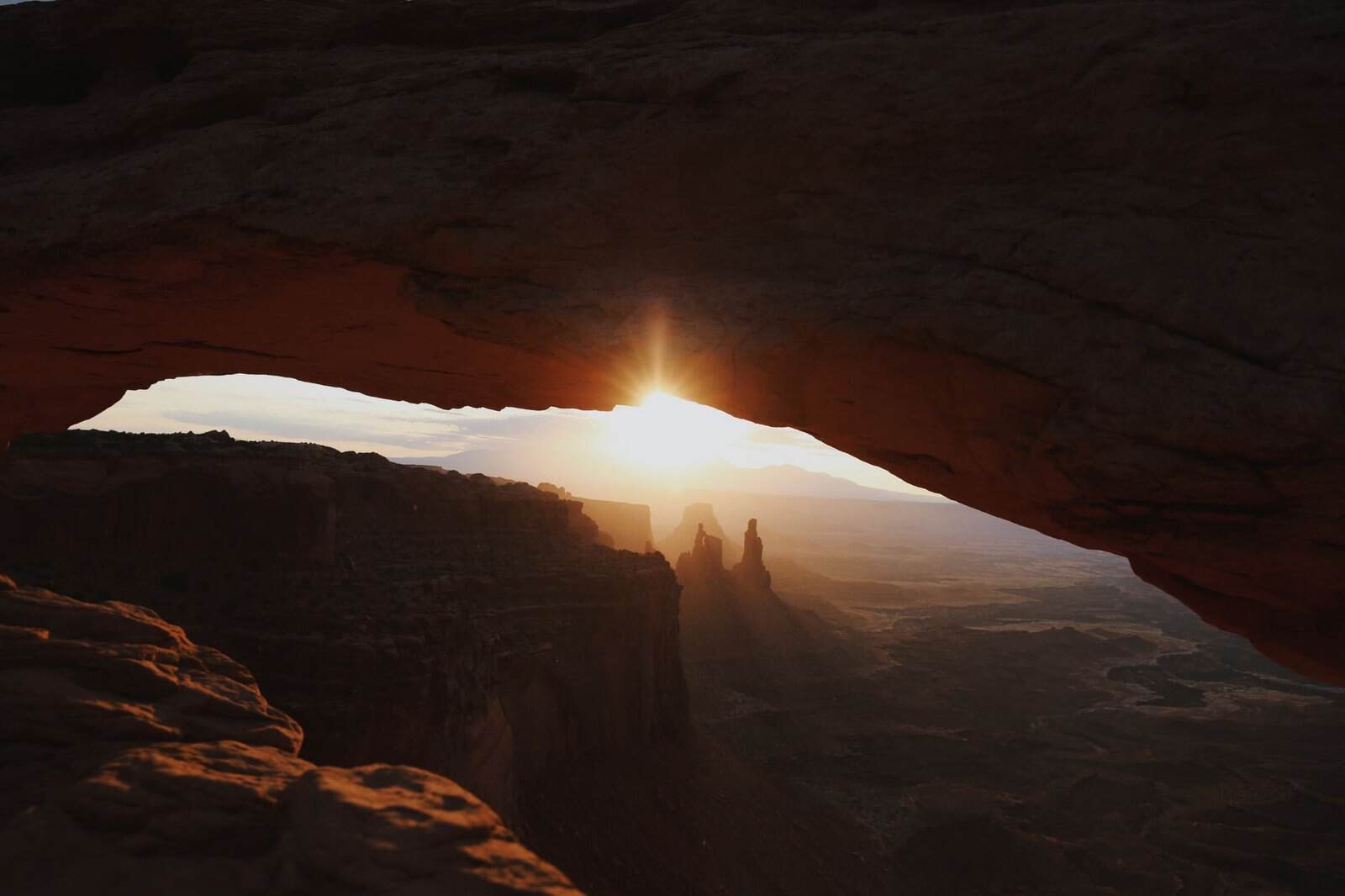
Arches National Park’s most famous formations, including Delicate Arch, are reachable via day hikes ranging from easy paved paths to a strenuous three-mile round trip with significant elevation gain and no shade, a hike best done at sunrise or sunset during summer months when daytime temperatures regularly exceed 100 degrees. Canyonlands’ Island in the Sky district offers some of the most accessible dramatic canyon views in the entire national park system, with several overlooks reachable by short walks from parking areas, while the park’s more remote Needles and Maze districts require considerably more time, preparation, and often high-clearance vehicles to reach.
Moab itself, positioned between the two parks, has grown into a substantial outdoor recreation town with mountain biking, whitewater rafting on the Colorado River, and off-roading alongside the hiking and camping economy, giving visitors options beyond national park boundaries if weather or crowds push them to adjust plans mid-week.
The Trade-Offs of Doing It Cheap
Desert camping requires more preparation than car camping in milder climates — water isn’t reliably available at dispersed sites, meaning visitors need to carry enough for drinking, cooking, and basic hygiene for their entire stay, and summer heat makes daytime activity genuinely dangerous without careful hydration and timing. Spring and fall offer far more comfortable conditions than summer, and most experienced visitors specifically time budget camping trips to this region for April, May, September, or October rather than the scorching months of June through August. Moab’s popularity has also created a real crowding problem at the most photographed sites, including Delicate Arch and Mesa Arch in Canyonlands, where sunrise and sunset visitation can mean dozens of photographers competing for the same shot, a reality that budget-minded visitors can partially avoid simply by visiting less famous viewpoints and trails that receive a small fraction of the traffic but offer comparably dramatic scenery. Rangers at both parks have specifically encouraged visitors to research secondary trails and overlooks rather than concentrating exclusively on the handful of formations that dominate social media, both to reduce environmental impact at the busiest sites and to give visitors a genuinely quieter experience of the same landscape. Moab’s own municipal government has debated tourism management measures in recent years, including potential caps or reservation systems for the most popular trailheads, following a pattern already implemented at other overcrowded natural attractions like Zion National Park’s Angels Landing. Whether similar systems eventually come to Arches or Canyonlands remains an open question, but the trend across popular Western parks has clearly moved toward more active crowd management rather than unlimited access. Visitors on a budget can also stretch a week further by taking advantage of nearby free dispersed camping on Bureau of Land Management land outside Moab’s more crowded designated campgrounds, an option that requires more self-sufficiency but eliminates campsite fees entirely for travelers comfortable with fully primitive conditions.P: Guided tours remain available for travelers who prefer not to navigate desert logistics independently, and several Moab-based outfitters offer single-day rafting, canyoneering, or off-road excursions priced well below the cost of a single ski resort lift ticket, giving budget travelers a middle option between fully independent camping and a fully guided, higher-cost vacation package.P: Visitors who want to stretch the trip even further sometimes extend the itinerary to include nearby Capitol Reef National Park, roughly two hours from Moab, adding a fourth park to the week without significantly increasing total driving distance given the region’s relatively compact cluster of red rock parks.
What this budget breakdown ultimately demonstrates is that some of the most dramatic scenery in the American West remains genuinely affordable for visitors willing to trade hotel comfort for a tent and a cooler, a math equation that has held remarkably steady even as lodging costs in nearby gateway towns like Moab itself have climbed substantially for visitors who prefer not to camp at all.