Vashon Island Has No Bridge to Seattle and No Traffic Lights. Here’s Why 10,000 People Chose to Live There Anyway
We may earn money or products from the companies mentioned in this post. This means if you click on the link and purchase the item, I will receive a small commission at no extra cost to you ... you're just helping re-supply our family's travel fund.
Vashon Island sits in the middle of Puget Sound, reachable only by ferry, and that single fact has kept it from becoming another Seattle suburb even as the city twenty minutes away by boat became one of the most expensive in the country. There is no bridge, no light rail extension, no highway on-ramp. To get to Vashon you drive onto a Washington State Ferries boat in West Seattle or Fauntleroy, wait in a line that can run ninety minutes on a summer Friday, and cross water that Boeing engineers and Amazon coders would rather not deal with twice a day.
The Commute That Filters Who Moves There
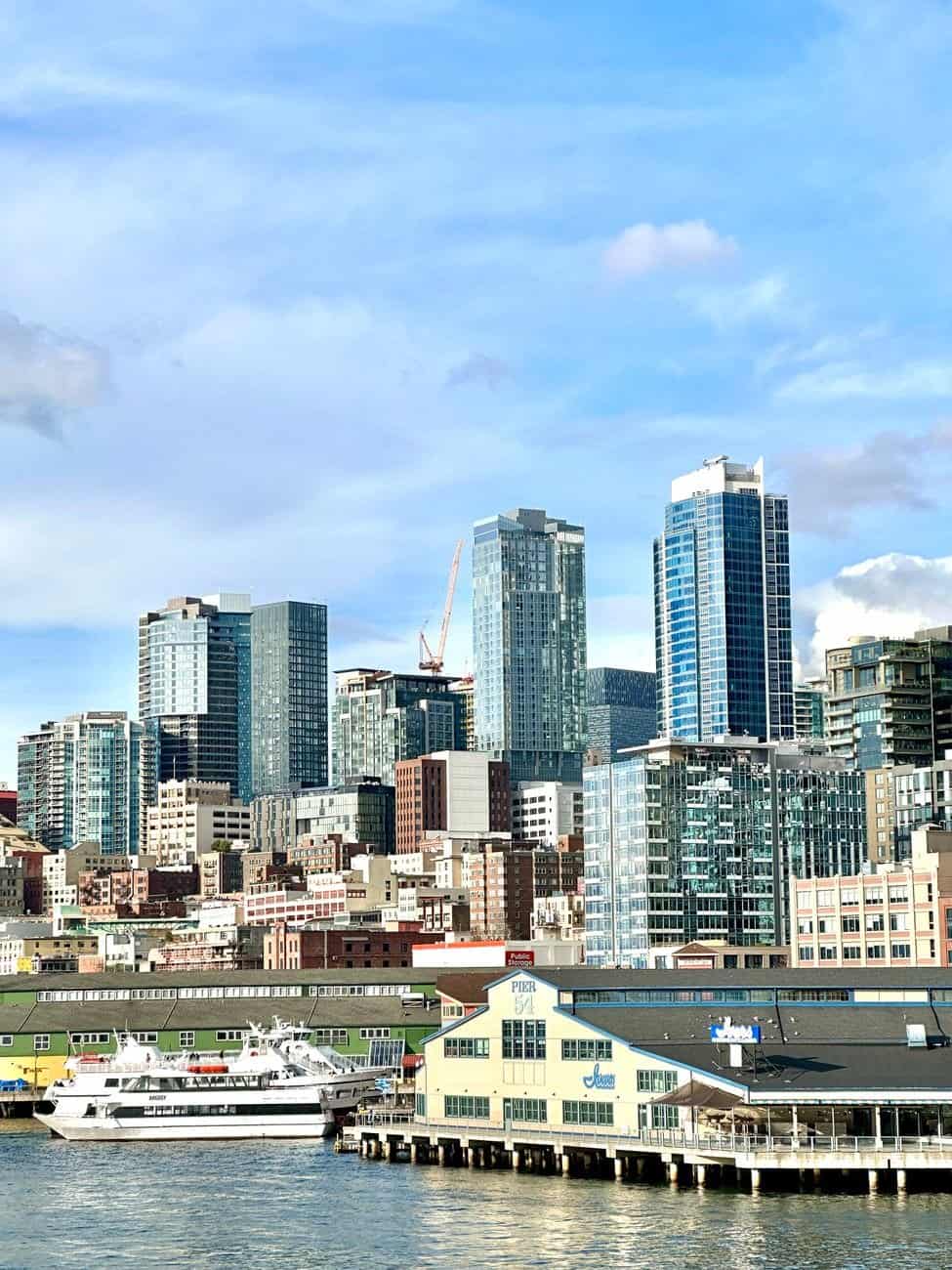
The ferry commute is the island’s real zoning law. A round trip to downtown Seattle, door to door, runs close to two hours each way once you count drive time, dock wait, and the twenty-five-minute crossing. That math pushes out anyone who needs to be at a desk in South Lake Union by nine every single day. What it leaves behind is a population of remote workers, retirees, tradespeople, farmers, and artists who either don’t commute at all or only cross the water a few days a week.
Median home prices on Vashon sit in the $650,000 to $750,000 range as of 2024, according to King County assessor data, which sounds steep until you compare it to Seattle proper, where the median has pushed past $850,000, or to nearby Mercer Island, where waterfront property routinely clears $3 million. Vashon is cheaper than the city it serves, not because it’s undesirable, but because the ferry tax on time is steep enough to keep prices from becoming irrational.
An Economy Built on Not Commuting
Vashon’s year-round population is roughly 10,600, a number that has barely moved in two decades, according to U.S. Census Bureau estimates. That stability is unusual for anywhere within sight of a booming tech city. The island has its own school district, its own hospital, a scattering of wineries and berry farms, and a downtown strip in the town of Vashon that still has a hardware store, a movie theater, and independent bookstores instead of chain retail. There’s no fast food drive-through on the island, a fact residents have protected for decades through zoning fights and market indifference.
- Roughly 20% of employed Vashon residents work entirely from home, well above the King County average
- The island’s median household income tracks close to the King County median despite lower housing costs
- Vashon has no incorporated city government — it’s unincorporated King County land with a Municipal Advisory Council
- The ferry carries about 2 million vehicle trips a year to and from the island
What the Ferry Actually Filters Out
Real estate agents on the island will tell you the ferry does more screening than any homeowners association could. Buyers who can’t tolerate schedule uncertainty — missed boats, weather cancellations, maintenance closures — self-select out within a year of moving. Those who stay tend to be people who have already decided that time is more valuable than convenience, which is a different kind of wealth filter than the one operating in, say, Bellevue or Kirkland, where money buys proximity.
This has created a strange economic split. Vashon has plenty of million-dollar farmhouses and waterfront cabins owned by people who made their money in tech and then deliberately chose distance from it. It also has a substantial number of longtime residents — loggers’ descendants, farmers, ferry workers themselves — who have been priced up by rising land values without ever changing their income. The island’s food bank, Vashon Household, serves several hundred families a month, a reminder that scenic isolation doesn’t erase economic strain.
Farming Persists Because Land Speculation Didn’t Fully Win
Vashon has one of the more active small-farm economies in the Puget Sound region, anchored by places like Sea Breeze Farm and a cluster of vineyards that take advantage of the island’s rain-shadow microclimate — Vashon gets noticeably less rainfall than Seattle because the Olympic Mountains block incoming storms. The Vashon Island Growers Association runs a farmers market that has operated continuously since the 1990s, and a number of small wineries sell almost exclusively to islanders and a trickle of ferry-riding day-trippers.
Agricultural zoning on the island is unusually protective. King County’s Vashon-Maury Island subarea plan has kept large swaths of land off-limits to the kind of subdivision that turned similar islands, like parts of the San Juans, into vacation-home sprawl. That’s not an accident — islanders voted repeatedly to keep it that way, even when it meant lower property tax revenue than denser development would generate.
The Trade-Off Nobody Advertises
Ask a longtime Vashon resident what the island costs them and they won’t talk about the mortgage. They’ll talk about missing a ferry during a family emergency, or paying nine dollars each way for a walk-on fare, or planning every grocery run around boat schedules. Emergency medical situations sometimes require an off-island transfer, and island residents have had to advocate for maintaining ferry service as an essential lifeline rather than a discretionary route, especially during the state’s periodic ferry crew shortages that have canceled runs with little notice.
What Vashon proves is that geographic inconvenience can function as an affordability mechanism more effective than any inclusionary zoning ordinance. The island isn’t cheap. But it’s not Seattle-cheap, and the reason has nothing to do with policy and everything to do with a stretch of cold water that nobody has bothered to bridge.
The Artists Who Got There First
Vashon’s creative community predates the current wave of remote-work arrivals by decades. Potters, glassblowers, and painters settled on the island starting in the 1960s and 1970s, drawn by cheap land and the same isolation that now attracts tech workers, and their presence built an arts infrastructure — working studios, a strong crafts fair tradition, and galleries along Vashon’s main strip — that gives the island a cultural identity independent of its commuter population. The Vashon Allied Arts organization, now known as the Vashon Center for the Arts, opened a purpose-built performance and gallery space in 2015, funded substantially by island residents themselves rather than outside grants, a sign of how much the community values keeping its cultural institutions locally rooted.
That older artist community and the newer remote-work arrivals don’t always mix easily. Longtime islanders have voiced concerns in local publications like the Vashon-Maury Island Beachcomber about rising studio rents and the slow conversion of working-class cottages into renovated second homes, a tension familiar to any small community that becomes desirable faster than its economy naturally would have made it. Still, the island’s strict land-use planning has prevented the kind of wholesale transformation seen in more accessible gateway communities, which is precisely why both groups are still there at all.