The Ultimate 24-Hour Tokyo Christmas Lights Itinerary
We may earn money or products from the companies mentioned in this post. This means if you click on the link and purchase the item, I will receive a small commission at no extra cost to you ... you're just helping re-supply our family's travel fund.
The most rewarding 24-hour Tokyo Christmas itinerary for light lovers pairs a Roppongi Hills market morning and a Shibuya shopping afternoon with two distinct night spectacles, then leaves room to rest before the next morning. You get a festive start, time to browse the city, and a luminous finish without staying out all night.
Tokyo’s winter light displays make familiar streets feel new after dark. This route is for travelers who want holiday atmosphere and a little breathing room, not a checklist of every event.
Begin with a market visit, take the afternoon at your own pace, then give the evening to the lights. This route makes the city’s holiday glow the centerpiece while leaving enough room for an unhurried winter experience.
Key Takeaways
- Start the day at Roppongi Hills at 11:15 a.m.
- Set aside the afternoon for shopping in Shibuya.
- See Keyakizaka’s winter illuminations before heading to Shiodome.
- Make Caretta Shiodome the evening’s main light-and-sound stop.
- Keep the late night and following morning flexible.
Tokyo Christmas Itinerary: The 24-Hour Route at a Glance
Start at Roppongi Hills at 11:15 a.m., shop in Shibuya through the afternoon, and save the brightest stretch for the evening. This suggested route runs through 11:15 a.m. the next day, with an overnight pause built in.
The times are suggested itinerary blocks, not fixed appointments. They give you room to enjoy each stop without turning the day into a race between trains and light displays.
| Time | Stop | Focus |
|---|---|---|
| 11:15 a.m.-1 p.m. | Roppongi Hills | Christmas market |
| 1-4:30 p.m. | Shibuya | Shopping |
| 5:15-6:15 p.m. | Keyakizaka | Winter illuminations |
| 6:45-9:15 p.m. | Caretta Shiodome | Light-and-sound show and views |
| 9:15 p.m.-11:15 a.m. the next day | Tokyo | Optional guided night experience, rest, and a relaxed morning |
The first block gives you time for a market browse and a relaxed meal before the afternoon. Shibuya then adds a lively retail stretch before you return to Roppongi for the blue winter lights.
The evening finishes in Shiodome, where you can combine the plaza spectacle with an indoor city view. The final block is deliberately broad, so you can choose a guided outing or head back to your hotel.
Keep the timetable as a comfortable sequence of stops, not a reason to rush the lights.
A Tokyo Christmas itinerary for 3 days can use this route as one full day. For a Tokyo Christmas itinerary for 4 days, keep it as your lights-focused day among three other days of sightseeing.
You can shift the pace to suit your interests, but allow time for transfers between neighborhoods. Treat the timetable as a comfortable sequence of stops, not a reason to rush the lights.
How Cold Is Tokyo at Christmas?
Tokyo’s December weather can feel crisp rather than icy by day, but the temperature drops enough to make a warm coat worthwhile at night. After sunset, outdoor browsing and light displays feel colder than the daytime high suggests.
Tokyo’s average December high was 13.2°C (55.8°F), and its average low was 3.8°C (38.8°F), based on 2024 meteorological data. The average daytime temperature was around 8.1°C (46.6°F), with average December rainfall of 0.5 mm (0.02 in).
December temperatures and daylight
Those figures make Tokyo winter weather fairly mild by day compared with colder places, but evenings still call for warm layers. Snow in Tokyo in December is rare, so plan for chilly air rather than a snow-covered city.
Daylight is short in this season, which suits a route built around evening illuminations. The shift from afternoon shopping to outdoor lights can feel sudden once the sun goes down.
Tokyo Christmas weather is usually cool and fairly dry, while Tokyo December weather and snow are better described as chilly days with rare snowfall. The city’s streets remain easy to explore, but you will feel the cold more when standing still.
What to wear after dark
Choose clothes you can adjust as you move between outdoor streets and heated trains. Layers help you stay comfortable when the train feels warm, then protect you again at an outdoor stop.
- A warm coat that works for standing outside
- Layers you can remove on heated trains
- Gloves for evening walks and photos
- A scarf to cover your neck
- Lip balm or moisturizer for dry winter air
A compact scarf and gloves can fit in a day bag once you reach warmer indoor spaces. Keep gloves and a scarf handy for the outdoor parts of the evening.
What Awaits at the Roppongi Hills Christmas Market?
O-YANE PLAZA is the setting for a compact market visit that brings traditional decorations and gifts together with German-style seasonal food. For a festive morning, it makes an easy first stop before the afternoon shopping block.
The 2026 Roppongi Hills Christmas Market runs November 21-December 25, from 11 a.m. to 9 p.m. It has 10 stalls and takes place in O-YANE PLAZA.
Browse decorations and gifts
The stalls feature traditional decorations and gifts, giving you a chance to browse seasonal keepsakes without spending the whole day at the market. Look for a small ornament or gift that can travel easily in your bag.
The Tokyo Christmas Market experience here feels focused rather than sprawling. Ten stalls keep the visit compact, so you can linger over a few finds and still leave time for the next part of the day.
| Stall focus | What to find | A useful stop for |
|---|---|---|
| Decorations and gifts | Traditional decorations and gifts | Browsing and souvenirs |
| Savory food | German sausages and stew | A warm bite |
| Baked treat | Stollen | A sweet market snack |
For more ideas on festive food and craft traditions, browse these nostalgic holiday markets from Europe and North America. They offer a wider view of how markets shape the holiday season in different places.
Make room for seasonal food
German sausages and stew offer a warm savory bite, while stollen gives you a sweet taste of the season. Choose food or gift browsing first, then let your appetite and the crowd guide the rest.
The market can be a meal stop, a snack break, or simply a place to soak up the holiday mood. Its modest scale makes it easy to fit into a day that also includes shopping and night lights.
- Arrive near opening for a calmer first look.
- Decide whether food or gift browsing comes first.
- Leave flexibility in case entry limits affect your visit.
Admission may be restricted if attendance is too high. Keep the market visit flexible in case attendance limits entry.
How to Spend the Afternoon Shopping in Shibuya
Shibuya gives the middle of the day a lively retail contrast to the quieter, light-focused evening. This dedicated shopping block lets you explore the city at street level before the night displays begin.
Choose a few shopping priorities in advance so the afternoon stays focused. Shibuya Crossing makes a clear central reference point when you plan a walk through the district.
Give the shopping walk a focus
Shibuya can easily fill an afternoon, so pick the kinds of finds you want before you arrive. A short list keeps you from drifting through streets without a plan or carrying more than you want.
- Fashion for a winter wardrobe update
- Design-led gifts with a local feel
- Seasonal food finds to enjoy or take away
Use Shibuya Crossing as a meeting point or a starting marker, not a promise that every shop sits nearby. From there, shape a walk around your own interests and energy.
The holiday feel here comes from the mix of shopping streets and seasonal displays, not one single attraction. A few purposeful stops can make the trip feel more personal than trying to cover every block.
Build in a warm indoor pause
Set aside time to sit indoors between shops. A calm pause gives your feet a break and lets you check your route before the evening’s outdoor stop.
Leave a flexible transfer buffer before heading back to Roppongi. The afternoon will feel easier if you do not use every minute for shopping.
Shopping can also be a useful place to find a last-minute gift or a small treat for later. Keep purchases manageable if you plan to spend the evening walking and taking photos.
Do not make a late shopping stop the only way to finish your list. Leave the last part of the afternoon open so the move to Roppongi does not become a race.
Where to See Roppongi Hills’ Blue Winter Lights
Keyakizaka turns the Roppongi Hills stop into a street-length sweep of blue-and-white winter light. The signature scene pairs rows of illuminated trees with Tokyo Tower as a backdrop.
In 2026, the Roppongi Hills illuminations are scheduled from 5 p.m. to 10 p.m. Keyakizaka’s illuminated stretch covers approximately 400 meters and uses about 970,000 “Snow & Blue” LEDs.
Follow Keyakizaka’s illuminated stretch
Walk along the street at an unhurried pace and take in how the lights change as you move. The long line of blue and white creates a different feeling from a plaza show or a lit tree in one spot.
Keyakizaka gives the Roppongi Hills illuminations a street-level scale. The approximately 400-meter scene is long enough to enjoy as a walk, yet easy to fit between afternoon shopping and the later evening stop.
Tokyo Tower gives the view a familiar Tokyo landmark, but the angle depends on where you stand along the street. Move a little and check how the tower lines up with the illuminated trees.
Frame the lights with Tokyo Tower
For a simple photo, step back until the lit street leads toward the tower in the background. Keep the tower and a row of lights in the same frame, then take a second shot from a slightly different position.
The best view is not guaranteed from every point, so give yourself a few minutes to look around. A small shift in position can change whether the tower appears between branches or above the street.
Stay aware of other pedestrians while you pause for a photo. Allow a few minutes to find a composition that includes both the illuminated street and Tokyo Tower.
How to Experience Caretta Shiodome’s Winter Illuminations
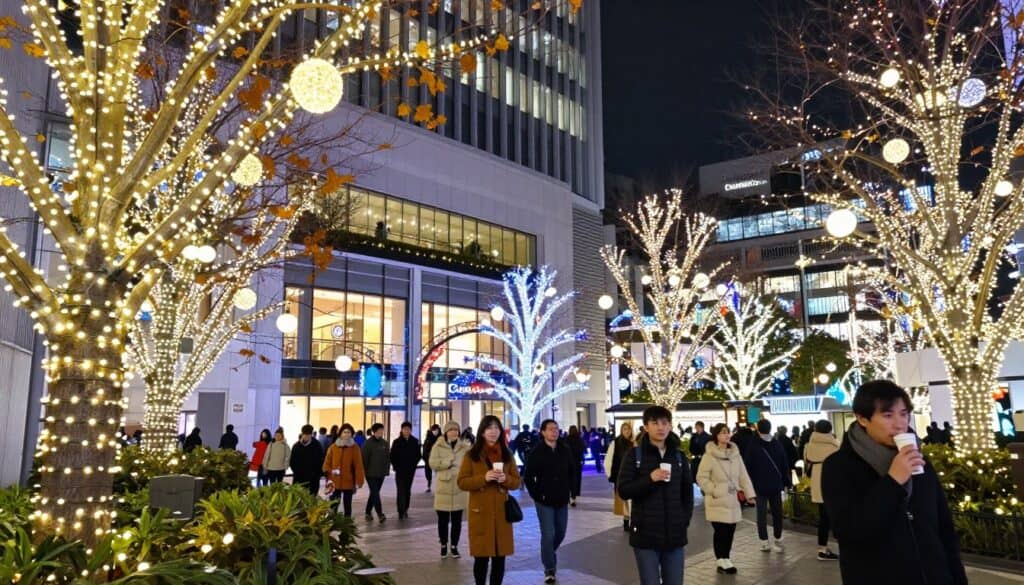
Caretta Shiodome’s evening combines a neon-lit plaza with a nightly 20-minute light-and-sound show. At nightfall, neon and LED lights brighten the plaza, giving the evening a more theatrical feel.
The show runs for 20 minutes every night. Caretta Shiodome stands at the foot of the Dentsu Headquarters Building in Tokyo’s Minato ward.
Catch the light-and-sound show
Give the plaza show your full attention for its 20-minute run. Light and sound turn the open space into an evening event, rather than a quick stop on the way to another view.
Arrive with enough room in your evening to settle in and watch the scene change. The neon and LED lights become most striking after nightfall, when they stand out against the darker city.
Caretta Shiodome is a useful stop for travelers who want a planned spectacle after a day of walking. The nightly show gives your evening a clear focus without requiring a long visit.
Add a high-up city view
The plaza sits below the Dentsu Headquarters Building, where the B2F entrance connects by elevator to the 46th floor. From there, you can reach the Dentsu Building indoor observation platform.
The platform is 200 meters above sea level and free to enter. Views from the 46th and 47th floors include Tokyo Bay, Rainbow Bridge, Tokyo Tower, and Tokyo Skytree.
Those views give you a broad look at the city after seeing its lights from street level. On a clear evening, you can pick out the bay and major landmarks from above.
Think of the plaza and platform as two parts of one stop, not competing attractions. Pair the plaza spectacle with the free upper-floor view for two different perspectives on the illuminated city.
How to Complete the 24 Hours Without Rushing
The itinerary can stay experiential after the main light show without turning the night into a forced marathon. A quiet finish matters as much as the evening’s biggest display.
The suggested 24-hour window ends at 11:15 a.m. the next day, so you can choose rest over a late night. A guided outing is an option, not a required final stop.
Add an optional guided night experience
If you still have energy, a guided night-photography and food walk can add local context after the light displays. Consider a guided night-photography and food walk viator.tpk.lv for a low-pressure way to see more of Tokyo after dark.
A guide can help you notice details that are easy to miss when you move between famous stops on your own. The food element also adds a different mood after an evening spent watching lights.
Keep the outing optional and match it to your energy. If the day has already felt full, head back to your hotel instead of adding another activity just to fill the night.
Leave room for an overnight reset
Choose a comfortable hotel where you can settle in without a long late-night journey. A calm return makes the day feel complete and gives you a proper chance to rest.
Let the next morning start slowly, with breakfast and time to enjoy Tokyo before the 24-hour window ends. You do not need to plan another major attraction to make the morning count.
Use the last hours for a relaxed meal, a quiet coffee, or a short walk near your hotel. A gentle start can feel like a welcome contrast to the bright evening before.
Protecting an overnight pause is what makes the next morning part of the experience rather than an afterthought.
Leave your morning schedule open enough for breakfast to last as long as you like. Protecting an overnight pause is what makes the next morning part of the experience rather than an afterthought.
What Changes on Christmas Eve and Christmas Day?
Christmas Eve and Christmas Day are regular workdays in Japan, but Christmas Eve dining is popular enough to plan ahead. Reserve early if a special dinner is part of your holiday plans.
Shops and trains operate on normal schedules on December 24 and 25. The city stays open for business as usual, even as winter illuminations give the season a festive mood.
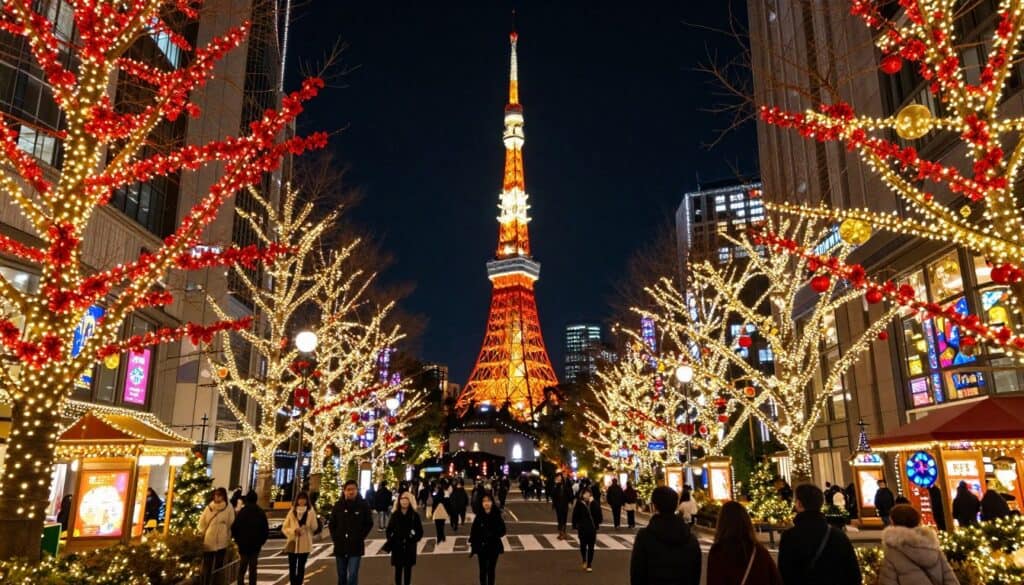
Christmas in Tokyo is shaped by bright streets and a distinct shift toward New Year traditions. The holiday has its own feel, while shrines and New Year plans soon become part of the season’s focus.
Christmas Eve is a popular date night, and restaurants book up. Make a reservation ahead of time if you want a particular restaurant or a special meal.
That dining choice can be separate from the route’s market food stops. A planned dinner lets you enjoy the evening without spending holiday time looking for an open table.
A Tokyo Christmas itinerary for 5 days can use this route as one planned day, then spread other sightseeing across four days. A Tokyo Christmas itinerary for 7 days can make the lights-focused day a centerpiece and leave six days for other city experiences.
Choose the date with the market’s published season in mind, especially if the market is a priority. Christmas Eve and Christmas Day offer the same regular workday rhythm, but the dinner scene can feel more in demand.
For a special Christmas Eve dinner, book a table before you arrive in Tokyo.
Christmas Eve is December 24, and Christmas Day is December 25. Choose a date that fits the market’s published season and reserve any special Christmas Eve dinner early.
Conclusion
From its first market stroll to its final city lights, this route gives one Tokyo winter day a vivid holiday rhythm. Festive Roppongi, Shibuya’s shopping energy, and Caretta Shiodome’s luminous finale create three distinct moods.
It is a rewarding way to visit Tokyo when you want seasonal atmosphere without packing every hour. The overnight pause keeps the experience comfortable and gives the next morning room to breathe.
Choose a date within the market’s published season, then save the 24-hour route for your trip. Pick your date and save the route so the evening can unfold at its own pace.