Natchez Was Mississippi’s Largest City for 100 Years. Here’s What Happened After It Fell to 33,000
We may earn money or products from the companies mentioned in this post. This means if you click on the link and purchase the item, I will receive a small commission at no extra cost to you ... you're just helping re-supply our family's travel fund.
In 1900, Meridian, Mississippi was the largest city in the state, a rail hub so busy that five different railroads converged there, moving cotton, lumber, and passengers through a downtown that rivaled Jackson’s in retail square footage. By the 1930s it had opera houses, department stores, and a Jewish merchant community substantial enough to build one of the largest synagogues in the Deep South. Today Meridian’s population sits under 33,000, down from a peak near 50,000 in the 1960s, and it keeps shrinking by a percentage point or two most years, according to U.S. Census Bureau data.
What a Rail Hub Loses When Rail Stops Mattering
Meridian’s entire original reason for existing was geography: it sat where multiple rail lines crossed, which made it a natural point for manufacturing, warehousing, and distribution serving the whole Southeast. That advantage evaporated over the second half of the twentieth century as trucking replaced rail freight and interstate highways rerouted commerce around, rather than through, old rail towns. I-20 and I-59 do intersect at Meridian, which kept the city relevant to logistics longer than many peers, but highway crossings don’t generate the same downtown density that rail depots once did.
The city’s population decline tracks almost exactly with the decline of its manufacturing base. Meridian once had a significant garment and furniture manufacturing sector, along with a major Naval Air Station presence. Naval Air Station Meridian remains active and is still one of the region’s largest employers, training Navy and Marine pilots, but it doesn’t generate the civilian retail spending that a thriving factory town once did.
The Distinctive Architecture Nobody Talks About
- Meridian’s Union Station is one of the few Mississippi rail depots still standing and functioning, now serving Amtrak’s Crescent line
- The Grand Opera House of Mississippi, built in 1890, was restored starting in the 1990s and still hosts performances
- The Merrehope house museum and Ritz Theatre are among a cluster of preserved 19th-century structures downtown
- Meridian’s historic Jewish community, once numbering in the thousands, built Temple Beth Israel, a landmark that speaks to the city’s forgotten commercial diversity
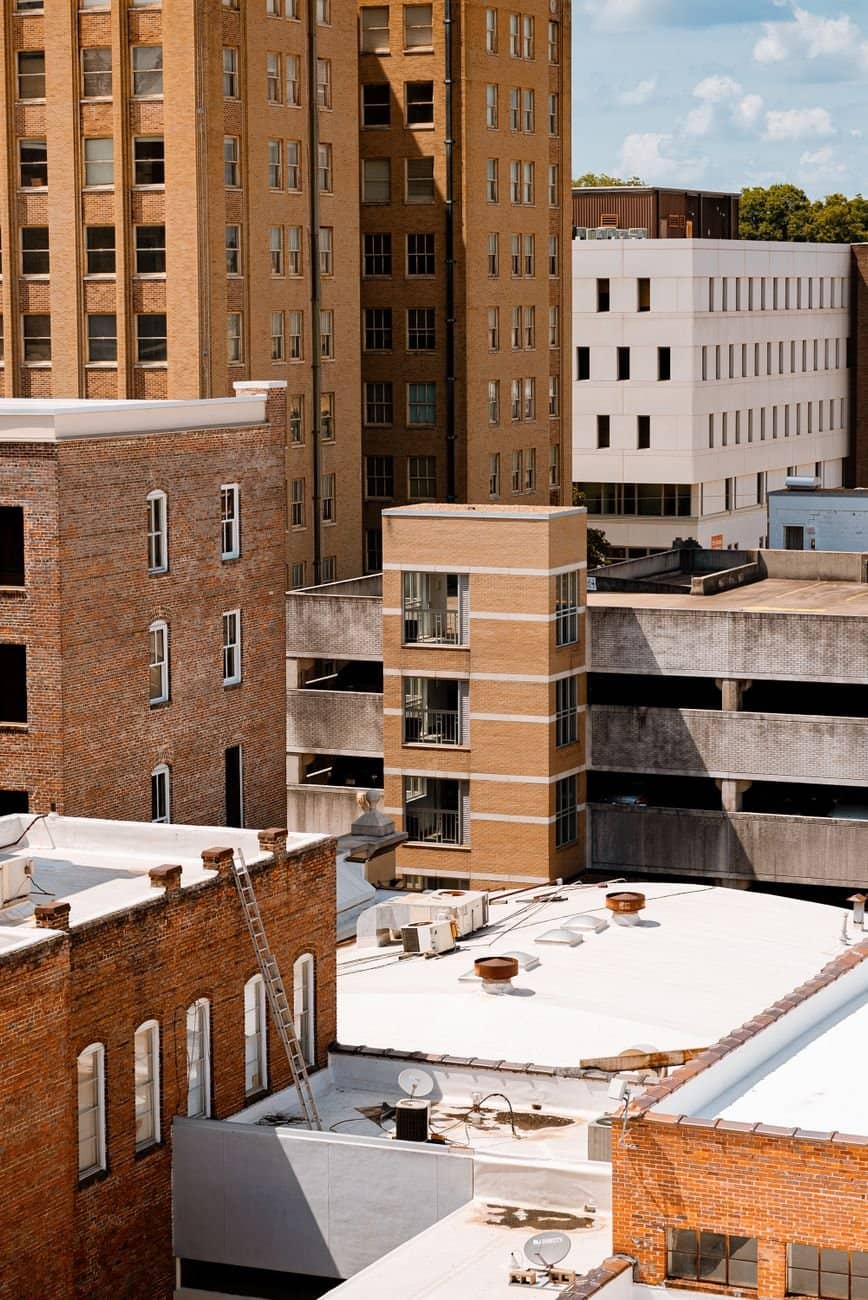
Downtown Meridian has more architecturally significant 19th and early 20th-century buildings than almost any city its size in the state, largely because it never had the growth pressure that would have justified tearing them down and rebuilding. Preservationists sometimes call this the shrinking city advantage: decline freezes a downtown in amber rather than erasing it, and Meridian’s is a near-intact snapshot of a boomtown from more than a century ago.
What’s Actually Keeping the City Functioning
Naval Air Station Meridian remains the area’s single largest employer, with thousands of military and civilian jobs tied to it. Rush Foundation Hospital and other healthcare institutions have also become major employers as the city has, like much of rural America, shifted from manufacturing to healthcare and education as its economic base. Mississippi State University maintains a Meridian campus, and East Mississippi Community College serves the broader region.
Median household income in Meridian sits well below both the Mississippi and national averages, and poverty rates run higher than the state average, which is itself among the highest in the country. The city carries the same demographic and disinvestment patterns common to many Deep South cities that lost their industrial base without a comparable replacement arriving.
Why It Hasn’t Disappeared
Meridian persists for the same reason a lot of mid-sized Southern cities persist: it’s still the largest population center for a fairly wide rural radius, meaning it retains hospital, retail, and government functions for surrounding counties even as its own population shrinks. Lauderdale County government, state offices, and regional healthcare draw people in from smaller towns nearby, even if fewer of them choose to live inside city limits.
There have been real preservation and redevelopment pushes — the MSU Riley Center performing arts complex, built inside the restored Grand Opera House, opened in 2006 with substantial state investment, aiming to give the city a cultural draw beyond its faded commercial base. Whether that kind of investment can reverse decades of population loss is an open question, but it has kept downtown Meridian from becoming the kind of hollowed-out core seen in comparable cities that lost their preservation fights decades ago.
What Meridian represents is a specific and common American story: a city built entirely around one form of infrastructure advantage, watching that advantage disappear as technology and commerce moved on, and being left with beautiful bones and a shrinking number of people to fill them.
The Musical Legacy Buried Inside the Decline
Meridian holds a specific claim to fame in American music history: it was the birthplace of Jimmie Rodgers, widely considered the father of country music, whose blend of blues and hillbilly music in the 1920s and 1930s shaped the entire genre that followed. The Jimmie Rodgers Museum in Meridian, along with an annual festival held in his honor since the 1950s, keeps that legacy visible even as the city’s broader population has thinned out. Meridian’s location at a Deep South crossroads also gave it exposure to blues and gospel traditions moving between the Mississippi Delta and Alabama, a musical crosscurrent that few outsiders associate with the city today.
Local preservationists have increasingly tried to connect Meridian’s musical history to tourism strategy, reasoning that a city with this much genuine cultural weight, sitting inside genuinely remarkable 19th-century architecture, has an asset base that mid-sized Southern cities without that history don’t have. Whether that translates into reversing population decline remains uncertain, but it gives Meridian something distinct from the dozens of other shrinking Deep South rail towns it otherwise resembles on a spreadsheet of Census data.
Comedian and actor Steve Harvey, born in nearby Welch, West Virginia but raised partly in the Mississippi orbit of the region’s Black cultural institutions, is sometimes cited alongside Meridian’s civil-rights-era history, since the city was also home to significant organizing activity during the 1960s. Meridian’s Carnegie library and its historically Black business district along 5th Street tell a parallel story to the downtown opera houses, one of segregation-era self-sufficiency that local historians have worked in recent years to document and preserve alongside the more commonly told railroad and music narratives.