Scottsdale Has the Name Recognition—But Tempe, Chandler, and Gilbert Deliver the Jobs at Half the Home Price
We may earn money or products from the companies mentioned in this post. This means if you click on the link and purchase the item, I will receive a small commission at no extra cost to you ... you're just helping re-supply our family's travel fund.
Scottsdale gets the magazine spreads, the golf resorts, and the median home price that crossed $900,000 in 2024. But the Phoenix suburbs that have actually absorbed the region’s job growth over the last fifteen years are Tempe, Chandler, and Gilbert, three cities most out-of-state visitors couldn’t place on a map, where median home prices run $150,000 to $250,000 below Scottsdale’s and the employers are technology and semiconductor companies rather than resorts.
Where the Jobs Actually Are
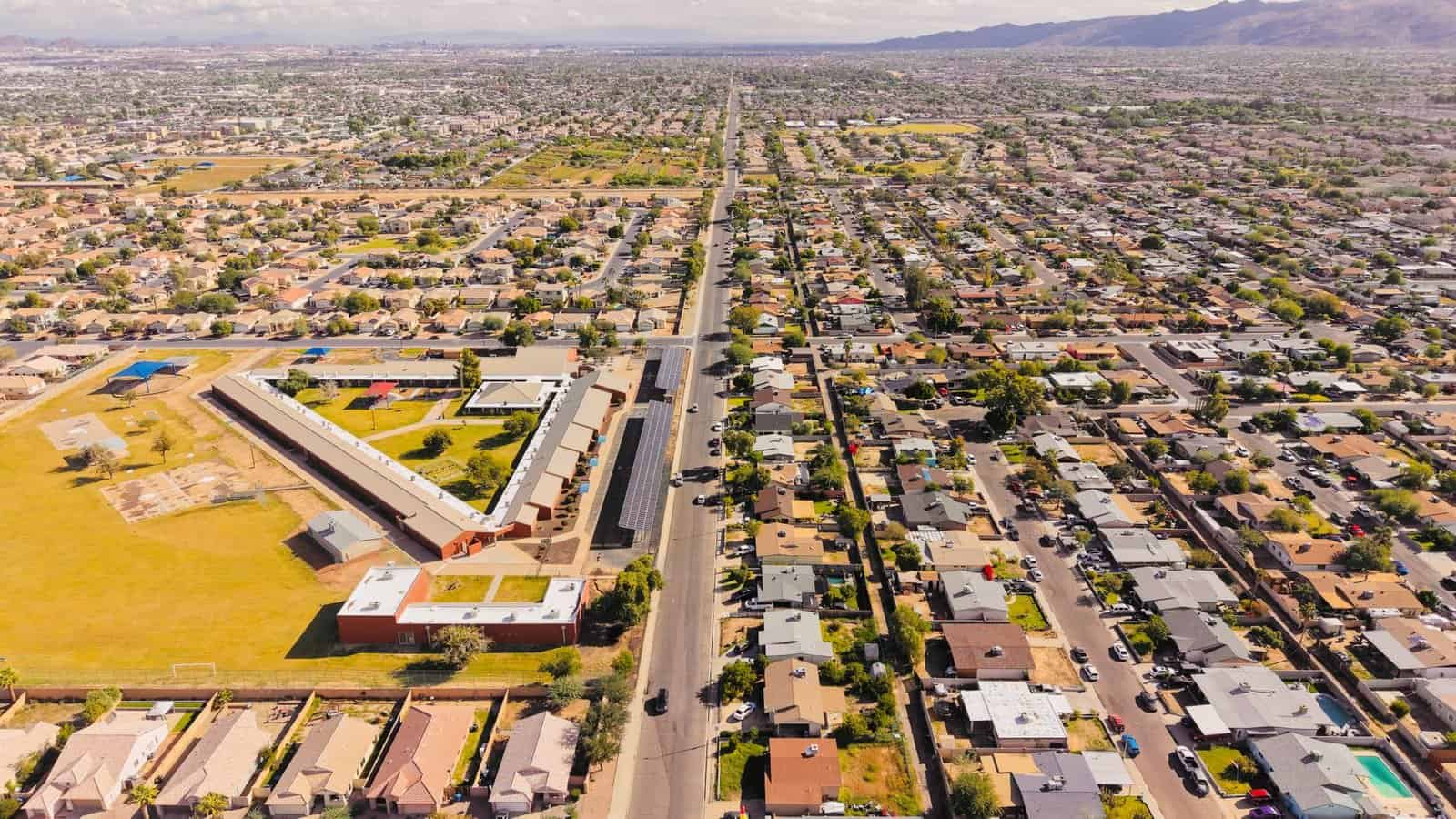
Chandler is home to Intel’s Ocotillo campus, one of the company’s largest chip manufacturing sites in the country, employing more than 12,000 people, according to Intel’s own figures, with billions more invested in expansion tied to federal CHIPS Act funding. Tempe hosts Arizona State University’s main campus, the largest single-campus enrollment in the country, along with corporate offices for State Farm, Amazon, and a growing cluster of fintech firms drawn by ASU’s talent pipeline. Gilbert has positioned itself around healthcare, with a expanding medical district anchored by Banner Health and Mercy Gilbert Medical Center.
Scottsdale, by contrast, built its economy on tourism, golf, and high-end retail, plus a wave of wealthy retirees and second-home buyers. That’s a legitimate economic base, but it’s a different one than the manufacturing and tech employment driving Chandler and Tempe, and it shows up directly in who can afford to live where.
The Price Gap in Real Numbers
- Scottsdale median home price: roughly $900,000 as of 2024 market data
- Chandler median home price: roughly $520,000
- Gilbert median home price: roughly $550,000
- Tempe median home price: roughly $480,000, pulled down partly by its large rental and student population
The gap isn’t subtle. A family earning the Phoenix-area median household income of around $75,000 has a realistic shot at homeownership in Chandler or Gilbert. That same income doesn’t come close in most Scottsdale zip codes, where buyers increasingly skew toward out-of-state cash purchases and second homes rather than local dual-income households.
Different Suburbs, Different Identities
Tempe has the density and nightlife of a college town layered onto a suburb, with Mill Avenue functioning as a walkable entertainment district that Scottsdale’s Old Town tries to replicate for a different, older demographic. Chandler has built an identity around its tech-manufacturing base and a historic downtown that’s been steadily revitalized without becoming a tourist attraction. Gilbert markets itself explicitly as family-oriented, with new-build subdivisions, top-rated public schools, and a downtown Heritage District that’s grown a genuine restaurant scene over the last decade.
None of the three markets itself as a resort destination the way Scottsdale does, and that’s precisely the point — their economies don’t depend on visitors, which makes them less vulnerable to the tourism downturns that occasionally hit Scottsdale’s hotel occupancy rates.
Who Actually Lives Where
Scottsdale’s population skews older and wealthier, with a significant share of residents over 55 and a large seasonal population of “snowbirds” who maintain homes there for winter months only. Chandler, Gilbert, and Tempe skew younger, with more families, more dual-income households, and a substantially higher share of residents who work full-time rather than being retired or seasonal.
This isn’t a story about one set of suburbs being better than the other — it’s a story about how a single metro area sorts itself by industry and life stage. The Phoenix area added roughly 100,000 new tech and manufacturing jobs over the last decade concentrated heavily in the East Valley cities, while Scottsdale’s growth stayed concentrated in hospitality, healthcare for retirees, and luxury real estate. Anyone moving to the Phoenix area assuming Scottsdale is the default choice is missing where the actual regional economy has been building for years.
The Semiconductor Bet That Changed Chandler
Intel’s Chandler campus dates back to 1980, but the scale of investment escalated dramatically after the 2022 CHIPS and Science Act made billions in federal incentives available for domestic chip manufacturing. Intel announced tens of billions of dollars in new fabrication plant investment tied to its Arizona operations, a commitment that reshaped how city planners in Chandler think about their tax base and workforce needs for the next generation, well beyond the retail and tourism assumptions that guide planning in Scottsdale.
That semiconductor bet has ripple effects across the East Valley: suppliers, logistics firms, and specialized construction companies have clustered near the Chandler facility, and Mesa has landed its own major chip investment from Taiwan-based manufacturers, further cementing the East Valley’s identity as an emerging domestic semiconductor corridor rather than simply Phoenix’s overflow suburbs. Scottsdale has no comparable industrial anchor, and isn’t trying to build one, which is exactly why the two halves of the metro area are aging into such different economic identities.
Water availability adds another layer to this divergence. Arizona’s Department of Water Resources has restricted new residential construction in parts of the Phoenix metro area that lack a hundred-year assured water supply designation, a policy that has affected some outlying development differently than established cities like Chandler and Gilbert with long-standing water infrastructure agreements. Scottsdale, similarly established, hasn’t faced the same restrictions, but the policy underscores how water planning, not just job growth, is increasingly shaping where the Phoenix area can keep adding rooftops on either side of the luxury-versus-industrial divide.
What Visitors Get Wrong About the Whole Metro
Out-of-state visitors and even relocating residents frequently treat Phoenix, Scottsdale, and the East Valley as interchangeable, booking a Scottsdale resort and assuming they’ve experienced the metro area’s full character. In reality the East Valley cities have their own increasingly distinct downtown revitalization projects, restaurant scenes, and cultural institutions, from Chandler’s Downtown Chandler entertainment district to Tempe’s Mill Avenue and the Tempe Center for the Arts, that operate independently of Scottsdale’s resort-and-golf identity and increasingly draw visitors who never set foot in Old Town Scottsdale at all. Understanding that the Phoenix metro isn’t one economy wearing different zip codes, but several distinct ones stitched together by highway, is the difference between seeing the region as it’s marketed and seeing it as it actually functions. The light rail system connecting Phoenix, Tempe, and Mesa, expanded steadily since its 2008 opening, has also reinforced this divergence, giving the East Valley a form of urban connectivity that car-dependent, low-density Scottsdale has never built and shows little interest in building.