The $29/Night Motel Is Now $200/Night and People Are Actually Paying It — Here’s Why
We may earn money or products from the companies mentioned in this post. This means if you click on the link and purchase the item, I will receive a small commission at no extra cost to you ... you're just helping re-supply our family's travel fund.
In 1965, a night at a Holiday Inn on Route 66 cost about $10. Adjusted for inflation, that’s roughly $95 today. The new boutique motel that opened in the same building last year charges $195 on weekdays and $265 on weekends. It has a Nespresso machine and locally sourced toiletries. The parking lot has a retro sign that photographs well.
People are paying it. Enthusiastically.
The American roadside motel has staged one of the more improbable comebacks in hospitality, and whether you think it’s genuine revival or marketing-inflated nostalgia depends entirely on which specific motel you stayed in.
Why Anyone Is Paying $200 to Sleep in a Renovated Motel
A few forces collided to make this happen:
- Airbnb fatigue — after years of “quirky” vacation rentals with confusing check-ins, four-page house rules, and $200 cleaning fees, a lot of travelers want a bed, a pool, and someone else handling the towels
- The road trip boom — the pandemic accelerated a shift toward car travel that has not fully reversed. Road trippers need places to sleep that aren’t chains. Motels, which are inherently road-trip-adjacent, benefited enormously.
- The boutique hotel pricing squeeze — independent boutique hotels in desirable destinations have gotten genuinely expensive. A renovated motel offers a similar aesthetic at a somewhat lower price point, or at least that’s the pitch.
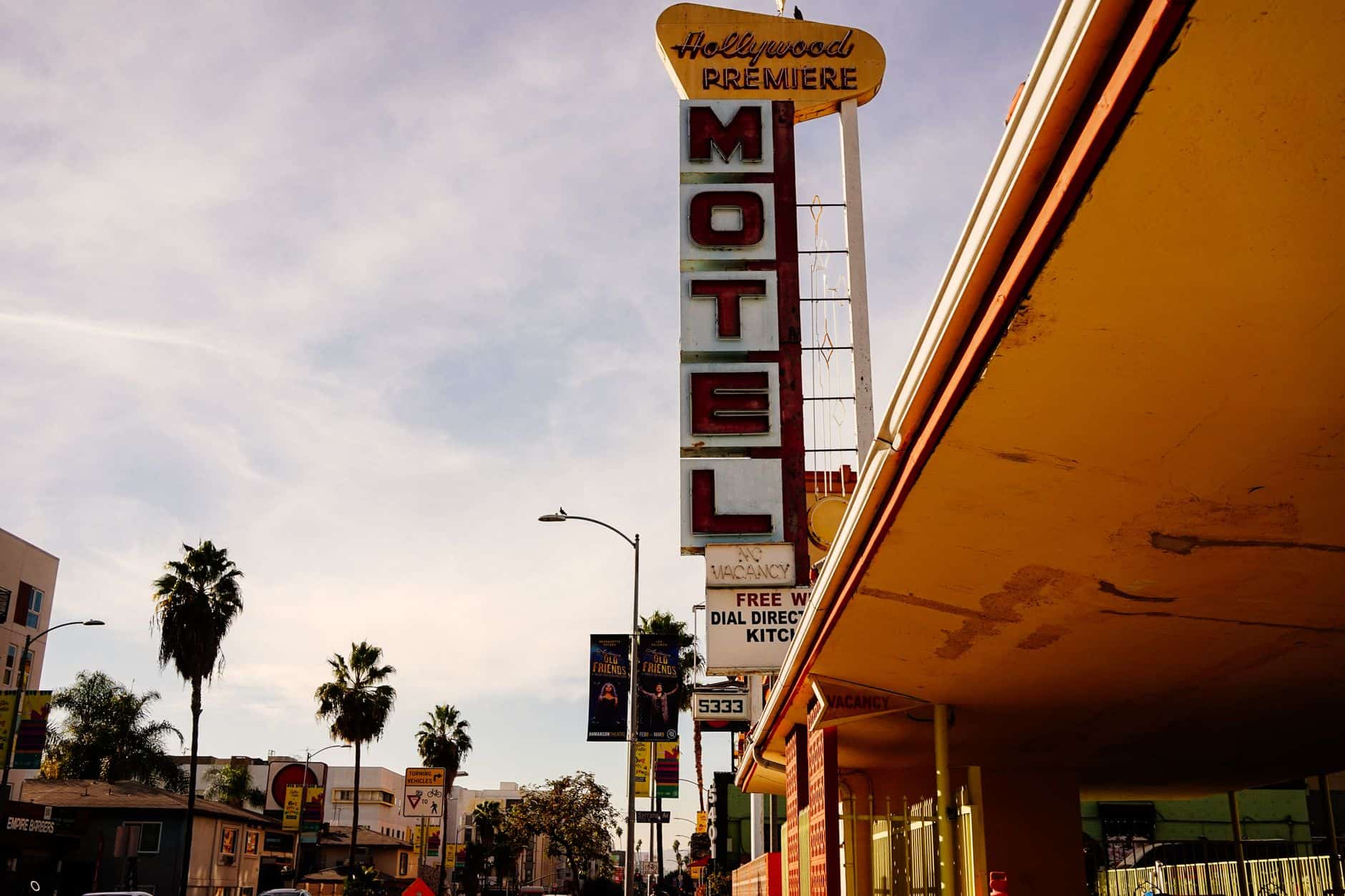
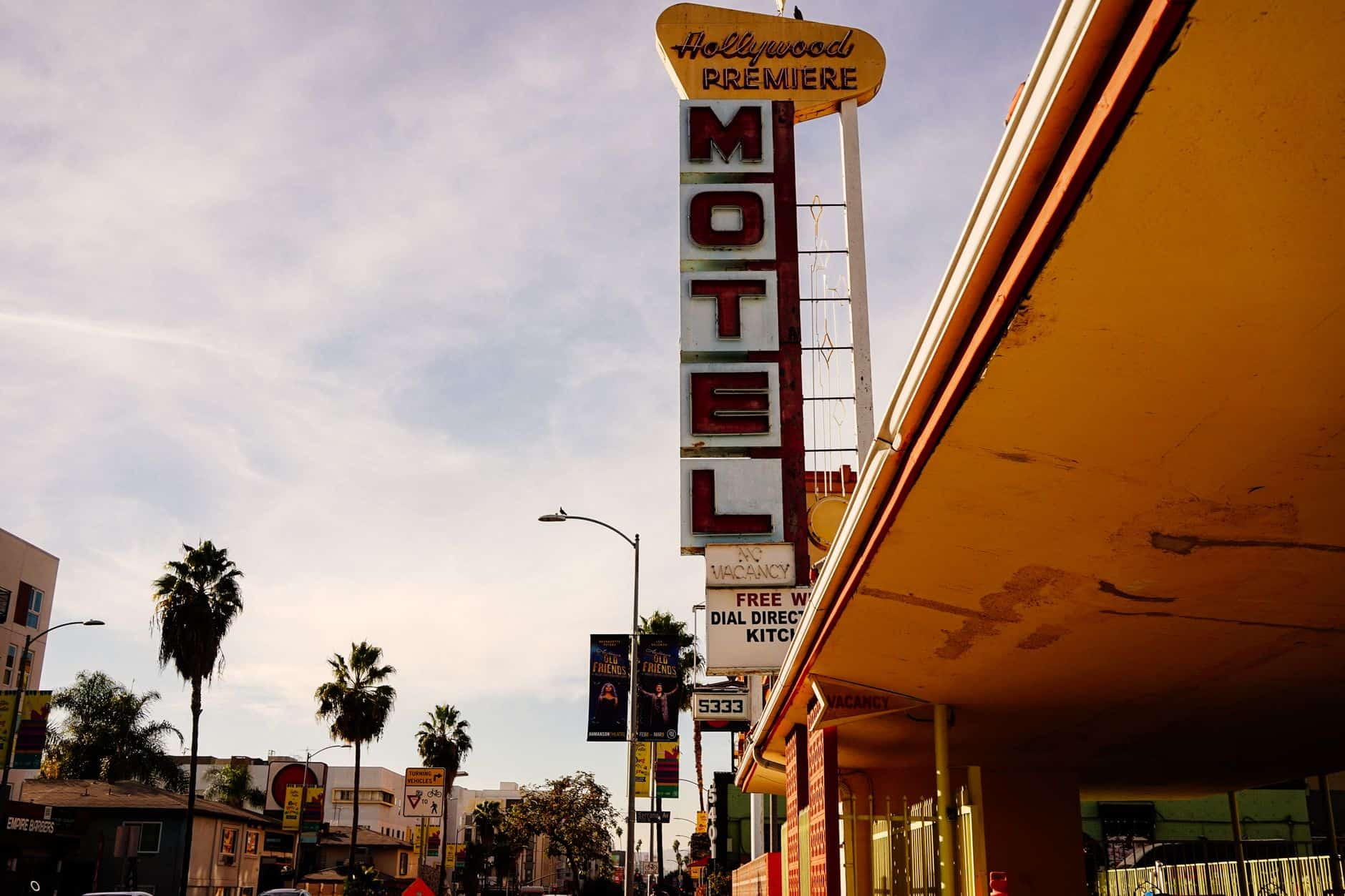
- Instagram — the vintage neon sign, the outdoor pool with a mountain backdrop, the room that’s been styled within an inch of its life — motels photograph beautifully. The visual content they generate drives bookings in a way that a Hampton Inn never will.
Add those together and you have a market for something that didn’t really exist ten years ago: the premium roadside motel experience.
The Actual History of the American Roadside Motel
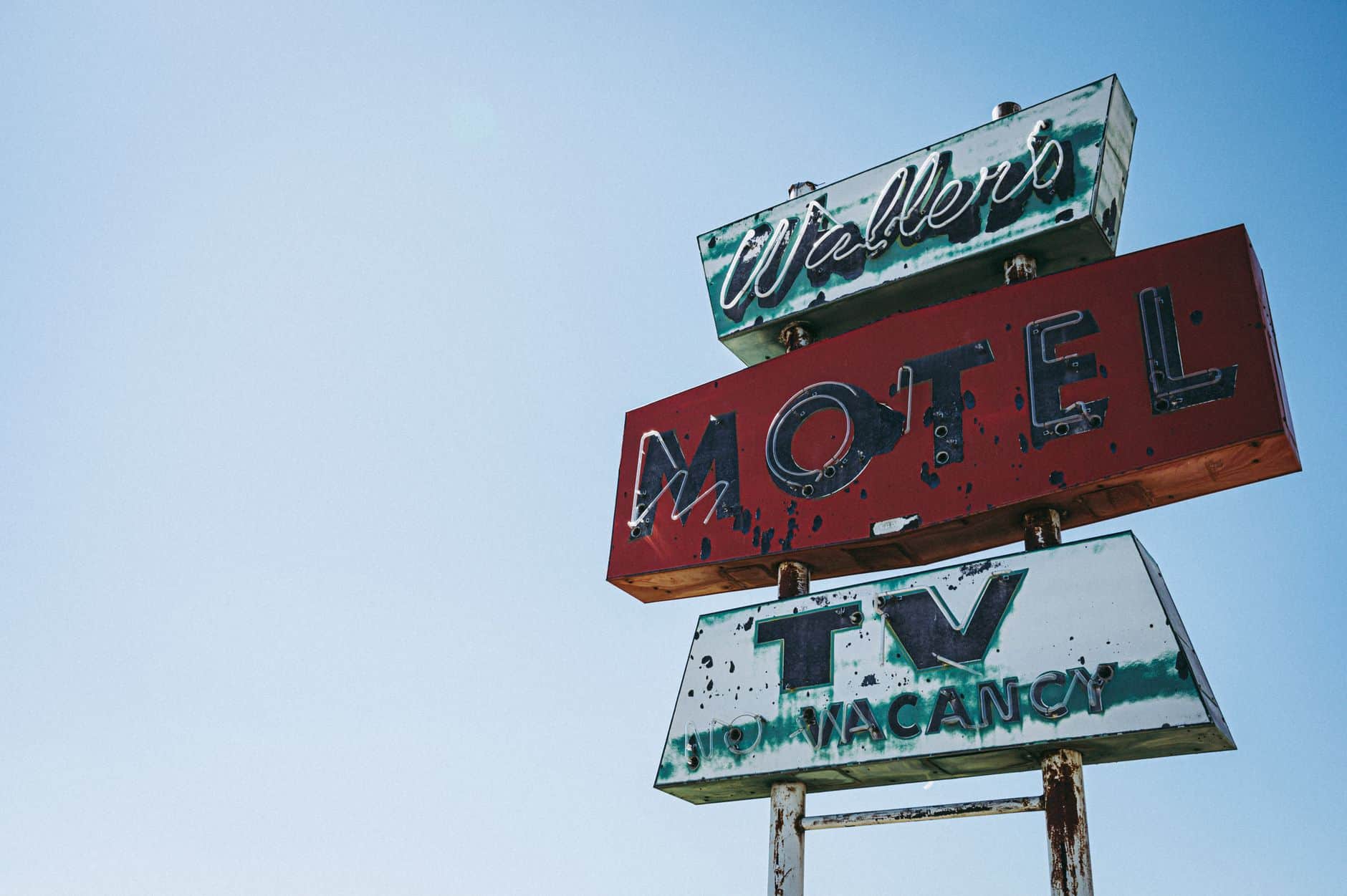
The motel (a portmanteau of “motor” and “hotel”) was essentially invented by the American car culture of the 1920s and 1930s. Before the interstate highway system standardized travel, roadside motor courts and motor lodges dotted US routes — typically a cluster of small cabins or rooms facing a parking lot, designed for guests arriving by car who didn’t want to navigate downtown parking to reach a traditional hotel.
The golden age was roughly 1950–1970. Motels built in this era often featured:
- Kidney-shaped pools (the design was cheap to build and looked striking from the road)
- Neon signage designed to be visible at highway speed in the dark
- Exterior corridors (rooms opening directly to the parking lot rather than an interior hallway)
- Ice machines in every wing (a genuine novelty and luxury in the early years)
The interstate system both made and broke the roadside motel. The early interstates pulled traffic off old US routes, killing the motels on those roads. But the new interchanges created demand for accommodation — which the franchise chains (Holiday Inn, Howard Johnson, later Motel 6 and Super 8) exploited ruthlessly with standardization. The independent motor lodge that couldn’t keep up became the cash-only motel with the peeling paint and the proprietor who watches through a window.
That’s the version most people know. And it persisted for decades in the public imagination even as a subset of these properties quietly became something else entirely.
What a Good Renovation Actually Looks Like vs. Lipstick on a Dump
This is where the honest consumer information lives, because not all motel renovations are created equal.
A genuine renovation involves:
- Complete plumbing replacement — old motel plumbing is often galvanized steel from the 1960s, which means brown water in the morning and low pressure. Good renovations replace it entirely.
- Window replacement — old motel windows are single-pane aluminum, which means street noise and temperature problems. Double-pane windows make a room 40% quieter.
- HVAC overhaul — the wall unit AC/heater in a 1970s motel is loud, inefficient, and often moldy inside. Real renovations replace these with modern mini-splits.
- Electrical upgrades — vintage motels often have inadequate amperage for modern device charging and appliances
- Mattress and bed quality — the single biggest complaint driver in motel reviews. Budget renovators paint the walls nice colors and put art on them, then put the same mattress under the new duvet cover. You can tell within ten seconds of sitting down.
A surface renovation — the one that creates Instagram content without addressing the underlying infrastructure — looks great in photos and delivers a mediocre or bad experience. Spotting it in advance requires reading reviews carefully for mentions of noise, temperature issues, water pressure, and mattress quality. Not the star rating: the actual text.
Bad signs even in good photography: reviews mentioning thin walls between rooms, HVAC that sounds like a machine gun, “quaint” as a description of room size (motel rooms are often genuinely tiny), and the phrase “charming but” in front of anything.
The Regions Where the Motel Renaissance Is Most Real
The boutique motel revival is not evenly distributed geographically. The places where it’s most legit:
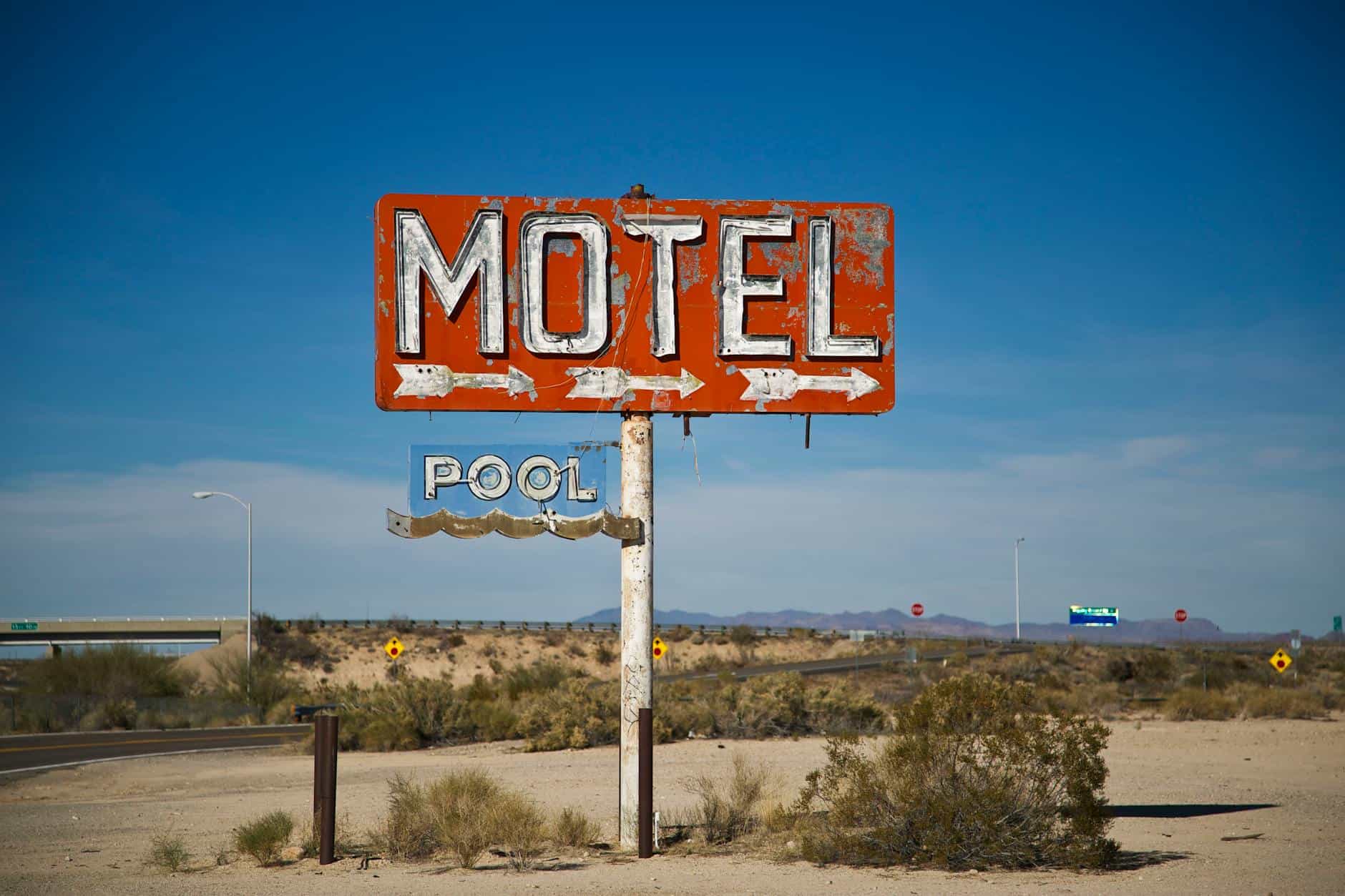
- The American Southwest — Marfa, TX; Bisbee, AZ; Joshua Tree, CA; along Route 66 in New Mexico. The desert landscape, the retro highway culture, and the proximity to Instagram-famous natural settings have made this region the heartland of the boutique motel moment. El Cosmico in Marfa (when it eventually reopens after its renovation) and the Thunderbird Hotel in Marfa are the genre-defining examples.
- Hudson Valley and Catskills, New York — close enough to NYC that design-conscious weekenders drove investment into formerly decrepit properties. The Arnold House, the Woodstock Way, the Hasbrouck House — this cluster of renovated properties is genuinely excellent.
- Pacific Coast Highway corridor — several old motor lodges in Northern California coastal towns have been renovated thoughtfully. The architecture suits the setting.
- Appalachian Trail corridor — demand from hikers and road trippers has driven investment in properties in western North Carolina, the Shenandoah Valley, and parts of Vermont.
The boutique motel revival is far less real in the Midwest and South, where the economics of renovation don’t pencil out as easily and the Instagram-driven demand is lower. In those regions, the motel options are still largely chain properties and independents that vary from clean-and-honest-about-it to actively alarming.
The Instagram Effect and the Honest Problem With It
The same Instagram attention that drove investment into these properties has also created a specific set of problems:
- Prices have risen faster than the renovations justify in some cases — you’re paying partly for the visual content, not just the stay
- Pools that exist primarily for photography are often cold, poorly maintained, and surrounded by guests trying to get the right angle rather than actually swimming
- Properties in extremely Instagram-popular locations (Joshua Tree especially) are booked weeks out, and the crowds have transformed the atmosphere that made the place desirable in the first place
- Some properties have doubled down on aesthetics at the expense of practicality — tiny rooms, no closets, minimal storage, nowhere to put your bags — because storage solutions don’t photograph well
The best boutique motel experiences are at properties that have figured out the balance: genuinely functional and comfortable, with an aesthetic that’s considered but not performative. They exist. They’re increasingly hard to find at the price point that originally made them interesting.
What You’re Actually Getting for the Price
At $150–$200/night for a renovated boutique motel, here’s the honest comparison:
- Versus a budget chain at $80–$100/night: You’re getting significantly more character, usually a better pool situation, and a more interesting location. Whether you’re getting better sleep depends entirely on the specific property’s renovation quality.
- Versus a mid-range full-service hotel at $180–$220/night: You’re giving up an interior corridor (noise control), a lobby, usually a restaurant or bar, and the consistency of a brand standard. You’re getting more personality, a parking spot outside your door, and usually a better story to tell.
- Versus an Airbnb at a similar price: You’re getting daily housekeeping (usually), no check-in drama, and no surprise cleaning fee. You’re giving up the kitchen and the extra space.
For road trips specifically, the motel format is genuinely well-suited to the mode of travel: you can pull right up to your room, you don’t have to drag bags through a lobby, and in the morning you’re in your car and moving within minutes of waking up. The exterior corridor that used to be a drawback is actually a feature if you’re living out of a car.
How to Find the Good Ones Before They Get Overpriced

The discovery pipeline for good boutique motels:
- Hipcamp and Dyrt for properties adjacent to outdoor recreation — these platforms surface indie properties that don’t show up on Expedia
- Hip Motels (hipmotels.com) — a curated directory specifically for renovated vintage motels, updated regularly
- Google Maps review mining — search “motel” in the area you’re traveling and sort by newest reviews. Look for places with recent renovation mentions.
- Road trip specific Facebook groups — “Route 66 Travelers,” “Vanlife,” regional road trip groups. These communities share recent finds before they hit mainstream travel press.
- The rule of the recent review — if a motel’s reviews are from 2018-2019 and the most recent is from early 2022, something changed. Either it got better (recent renovation) or it got worse (ownership change). Either way, call and ask about what’s changed. Independent motel owners almost always answer the phone.
The golden window for the best boutique motel deals is usually the 12–24 months after a renovation, before the property has been fully discovered by travel press and the prices have been optimized upward. The properties in that window right now are in the mid-South, the Northern Rockies corridor, and small towns in the Pacific Northwest — places where the design sensibility has arrived but the full demand wave hasn’t caught up yet.