Sedona Has 10,000 Residents and 3 Million Annual Visitors. That’s a 300-to-1 Ratio Locals Live With Every Day.
We may earn money or products from the companies mentioned in this post. This means if you click on the link and purchase the item, I will receive a small commission at no extra cost to you ... you're just helping re-supply our family's travel fund.
Sedona’s population, per the latest U.S. Census Bureau estimate, sits at 9,778 residents (U.S. Census Bureau). The Sedona Chamber of Commerce and multiple tourism analyses put annual visitation at roughly 3 million people, a ratio of about 300 visitors for every permanent resident — among the most extreme visitor-to-resident ratios of any town in the country, driven by the combination of the city’s red-rock scenery, its accessibility from Phoenix, and strict development limits that keep the town itself small even as demand keeps climbing (Arizona Republic).
Why the Town Can’t Simply Grow to Meet Demand
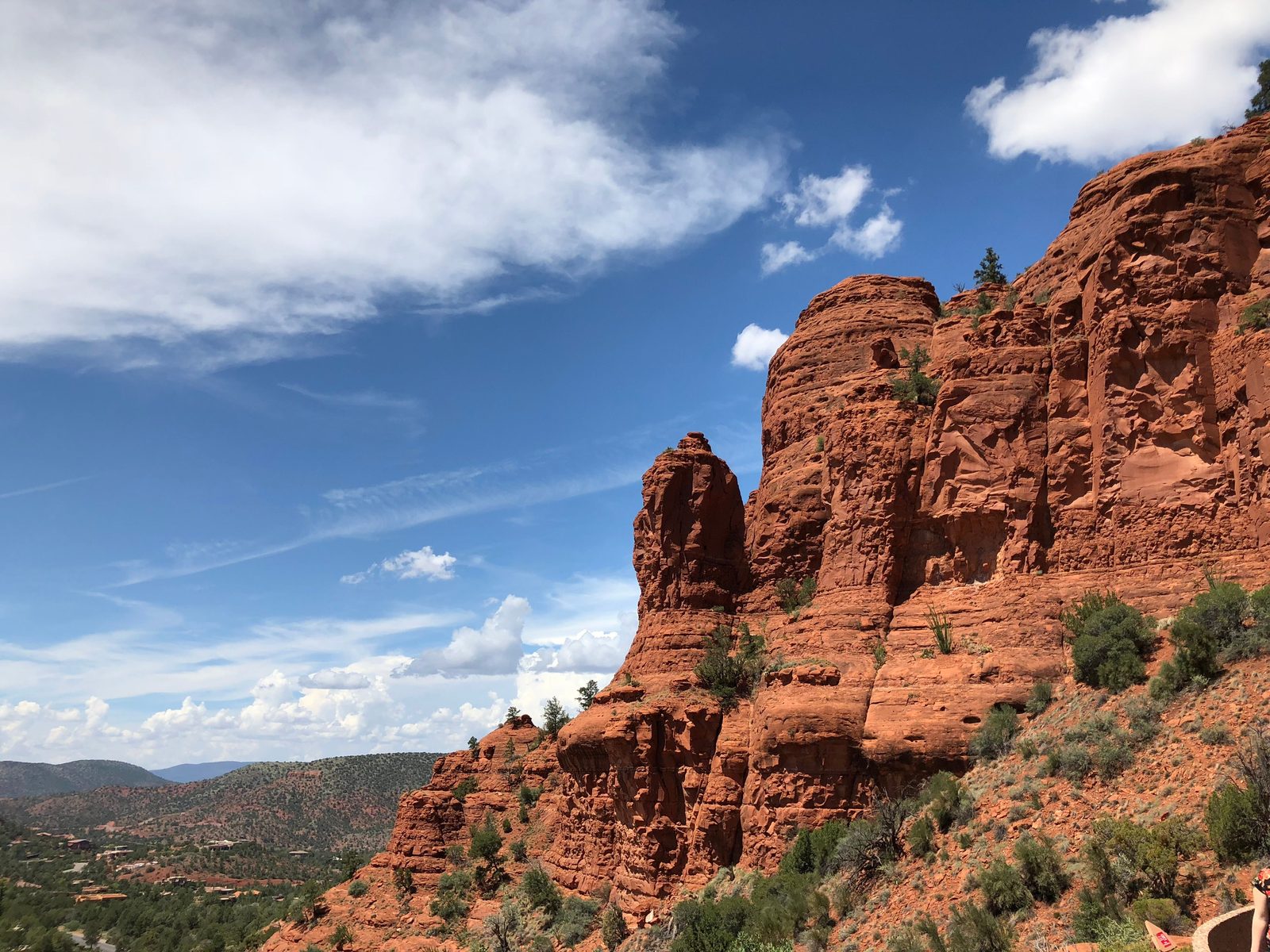
Sedona is almost entirely surrounded by the Coconino National Forest and additional protected land, including Red Rock State Park, which makes large-scale residential or commercial expansion essentially impossible under current federal and state land management rules (Sedona real estate market analysis). That fixed geographic ceiling means Sedona’s 300-to-1 visitor ratio isn’t a temporary imbalance the town might eventually grow out of — it’s a structural condition baked into the landscape, with essentially no path for the permanent population to expand meaningfully to better match visitor demand, short of the federal government releasing protected land for development, which is not under serious consideration.
What This Ratio Does to Daily Life for Residents
- Traffic on State Route 179, Sedona’s main commercial corridor, regularly backs up for miles during peak season, a daily reality for residents running basic errands, not just visitors
- Short-term rental conversion has consumed a meaningful share of Sedona’s already-limited housing stock, pushing many of the town’s service workers to commute from Cottonwood or the Verde Valley, 20-30 minutes away
- Trailhead parking at popular hikes like Cathedral Rock and Devil’s Bridge routinely fills before 9 a.m. on weekends, prompting the Forest Service to implement timed and paid parking systems at several sites
- Median home prices have climbed well beyond what the local service-industry wage base can support, mirroring the same imbalance found in other high-visitor, land-constrained tourist towns
The Economic Trade-Off That Keeps the Town Committed to Tourism Anyway
Tourism generates an estimated $700 million or more annually in economic activity for a town of fewer than 10,000 residents, according to real estate and tourism industry analyses of the local market — a figure so large relative to the population that few local officials seriously entertain policies that would meaningfully restrict visitor volume, even as residents increasingly voice frustration over traffic and cost-of-living pressure. The math is stark: tourism revenue at this scale effectively subsidizes municipal services and local business viability far beyond what a town of Sedona’s actual population size could otherwise generate or sustain on its own.
How to Actually Visit Without Adding to the Worst of It
Visiting on weekdays rather than weekends, arriving at trailheads before 8 a.m., and booking timed-entry parking permits in advance for the most popular hikes all meaningfully reduce a visitor’s personal contribution to Sedona’s congestion. Staying in Cottonwood or the Village of Oak Creek rather than directly in central Sedona also spreads lodging demand — and lodging tax revenue — into surrounding communities that have more room to absorb it, an option increasingly recommended by locals themselves as Sedona’s own capacity continues to strain against a visitor base that shows no sign of leveling off.
How Sedona Compares to Other Extreme-Ratio Tourist Towns
Sedona’s 300-to-1 visitor ratio puts it in rare company among American tourist towns, comparable in kind to gateway communities like Jackson, Wyoming or Estes Park, Colorado, though Sedona’s ratio runs considerably higher than either, given its combination of a smaller resident base and a visitor volume driven by its relatively easy 2-hour drive from the Phoenix metro area’s roughly 5 million residents. That proximity to a massive nearby population center, rather than requiring a multi-day trip the way more remote national park gateways do, is a specific factor driving Sedona’s numbers higher than comparably scenic but more remote destinations.
What Locals Actually Want Visitors to Know
- Water usage restrictions apply seasonally given the region’s desert climate and the strain tourism places on local water infrastructure
- Several popular trailheads now require a Red Rock Pass or timed permit, purchasable in advance to avoid discovering the requirement upon arrival
- Supporting Sedona’s independent restaurants and galleries, rather than the chain options that have crept in along the main highway corridor, keeps more tourism revenue with longtime local operators
The Bottom Line for Anyone Planning a Visit
Sedona’s math isn’t going to change — the land constraints are permanent and the visitor demand shows no sign of slowing. Understanding the 300-to-1 ratio before you go is the difference between frustration at the traffic and appreciation for how the town manages to function at all.