Houston Doesn’t Have Zoning Laws. Montrose, the Heights, and EaDo Are What Happens When a City Grows Without Rules.
We may earn money or products from the companies mentioned in this post. This means if you click on the link and purchase the item, I will receive a small commission at no extra cost to you ... you're just helping re-supply our family's travel fund.
Houston is the largest city in the United States without conventional zoning ordinances, a fact that shapes its neighborhoods in ways visitors from more rigidly zoned cities often find disorienting — a $2 million modern townhouse can sit directly next to a decades-old bungalow, and a bar can open next to a church with none of the buffer requirements standard elsewhere. That lack of formal zoning has produced three of the more distinctive, organically evolved neighborhoods in any major American city: Montrose, the Heights, and East Downtown, known locally as EaDo.
Montrose: Houston’s LGBTQ+ Historic Core, Now a Broader Arts and Nightlife District
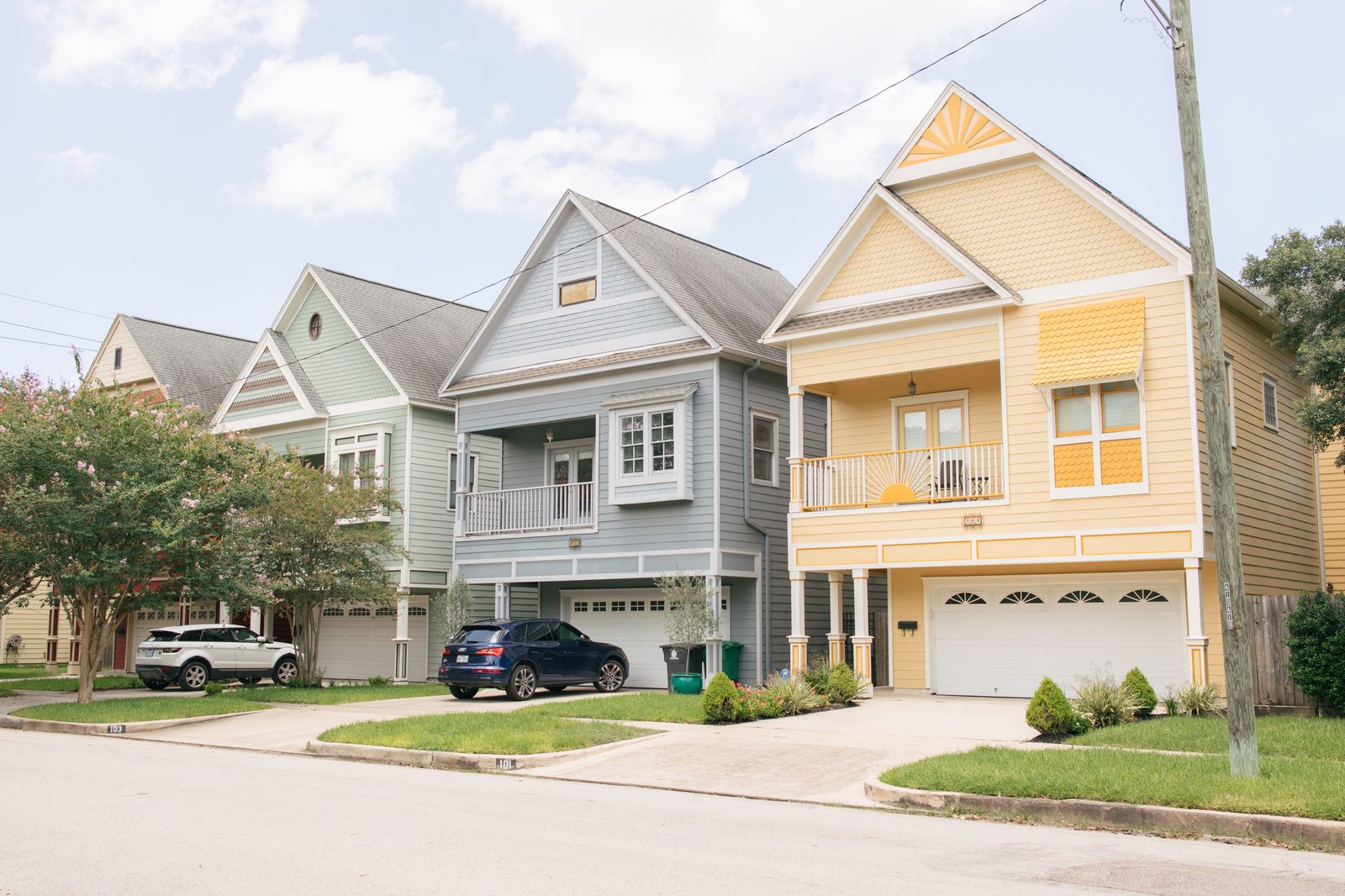
Montrose emerged as the center of Houston’s LGBTQ+ community starting in the 1970s and 1980s, and while the neighborhood has diversified considerably since then, it retains a visible concentration of LGBTQ+-owned bars, bookstores, and community institutions alongside a broader arts and antique district along Westheimer Road. The neighborhood’s built environment reflects Houston’s zoning-free development pattern directly: converted bungalows sit next to new mixed-use developments, with little of the architectural consistency zoning ordinances typically enforce elsewhere, giving Montrose a visual texture that changes block by block rather than following a single coherent design language.
The Heights: Historic Preservation Winning Out Over Houston’s Usual Free-for-All
- The Heights is one of the few Houston neighborhoods with a historic preservation ordinance restricting demolition and major exterior alterations to its Victorian and Craftsman-era homes
- 19th Street and White Oak Drive anchor the neighborhood’s commercial corridors, mixing longtime local businesses with newer boutiques and restaurants
- Home values have climbed steadily as the neighborhood’s walkability and historic character have drawn buyers away from Houston’s more sprawling, car-dependent suburbs
- The Heights was originally developed in the 1890s as a separate town before being annexed by Houston, which explains why its street grid and architecture differ so distinctly from surrounding areas
EaDo: What Houston’s Lack of Zoning Looks Like in Real Time
East Downtown, still commonly called EaDo, illustrates Houston’s development pattern in its most visible, ongoing form: warehouses and industrial lots sit interspersed with new luxury apartment towers, breweries, and the Toyota Center-adjacent entertainment district anchored by the Houston Dynamo’s stadium. The neighborhood has transformed dramatically over roughly the past fifteen years from an industrial and light-manufacturing zone into a mixed residential and entertainment district, a shift that happened almost entirely through market forces and individual property decisions rather than any coordinated municipal planning process, since Houston has no zoning mechanism to guide or restrict that kind of transition.
Why Houston Never Adopted Zoning in the First Place
Houston voters have rejected zoning proposals multiple times going back to the mid-20th century, reflecting a deep-seated local preference for property-rights flexibility and skepticism of government land-use control that traces back to the city’s oil-boom-era growth culture. Instead of zoning, Houston relies on a patchwork of deed restrictions negotiated privately within individual subdivisions, along with targeted ordinances like the Heights’ historic preservation rules, to manage land use in specific areas — a fundamentally different regulatory philosophy than nearly every other major American city, and one that continues to produce the kind of unpredictable, block-by-block variation that makes neighborhoods like Montrose, the Heights, and EaDo feel so distinct from each other despite sitting within the same unzoned city.
What to Actually Do With a Day in Each Neighborhood
A reasonable day trip covers all three: morning coffee and gallery browsing in Montrose, an afternoon walking 19th Street in the Heights for boutiques and lunch at one of its longtime local restaurants, and evening drinks or a Dynamo match in EaDo’s stadium district. All three neighborhoods sit within a roughly 15-20 minute drive of downtown Houston and of each other, making this an achievable single-day loop for visitors who want to understand how differently Houston’s neighborhoods can evolve without a zoning map dictating the outcome.
What This Means for Houston’s Future Growth
Houston’s population continues to grow faster than most major U.S. metros, and its lack of zoning means that growth will keep producing the same unpredictable, market-driven neighborhood transformations that turned EaDo from an industrial zone into an entertainment district within roughly fifteen years. Urban planners studying Houston’s model remain divided: some point to the city’s comparatively affordable housing costs relative to zoned peer cities as evidence the system works, while others point to the same unpredictability that can make a quiet residential block suddenly abut new high-density development as evidence of real costs to the model too.
A Few Practical Notes for Visiting
- Montrose and the Heights are both very walkable in their core commercial strips, though a car remains useful for connecting between neighborhoods
- Houston’s heat and humidity make a spring or fall visit considerably more comfortable for neighborhood walking than a summer trip
- EaDo’s evening entertainment district gets significantly busier on Dynamo match nights and around Toyota Center events
The Bottom Line for Anyone Planning a Visit
Houston’s neighborhoods reward visitors willing to treat the city’s lack of zoning as a feature to explore rather than a planning failure to navigate around. Montrose, the Heights, and EaDo each tell a different version of what an American city looks like when the market, not a zoning map, decides what gets built next door.