Montgomery’s 195,000 Residents Live Amid Civil-Rights History and State Power—Here’s How to Read the City as a Visitor
We may earn money or products from the companies mentioned in this post. This means if you click on the link and purchase the item, I will receive a small commission at no extra cost to you ... you're just helping re-supply our family's travel fund.
Montgomery, Alabama, has about 195,000 residents, and few American cities of its size carry as much history. Visiting Montgomery Alabama means standing in the place where the Confederacy was founded, where the bus boycott began and where the Selma to Montgomery marchers ended. It is also a working state capital, with government buildings, a military base and a modest downtown that is still finding its footing.
The best way to read the city is to pair its great sites with its ordinary streets. Here is how to do it, what to book ahead and how to give the visit enough time.
How to Read Montgomery as a Visitor
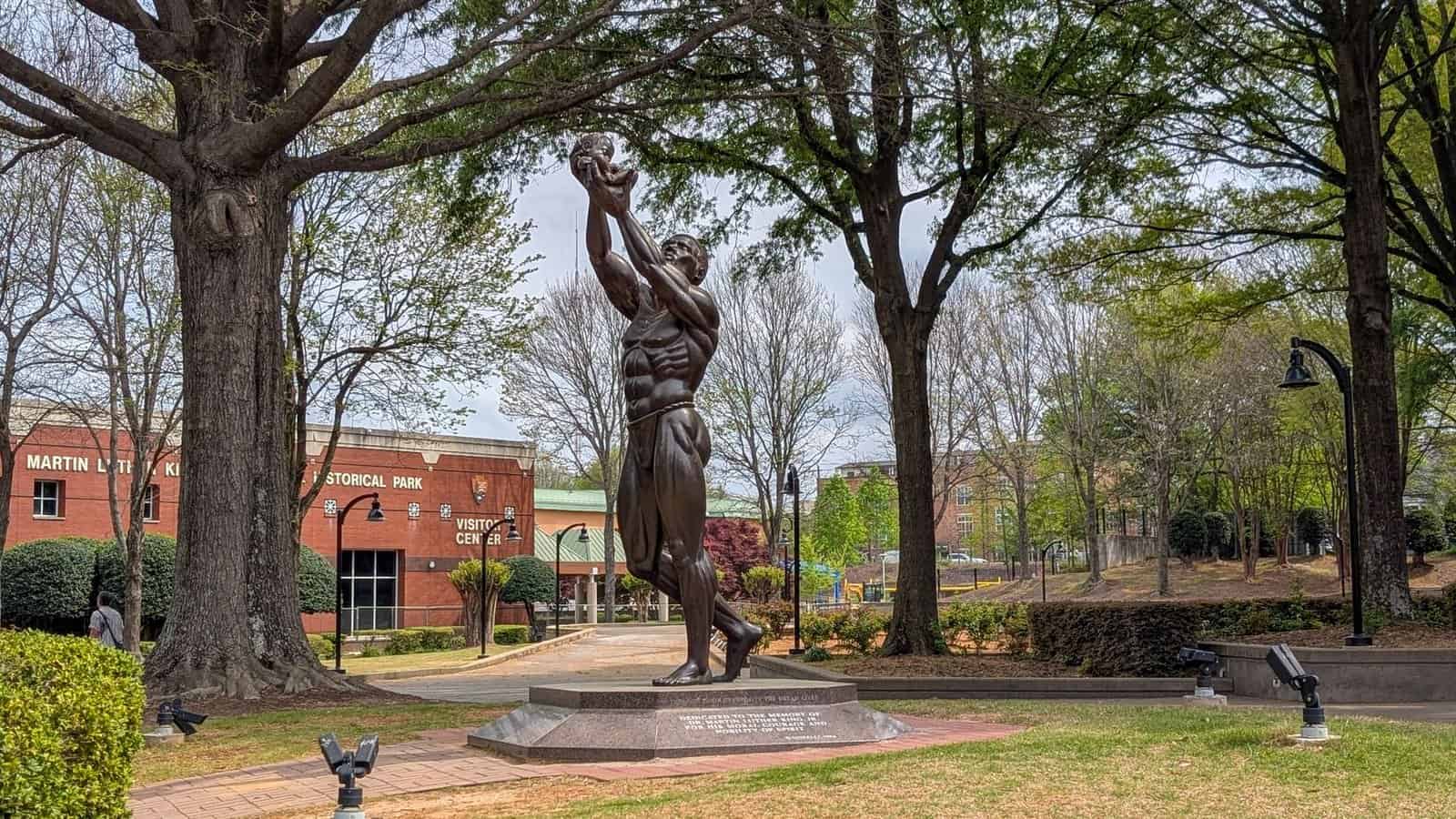
Montgomery is the capital of Alabama and the seat of Montgomery County. The Census Bureau’s 2024 estimate puts the city at about 195,000 residents, making it one of the state’s largest cities along with Birmingham, Huntsville and Mobile. It sits on the Alabama River in the state’s Black Belt region, named for its dark soil and later for its large Black population. That history is central to its identity.
The city’s story has two threads that run side by side: state power and civil-rights struggle. The first brought the capitol, the Confederate White House and the seat of segregationist government. The second brought the people who challenged them. Seeing both gives you a clearer picture than visiting only the museums.
The state power thread
The Alabama State Capitol sits on a hill at the top of Dexter Avenue. Jefferson Davis took the oath of office as president of the Confederacy on its steps in February 1861, and Montgomery briefly served as the Confederate capital. Nearly a century later, on March 25, 1965, thousands of marchers who had walked from Selma arrived at the same steps to demand voting rights, with Martin Luther King Jr. speaking to the crowd. The building is open for tours, and it is worth seeing for its architecture and its history. Check hours before you go.
Near the capitol is the First White House of the Confederacy, the house where Davis and his family lived during the brief time Montgomery was the capital. It is now a museum. Visiting both sites in a single morning helps you understand how closely the story of the city is tied to the story of the state.
The civil-rights thread
Montgomery was the stage for some of the most important moments in the movement.
- Dexter Avenue King Memorial Baptist Church: King served as pastor here from 1954 to 1960. The church, a short walk from the capitol, offers guided tours of the sanctuary and a basement mural that depicts the Montgomery story.
- Rosa Parks Museum: Operated by Troy University near the spot where Parks was arrested on December 1, 1955, the museum uses exhibits and a reenactment to tell the story of the 381-day bus boycott.
- Freedom Rides Museum: Housed in the former Greyhound bus station, it commemorates the 1961 Freedom Riders who were attacked when they arrived in Montgomery.
- The Legacy Museum: Run by the Equal Justice Initiative and opened in 2018, it traces the line from slavery to mass incarceration, with powerful exhibits. Allow two to three hours.
- The National Memorial for Peace and Justice: Also opened in 2018 by the Equal Justice Initiative, it honors thousands of victims of racial terror lynchings in the United States. It sits on a hill a few miles from downtown, and visitors should allow at least an hour. Both sites require advance tickets for some days, so book online before you go.
Planning the Days
Montgomery rewards a slow pace, because the content is heavy and the sites are emotionally demanding. Two days is the minimum for the main sites, and three is better.
A sample itinerary
On the first morning, begin at the Rosa Parks Museum when it opens. Walk to Dexter Avenue and tour the church. Continue up the hill to the capitol and the Confederate White House. Eat lunch downtown. In the afternoon, visit the Legacy Museum. Rest in the evening along the riverfront, where there is a minor-league ballpark, an amphitheater and a boardwalk.
On the second morning, go to the National Memorial for Peace and Justice, ideally early when it is cooler and quieter. Then visit the Freedom Rides Museum. In the afternoon, explore neighborhoods or the Hank Williams Museum, which honors the country singer who is buried in Montgomery. If you have a third day, see the Alabama Shakespeare Festival, the Montgomery Museum of Fine Arts or Old Alabama Town, a collection of restored historic buildings.
Beyond the Museums
The sites are essential, but the city has other layers.
Downtown and the riverfront
Downtown Montgomery has Court Square, with a historic fountain and a marker commemorating the city’s role as a slave market. The Riverwalk Stadium is home to the Montgomery Biscuits, the Double-A baseball team, whose games are a popular summer outing. Restaurants and cafes have opened in renovated buildings, and the area is walkable, though many visitors drive.
Neighborhoods
Cloverdale and Old Cloverdale, with older homes and shops, show a residential side. Alabama State University, a historically Black university founded in 1867, is a center of activity. The Maxwell Air Force Base is a major employer, and the Hyundai plant is a major economic force in the region. Together with state government, these institutions drive the local economy.
Food
Montgomery is known for Southern cooking, including fried chicken, barbecue, catfish and vegetables. Look for local diners and meat-and-three restaurants, and be prepared for lunch crowds on weekdays when government workers fill the places near the capitol. Check hours, since some restaurants close early or on Sundays.
Visitor Tips
- Book Legacy Museum and Memorial tickets ahead, especially on weekends and in spring.
- Plan for heat from May through September. Start early and drink water.
- Wear comfortable shoes, since you will walk on hills and uneven pavement.
- Give yourself time between emotionally heavy sites.
- Talk with local guides and museum staff, who often share personal stories.
- Be respectful in memorials and churches, which are active places of worship and mourning.
- Consider a day trip to Selma, about an hour west, to walk across the Edmund Pettus Bridge and visit the National Voting Rights Museum.
Visiting Montgomery Alabama: A Practical Plan
Montgomery is easy to reach and easy to navigate. Montgomery Regional Airport has limited service, mainly to hubs such as Atlanta, Charlotte and Dallas, so many visitors fly into Birmingham, about 90 minutes north, or Atlanta, about two and a half hours east, and drive. Interstates 65 and 85 meet near the city. A car is the simplest way to get around, though the historic core around Dexter Avenue and Court Square can be walked.
Where to stay
Hotels cluster downtown and along the interstates. Downtown choices are within walking distance of the capitol, the Rosa Parks Museum and the riverfront. Others near the interstate offer easy parking and lower rates. Check rates before you go, since state government events, college football weekends and conferences can fill rooms and raise prices.
What to budget
Admission to most civil-rights sites is modest, often in the range of ten to twenty dollars, and some are free, though prices change and several require advance reservations. Meals at local restaurants are generally affordable compared with larger cities. A full weekend, with lodging, food, parking and admissions, can be done at moderate cost, but check current prices.
Reading the City on Foot and on Wheels
Start with the walkable core. Dexter Avenue slopes up toward the capitol, and the block is lined with markers and historic buildings. Walk it slowly and read the plaques. Then drive or take a ride service to the memorials and museums that are farther out. A guided tour can add context, and some local guides specialize in civil-rights history.
The Alabama River and the city’s origins
Montgomery grew up along the river, which carried cotton and goods to Mobile and the Gulf. The riverfront today includes a park, a boat dock and a historic railroad station, Union Station, once a hub for passengers. The area is a good place to sit after a heavy day, and it offers a sense of how geography shaped the city. Sunset over the water is calm and often beautiful.
The Black Belt context
Montgomery is the gateway to Alabama’s Black Belt, a band of counties with fertile soil, a history of cotton plantations and a large share of Black residents. Many of the counties have faced poverty and population loss. Traveling beyond the city, to places such as Selma, Lowndes County, Tuskegee and Marion, deepens the picture of the struggle for voting rights and education. Tuskegee has the Tuskegee Institute National Historic Site and the Tuskegee Airmen National Historic Site, both operated by the National Park Service.
Living City, Not Just a Memorial
It is easy to treat Montgomery as a set of sites. It is also a city of people with jobs, schools, churches and neighborhoods. Some residents welcome visitors who come to learn, and others are weary of being defined by the past. Eat locally, shop at independent stores and talk to people when the moment is natural. Visit a church service if invited, and observe respectfully.
Challenges and change
Like many Southern cities, Montgomery faces issues such as poverty, uneven school performance and population shifts from the center to the suburbs. Redevelopment downtown has created new restaurants and housing, but many neighborhoods still need investment. A visitor who sees both the polished downtown and the surrounding areas gets a more complete view.
Reading the layers
One way to organize your visit is to think in three layers. The first is the official city: the capitol, courthouse and monuments. The second is the contested city: the sites that tell the story of resistance, memory and conflict. The third is the daily city: the schools, shops and neighborhoods where residents live now. A good trip touches all three. You will not understand Montgomery by the museums alone, and you will not understand it without them.
The Takeaway
Montgomery is not a city you can see in a rush. Visiting Montgomery Alabama works best when you combine the civil-rights sites with the capitol, the riverfront and the neighborhoods that make up everyday life. It is a place of difficult history, and also a place where people live and work now. Give it time, listen and leave with a fuller understanding.