The Dallas Arts District Is 68 Acres of Museums and Concert Halls. Whether It Actually Changed Dallas Is a Different Question
We may earn money or products from the companies mentioned in this post. This means if you click on the link and purchase the item, I will receive a small commission at no extra cost to you ... you're just helping re-supply our family's travel fund.
Dallas built the largest contiguous arts district in the United States, 68 acres of downtown real estate holding the Dallas Museum of Art, the Nasher Sculpture Center, the Perot Museum of Nature and Science, the AT&T Performing Arts Center, and a cluster of theaters and concert halls that would be a point of civic pride in any city. The district turned 40 years old recently, an anniversary marked by retrospectives in the Dallas Observer and Dallas Innovates, both of which asked a version of the same question: did building this much culture in one place actually change what Dallas is, or did it just give the city a very expensive postcard?
A District Built by Committee Decision, Not Organic Growth
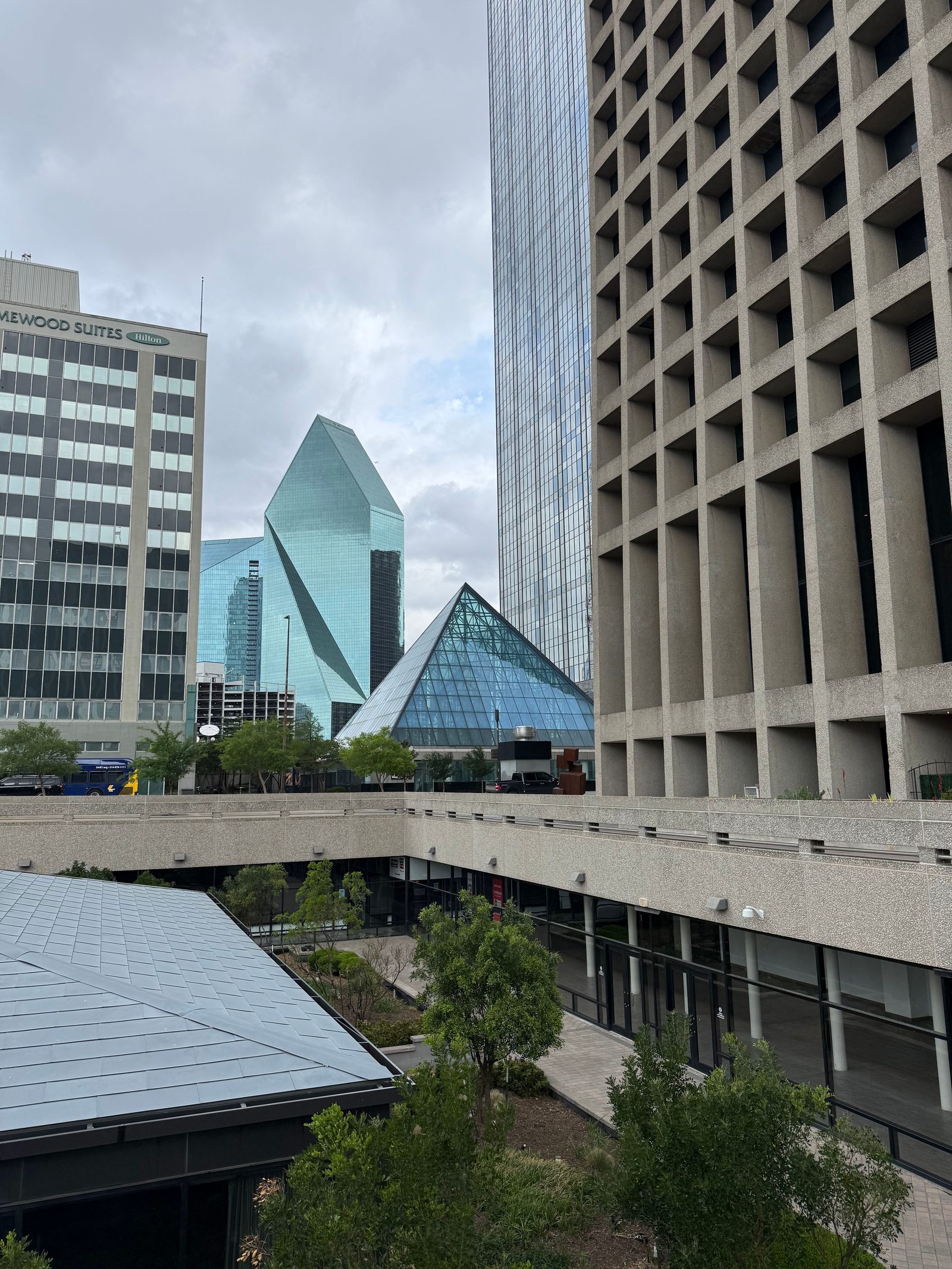
Almost every great arts neighborhood in American history grew the way SoHo grew, or the way the original Warehouse District in most cities grew: cheap rent attracted artists, artists attracted galleries, galleries attracted a scene, and the scene eventually got expensive enough to price out the artists who started it. Dallas didn’t do any of that. The Arts District was a planning decision, mapped out by the city and a coalition of civic and business leaders starting in the early 1980s, who designated a specific 68-acre zone downtown and then spent four decades filling it with institutions, largely funded by a small number of wealthy donor families whose names are now on most of the buildings. The AIA Dallas has written about the district’s architecture as a kind of unintentional survey of star-architect work from four decades, I.M. Pei’s Meyerson Symphony Center, Renzo Piano’s Nasher, Foster + Partners and Rem Koolhaas both contributing to the Performing Arts Center complex.
That top-down model produced buildings of genuine architectural significance faster than any organic arts district ever could. It also produced, for years, a district that emptied out at 10 p.m. and stayed empty most weekday afternoons, because a collection of single-purpose cultural buildings does not automatically generate the street life that comes from an actual mixed neighborhood with residents, bars, and businesses that stay open past a concert’s curtain time. D Magazine’s ten-years-later assessment in 2019 was blunt about this gap between the district’s cultural ambition and its lived, daily texture as an actual place people wanted to walk through rather than drive to for a specific show.
The Economic Case, in Dollars
Whatever the district’s shortcomings as a neighborhood, its economic footprint is not in dispute. The Dallas Arts District’s own economic impact study put the broader North Texas arts and culture sector’s annual economic impact at $1.4 billion, and a separate accounting from the AT&T Performing Arts Center pegged the city’s nonprofit arts and culture sector’s impact at $853 million. Those numbers include everything from ticket sales to the restaurant meals and hotel stays generated by people attending an opera or a museum opening, the standard methodology used by groups like Americans for the Arts to calculate cultural tourism’s ripple effects.
- 68 contiguous acres, the largest urban arts district in the United States
- $1.4 billion annual economic impact attributed to North Texas arts and culture
- $853 million annual impact from Dallas’s nonprofit arts and culture sector specifically
- Architecture by I.M. Pei, Renzo Piano, Foster + Partners, and Rem Koolhaas within a few blocks of each other
What 40 Years Actually Bought the City
The more honest answer to whether the Arts District changed Dallas’s cultural identity is that it changed Dallas’s cultural infrastructure without fully changing the city’s cultural identity in the way its founders hoped. Dallas is still primarily known nationally for football, finance, and a certain brand of big-money Texas ambition, not for its museums, in the way that a city like Chicago or Minneapolis has managed to fold its arts institutions into its broader civic self-image. But infrastructure matters on a longer timescale than identity does. A resident of Dallas today has access to a world-class art museum, a Renzo Piano-designed sculpture garden, and a symphony hall regularly ranked among the best acoustic spaces in the country, all within walking distance of each other, a concentration of cultural capital that simply did not exist in the city before 1984 and that most American cities of Dallas’s size still do not have.
Measuring Cultural Change Against a City’s Reputation
Dallas spent decades fighting a reputation, fair or not, as a city defined by strip malls, highways, and a downtown that emptied out after 5 p.m. The Arts District was conceived specifically to counter that image, concentrating the Dallas Museum of Art, the Nasher Sculpture Center, the Perot Museum of Nature and Science, and the Winspear Opera House and Wyly Theatre into a single walkable zone rather than scattering cultural institutions across the metro the way earlier Dallas development patterns had. The concentration was a deliberate bet that critical mass, not individual institutions, would be what actually shifted outside perception of the city.
Whether that bet paid off depends on which metric gets used. Attendance and philanthropic investment in the district’s institutions have grown substantially since the major building push in the 2000s, and downtown Dallas residential population has grown alongside it, suggesting the district contributed to making downtown a place people wanted to be rather than just drive through. But critics point out that the district remains disconnected from Dallas’s broader neighborhoods, that its use skews toward a narrow demographic able to afford ticket prices and downtown parking, and that the surrounding streets still empty out most evenings the way they always did, which raises a real question about whether concentrated architectural ambition can substitute for the kind of organic street life that develops in cities where cultural life is not confined to a purpose-built district.
The district’s more recent chapter, including redevelopment plans reviewed by the City of Dallas planning commission, has focused specifically on the street-life problem, adding more housing, retail, and reasons to be there on a random Tuesday rather than only during a scheduled performance. Forty years in, the district has stopped being a novel experiment and become simply part of how the city functions, the default answer to where a Dallas family takes visiting relatives, and the answer to whether that counts as changing a city’s identity depends mostly on how patient you are willing to be with the definition of identity.