Your Body Does Something Specific and Measurable After Hour Six of a Long Flight. Almost Nobody Prepares For It
We may earn money or products from the companies mentioned in this post. This means if you click on the link and purchase the item, I will receive a small commission at no extra cost to you ... you're just helping re-supply our family's travel fund.
Cabin air on a long-haul flight is pressurized to the equivalent of roughly 6,000 to 8,000 feet of altitude, and humidity inside the cabin typically drops below 20 percent — drier than most deserts. That combination starts a specific, well-documented chain of physical effects within the first few hours that most travelers attribute vaguely to “flying is tiring” without understanding the actual mechanism, which makes it harder to counteract.
What’s actually happening, hour by hour
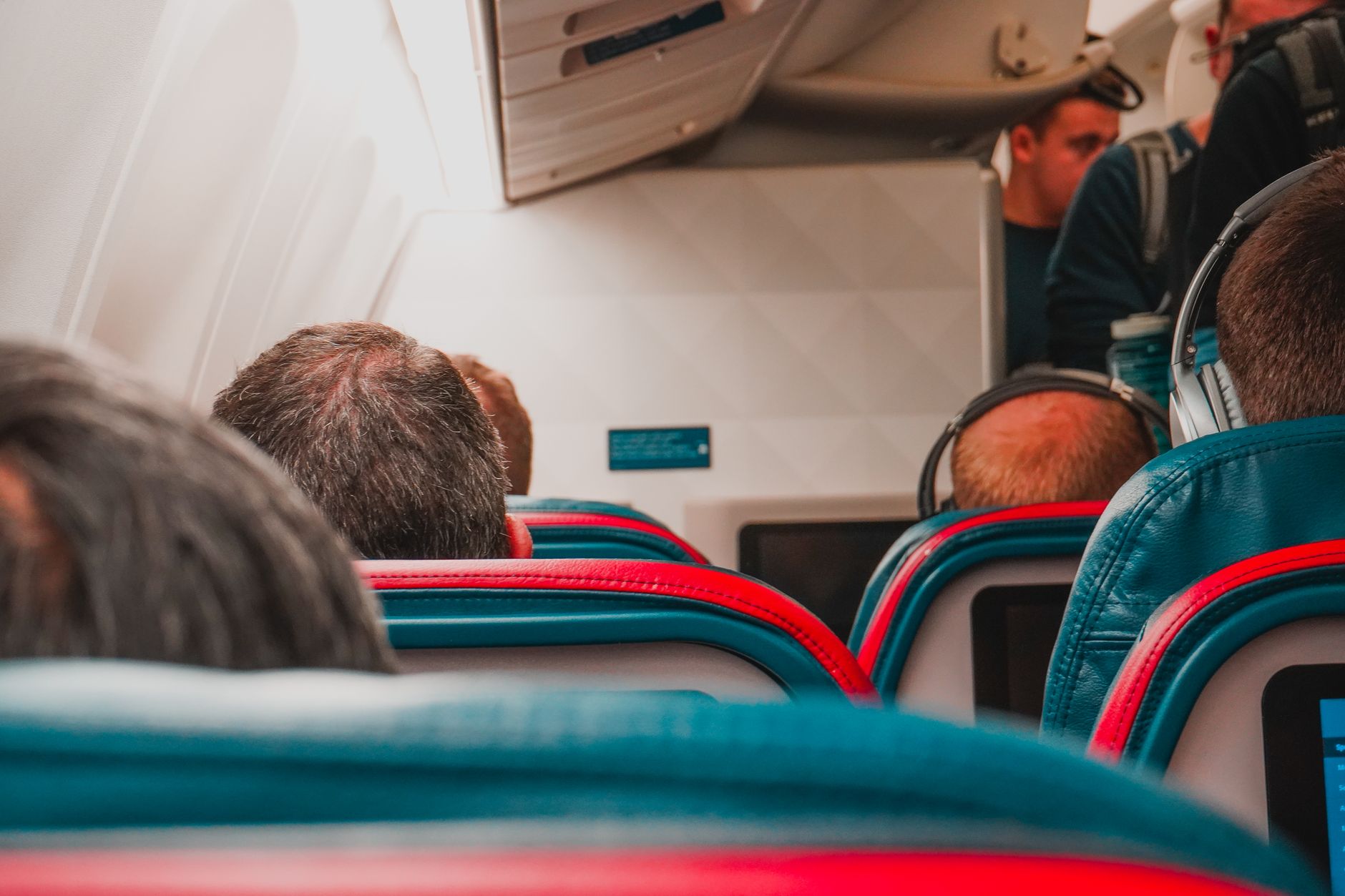
The low humidity dehydrates skin, nasal passages, and eyes measurably faster than ground-level air, which is why lips and skin feel tight and dry within a couple of hours and why a scratchy throat often shows up before landing even without catching anything. The reduced cabin pressure means less oxygen is available per breath than at sea level, which is generally not dangerous for healthy passengers but does contribute to the specific grogginess that hits around hour five or six — your blood oxygen saturation typically drops a few percentage points, enough to be noticeable as fatigue without being medically significant.
Sitting still for that long also causes blood to pool in the legs, which is why ankles swell on long flights and why deep vein thrombosis risk, while low for most healthy travelers, rises measurably on flights over four hours — airlines and health authorities recommend getting up and walking the aisle roughly once an hour specifically because of this. Digestion slows down too; the reduced oxygen and cabin pressure changes affect gut motility, which is part of why airplane meals sit heavier than the same food would on the ground and why bloating is common regardless of what’s eaten.
The jet lag piece is separate and often worse
Everything above happens regardless of time zones, even on a long domestic flight. Jet lag is a distinct problem layered on top when you cross multiple time zones: your circadian rhythm, regulated by light exposure and a part of the brain called the suprachiasmatic nucleus, doesn’t reset instantly, and the general rule of thumb among sleep researchers is roughly one day of adjustment per time zone crossed. A New York to Tokyo flight crosses thirteen time zones, which means the textbook adjustment period is longer than most vacations — a big part of why the first two or three days of an international trip often feel foggier than they should.
What actually helps, based on the mechanism
- Hydrate more aggressively than feels necessary — the dry cabin air outpaces normal thirst cues
- Walk the aisle roughly once an hour to counteract blood pooling in the legs
- Eat lightly in the air — heavy meals compound the digestive slowdown already happening from pressure and oxygen changes
- Get outside into daylight immediately after landing, since light exposure is the primary lever for resetting circadian rhythm
- Expect one day of adjustment per time zone crossed, not one trip’s worth of adjustment total
Why nobody actually tells you this
Why some people handle long flights better than others
Individual variation in long-flight tolerance is real and partly explained by baseline cardiovascular fitness, since better circulation reduces the severity of blood pooling and swelling in the legs. Age plays a role too — older travelers generally report more pronounced jet lag and slower recovery, likely tied to changes in circadian rhythm regulation that occur naturally with age. Frequent flyers sometimes report becoming more tolerant of the physical strain over time, though researchers studying flight attendants and pilots — who experience these effects at a much higher frequency than average travelers — have also documented cumulative health effects tied to repeated exposure to cabin pressure changes and circadian disruption, suggesting tolerance isn’t the same as immunity.
Alcohol makes essentially every effect described above worse, not better, despite its reputation as a flight-anxiety tool. It compounds dehydration, disrupts sleep quality even when it seems to induce drowsiness, and can worsen the swelling associated with prolonged sitting. Sleep aids carry their own tradeoff — they can help pass the hours but often produce a heavier, less restorative sleep than natural rest, and can leave some travelers groggier on arrival than if they’d simply stayed awake and adjusted to the destination’s schedule immediately.
Seat position matters more than most travelers realize — aisle seats allow for easier, more frequent movement, which directly addresses the circulation problem, while window seats offer better sleep quality for travelers who can lean against the wall, addressing the fatigue problem from a different angle. Premium economy and business class seats, beyond the comfort factor, generally offer more legroom that meaningfully reduces the blood-pooling risk, which is part of why airlines increasingly market these upgrades using health-adjacent language rather than pure comfort language.
Compression socks, once seen as a niche accessory for older travelers, have become mainstream advice from airlines and travel health authorities specifically because the mechanism they address — reduced circulation on long flights — is so well understood and so easily mitigated with a cheap, simple garment, which is part of why doctors increasingly recommend them for any flight over four hours regardless of age or health status.
Airlines have an obvious incentive not to dwell on how physically taxing their product is, and most travelers only fly long-haul a handful of times a year, which means the lesson never quite compounds into working knowledge the way it would for something you did weekly. The result is that most people treat the exhaustion, swelling, and fog after a long flight as an unavoidable, unexplainable cost of travel rather than a predictable physiological response with specific, addressable causes — which means most people also never bother addressing them.