Everyone Becomes a Slightly Worse Version of Themselves at the Airport. There’s an Actual Explanation for Why
We may earn money or products from the companies mentioned in this post. This means if you click on the link and purchase the item, I will receive a small commission at no extra cost to you ... you're just helping re-supply our family's travel fund.
Airports reliably produce behavior — shortness with strangers, impatience in lines, a general edge — that the same people would find embarrassing in almost any other setting. This isn’t random. Airports combine several specific psychological stressors simultaneously in a way few other everyday environments do, and understanding the mechanism makes the behavior far more predictable, both in yourself and in the person cutting you off at the gate.
The specific stressors stacking on top of each other
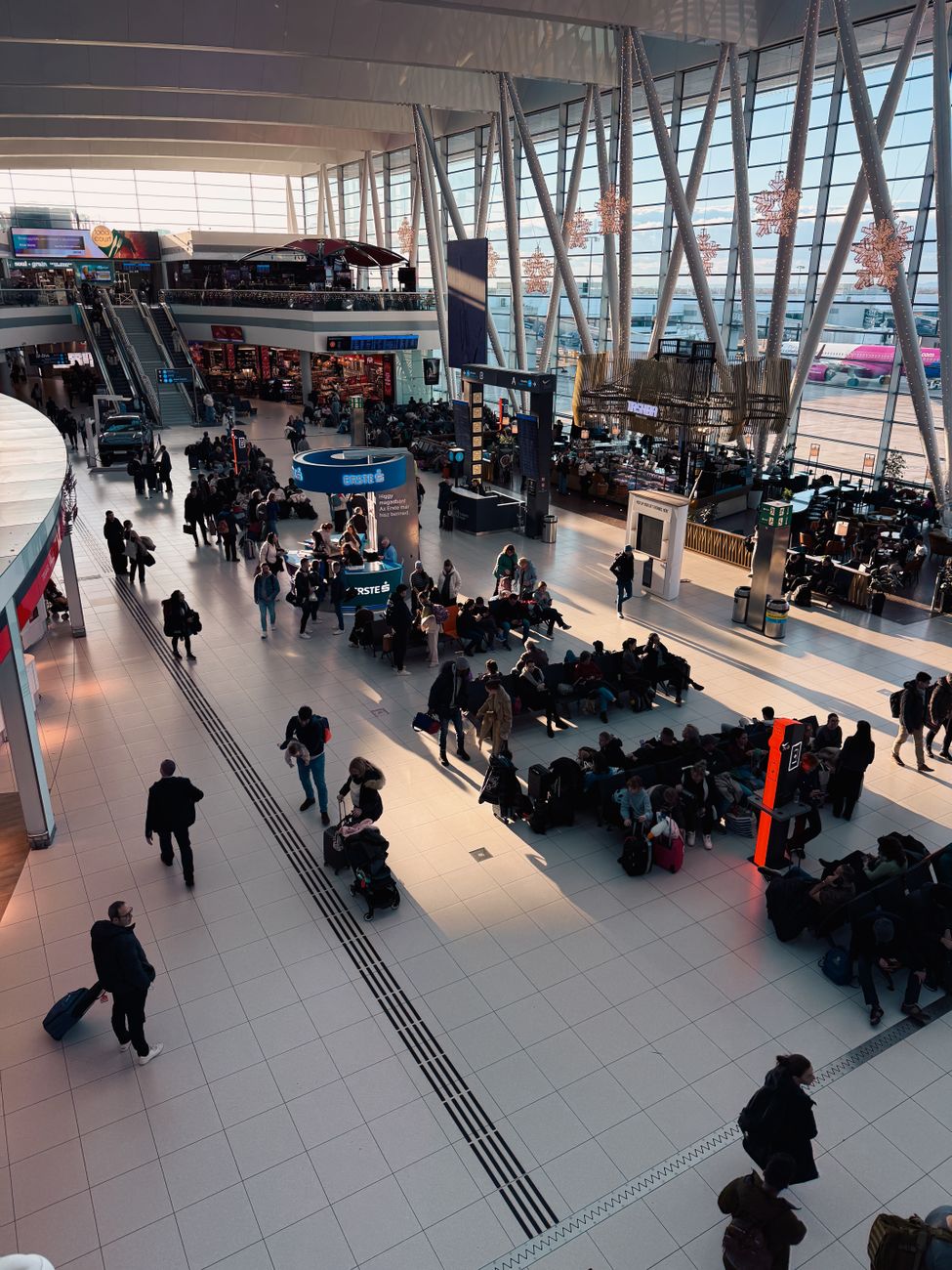
Loss of control is the biggest one. In daily life, most adults control their own schedule to a meaningful degree. In an airport, control transfers almost entirely to airlines, security agents, and gate staff — you cannot leave when you want, speed up a line through effort, or negotiate a delay. Psychologists who study stress consistently identify loss of perceived control as one of the strongest predictors of irritability and anxiety, and an airport removes control more completely than almost any other routine environment people voluntarily enter.
Add uncertainty on top of that — will the flight be delayed, will the bag make the connection, is that line moving — and you get a second well-studied stress amplifier. Humans tolerate known bad outcomes better than ambiguous ones; a confirmed two-hour delay is easier to sit with than an unclear “possible delay” that keeps shifting. Airports specialize in exactly this kind of ambiguous, shifting information, delivered over garbled PA systems and constantly updated departure boards.
Then the physical environment makes it worse
Airport lighting is typically harsh fluorescent or LED, chosen for uniform brightness rather than comfort. Noise levels stay elevated and unpredictable — boarding announcements, rolling luggage, crying children, none of it rhythmic enough to tune out. Many travelers are also running on inadequate sleep, skipped meals, or dehydration by the time they reach security, all of which independently reduce the brain’s capacity for patience and impulse control. Stack sleep deprivation, hunger, noise, harsh lighting, loss of control, and uncertainty into a single hour, and short tempers stop being a personality flaw and start being a predictable output.
Why security lines specifically break people
- Security requires immediate compliance with unfamiliar, inconsistently enforced rules, which creates anxiety even for frequent flyers
- Lines move in unpredictable bursts rather than steady progress, which studies on queuing psychology show frustrates people more than a slower but steady line
- The stakes feel disproportionately high — missing a flight over a forgotten water bottle feels absurd but happens constantly
What actually helps, beyond “just relax”
Why gate areas specifically produce the worst behavior
Boarding groups add a competitive element that airports didn’t always have — the scramble for overhead bin space turns what should be an orderly process into something closer to a low-stakes territorial dispute, and airlines’ own boarding policies, which vary by carrier and often change without much notice, add another layer of confusion that breeds resentment. Gate agents absorb a disproportionate share of passenger frustration for decisions — delays, cancellations, overbooking — that they typically have no personal control over, which is its own small tragedy of the airport environment: the people most exposed to traveler anger are rarely the people actually responsible for the thing that caused it.
Children add a layer that compounds everything else. Parents traveling with young kids are managing their own stress on top of a child’s, in an environment with none of the usual coping tools available at home, while surrounded by strangers who are themselves running low on patience. Frequent flyers with elite status often report far less friction specifically because status provides some of the control back — priority lines, guaranteed seating, lounge access — which supports the broader theory that it’s the loss of control driving the irritability more than the environment itself.
International terminals add a language and cultural layer on top of everything else, where travelers navigating a customs process in an unfamiliar language experience an additional cognitive load that compounds the existing stress factors. Studies of behavior at international arrivals halls have found even higher reported stress levels than domestic terminals, driven by that added uncertainty about rules, procedures, and what’s expected — reinforcing, again, that uncertainty and loss of control are doing most of the psychological work behind airport bad behavior, far more than the environment’s noise or crowding alone.
Airport design itself has slowly started responding to some of this research, with newer terminals incorporating more natural light, quieter zones, and clearer wayfinding signage specifically to reduce traveler stress, though older terminals — which still make up the majority of U.S. airport infrastructure — remain largely built around 1970s and 80s assumptions about throughput that never accounted for passenger psychology at all.
Even something as small as an airport’s food options plays into the overall stress level — being stuck behind security with only overpriced fast food available, no real choice, and long lines even for that, reinforces the same loss-of-control theme running through every other part of the experience. It’s a small thing that compounds everything larger happening around it.
Building in more buffer time than feels necessary directly targets the control and uncertainty problem, because arriving with margin restores a sense of agency even when nothing else about the environment changes. Eating and hydrating before reaching the stressful part of the process addresses the physiological half of the equation. None of this eliminates airport stress entirely — the environment is genuinely built for throughput, not comfort — but understanding that the irritability is a predictable systems response rather than a personal failing tends to make people quicker to laugh it off in themselves and slower to take it personally from strangers.