I Did the Same Trip in July and in September — The Difference Was So Dramatic I’m Never Going Back to Peak Season
We may earn money or products from the companies mentioned in this post. This means if you click on the link and purchase the item, I will receive a small commission at no extra cost to you ... you're just helping re-supply our family's travel fund.
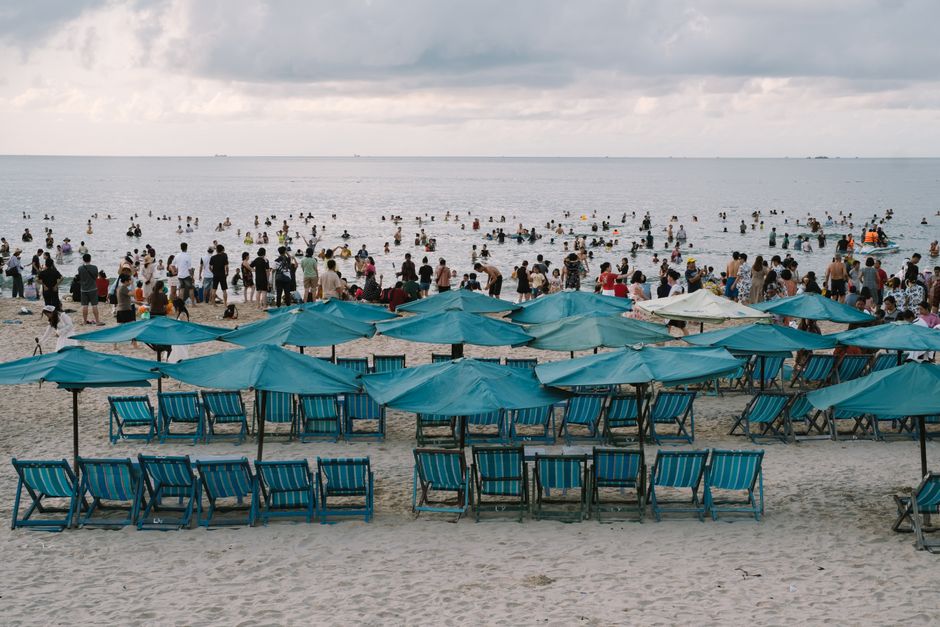
July 2022: Positano, Amalfi Coast. We paid €380 per night for a room with a view. We stood in a line of approximately 400 tourists to board a boat to Capri. We waited 75 minutes to sit down for dinner at a restaurant with menus laminated in six languages. The town was so crowded we physically could not walk on the main path without stopping every 30 seconds for the photo traffic to clear.
September 2023: Same region. We paid €210 per night for the same category of room — with a bigger terrace. The ferry to Capri had empty seats. Restaurants welcomed us without a reservation. The narrow lanes of Positano, lined with bougainvillea, were walkable. We had an entire section of a beach to ourselves on a Tuesday afternoon.
Same place. Same route. Same family. €170 cheaper per night, $600 cheaper on the flights, and dramatically — almost incomparably — better in terms of the actual experience of being there.
This is not an anecdote I’m extrapolating into a principle. This is a principle I’m illustrating with an anecdote. Shoulder season is objectively, measurably better for the majority of destinations the majority of the time.
What Peak Season Really Costs You
The financial costs are quantifiable:
- European hotel rates: 30-40% higher in July and August compared to May or September/October
- Transatlantic flights: Average $400–$600 more per ticket in July and August versus September or October on the same routes
- Tour pricing: Many popular attractions (skip-the-line Colosseum, Versailles, Uffizi) sell out months in advance in peak season — you either pay premium for timed entry or wait in lines measured in hours
- Rental car rates: Peak season premiums of 25-50% over shoulder season at popular European destinations
For a family of four doing two weeks in Europe, the difference between a July trip and an October trip can easily be $3,000–$6,000 in total cost. That’s a significant portion of the trip’s entire budget.
But the financial cost is only half of it. The other cost is experiential — and for some destinations, it’s more damaging than the price.
Venice in July is a case study in what overtourism does to a place. 60,000 day-trippers arrive daily in peak summer. The tiny streets can’t absorb that volume. The canals are clogged with gondolas arranged for Instagram backdrops. You queue to cross the Rialto Bridge. The city becomes a theme park of itself. Venice in October — after the cruise ships slow, before the winter acqua alta floods — is still crowded, but it’s a different city. You can hear the water. You can find a café without a “tourist menu” outside. The place breathes.
Shoulder Season Sweet Spots by Region

Europe
The shoulder season window for Europe is clear and consistent: May and September are the sweet spots.
May means school is still in session everywhere in the US and most of Europe. Temperatures are mild across France, Italy, Spain, and Greece — not the brutal Mediterranean July heat, but fully warm enough for beaches, patios, and everything outdoor. Prices are 30-40% below August peaks. The light in May in Tuscany or Provence is extraordinary.
September is even better for some destinations. Summer heat has broken. The crowds have thinned but not disappeared (there are still tourists in September — just far fewer of them). Harvest season in wine regions: Burgundy, Tuscany, the Douro Valley in Portugal. The food markets are at their most abundant.
- Best May destinations: Paris, Tuscany, Barcelona, the Greek Islands (Santorini is manageable in May; it’s a zoo in July)
- Best September destinations: Venice, the Amalfi Coast, Portugal, Croatia
Caribbean
The Caribbean’s peak season is December through April — dry, pleasant, and correspondingly expensive. The shoulder strategy here requires understanding the hurricane season nuance.
June through November is officially hurricane season. But hurricanes, like most weather events, don’t follow neat calendars. The statistically safest windows within the shoulder period:
- May: Still dry in most islands, hurricane risk is minimal, prices haven’t peaked yet, crowds are thinning
- Late November–early December: Hurricane season is statistically over by November 30, prices haven’t fully recovered to peak, the weather is excellent
Hotels in the Caribbean can be 40-50% cheaper in May compared to February. On an all-inclusive at a high-end property, that difference can be $500-1,000 per person over a week.
Southeast Asia
Southeast Asia’s peak season runs November through February — the dry season, when temperatures are most comfortable and prices are highest. The shoulder approach:
- April and early May in Thailand: Hot — genuinely, sweepingly hot — but dramatically fewer tourists than December or January, and prices reflect it. If you can handle the heat (and hotel pools become your primary activity), the savings are real.
- Avoid June–October: Monsoon season in most of mainland Southeast Asia. The rain is serious and can limit activities significantly.
Bali deserves a special mention: peak season is July-August and December. Shoulder season (May, June, September) still has fantastic weather and dramatically thinner crowds.
US National Parks
Yosemite sees approximately 5 million visitors per year, and an overwhelming percentage of them arrive in June, July, and August. The park’s iconic valley — Half Dome, El Capitan, Yosemite Falls — becomes a parking lot problem in July. Peak summer requires reservations, early entries, and competition for every trailhead.
May and September/early October:
- Wildflower blooms are extraordinary in May
- Fall color begins in late September
- Crowds are significantly reduced
- Campsite availability is dramatically better
- The valley’s waterfalls are at their strongest in May (snowmelt-fed)
This pattern holds for Zion, Grand Canyon, and most popular western parks. The shoulder season isn’t a sacrifice — it’s frequently the better experience.
Japan
Japan has two spectacularly crowded peak seasons: late March to mid-April (cherry blossom season) and the New Year holiday period.
The cherry blossom season is genuinely worth experiencing once — it is one of the most beautiful cultural events in the natural world, and I’m not going to pretend otherwise. But the crowds in Tokyo and Kyoto during peak bloom are extreme. Hotels triple in price. Everywhere you want to go has a line.
Early November is the alternative: autumn foliage in Japan rivals any fall color anywhere in the world. Red maples, ginkgo trees, and Japanese oaks in mountain temples and city parks. The tourist crowds are still lower than spring, the prices are mid-range, and the food in fall is extraordinary (matsutake mushroom season, new sake, chestnuts).
Mexico (Beach Destinations)
- Peak season (December–April): Dry, comfortable, most expensive
- Shoulder season sweet spot: Late October and November — hurricane season is essentially over by late October, the summer crowd has thinned, prices drop 30-40%, and the Yucatán has perfect weather. May is another good window before the summer heat builds.
- Avoid: July and August in beach destinations — extremely hot, humid, and often rainy, yet still crowded because it’s American summer vacation season
The Destinations Where Peak Season Is Actually Worth It
Shoulder season isn’t always better. Some destinations have a specific, irreplaceable peak season experience:
- Iceland for Northern Lights: October through March — the darker the better. Peak winter IS the purpose of going.
- Norwegian fjords in summer: The midnight sun, green valleys, waterfalls at full force. June-July is genuinely special and worth the premium.
- Patagonia (Chile/Argentina): November–March is the only practical window. Outside these months, weather makes trekking genuinely dangerous.
- Antarctica: November–March only. There’s no shoulder season choice.
- Maldives in peak season: The dry season (November–April) matters because the wet season genuinely affects what you’re there for.
How to Find the Shoulder Season Window

- Google Flights price calendar: Search your dates and use the calendar view to see the cheapest months at a glance. The price cliff between peak and shoulder is immediately visible.
- Climate-Data.org: Month-by-month temperature and rainfall data for almost any city in the world. Find the months with good weather that don’t overlap with peak tourism.
- Local school calendar awareness: Most Western European countries have school holidays in July and August, at Christmas, and around Easter. Those are your peak weeks everywhere in Europe. Non-holiday weeks, even in summer, are meaningfully less crowded.
The One Reason People Still Choose Peak Season

School calendars. That’s it. The reason July and August are peak season in every major destination is that school-age children in the US, UK, France, Germany, and most Western countries are on summer break during those two months, and families schedule around it.
If you have school-age children, this is real and I’m not going to dismiss it. You may genuinely only have a July window. In that case:
- Book 6-12 months in advance to get the best prices within peak season
- Choose destinations that handle peak season better — countries with more dispersed tourism infrastructure, or destinations with genuinely unlimited capacity (big country national parks, large coastal regions rather than small islands)
- Arrive Sunday through Wednesday — weekend arrivals at popular destinations are a crowd within a crowd
But if your kids are grown, you’re traveling as a couple, or you can take a strategic week or two in May or October? The shoulder season calculation is clear. I’ve done the math with my own family’s trips and the savings over a decade have funded entire additional vacations. The experience quality comparison isn’t even close.