Marfa, Texas Has 1,700 People and 45,000 Annual Visitors. Show Up Expecting a Cute Town and You’ll Be Disappointed
We may earn money or products from the companies mentioned in this post. This means if you click on the link and purchase the item, I will receive a small commission at no extra cost to you ... you're just helping re-supply our family's travel fund.
Marfa, Texas sits in the high desert of Presidio County, three hours from the nearest airport with regular commercial service and closer to the Mexican border than to any city most Americans could name. It has roughly 1,700 residents. It also draws an estimated 45,000 visitors a year, according to figures reported by City Journal, most of them coming specifically because of the Chinati Foundation, the minimalist art museum Donald Judd built after moving there from New York in 1971.
Two Different Towns, Same Zip Code
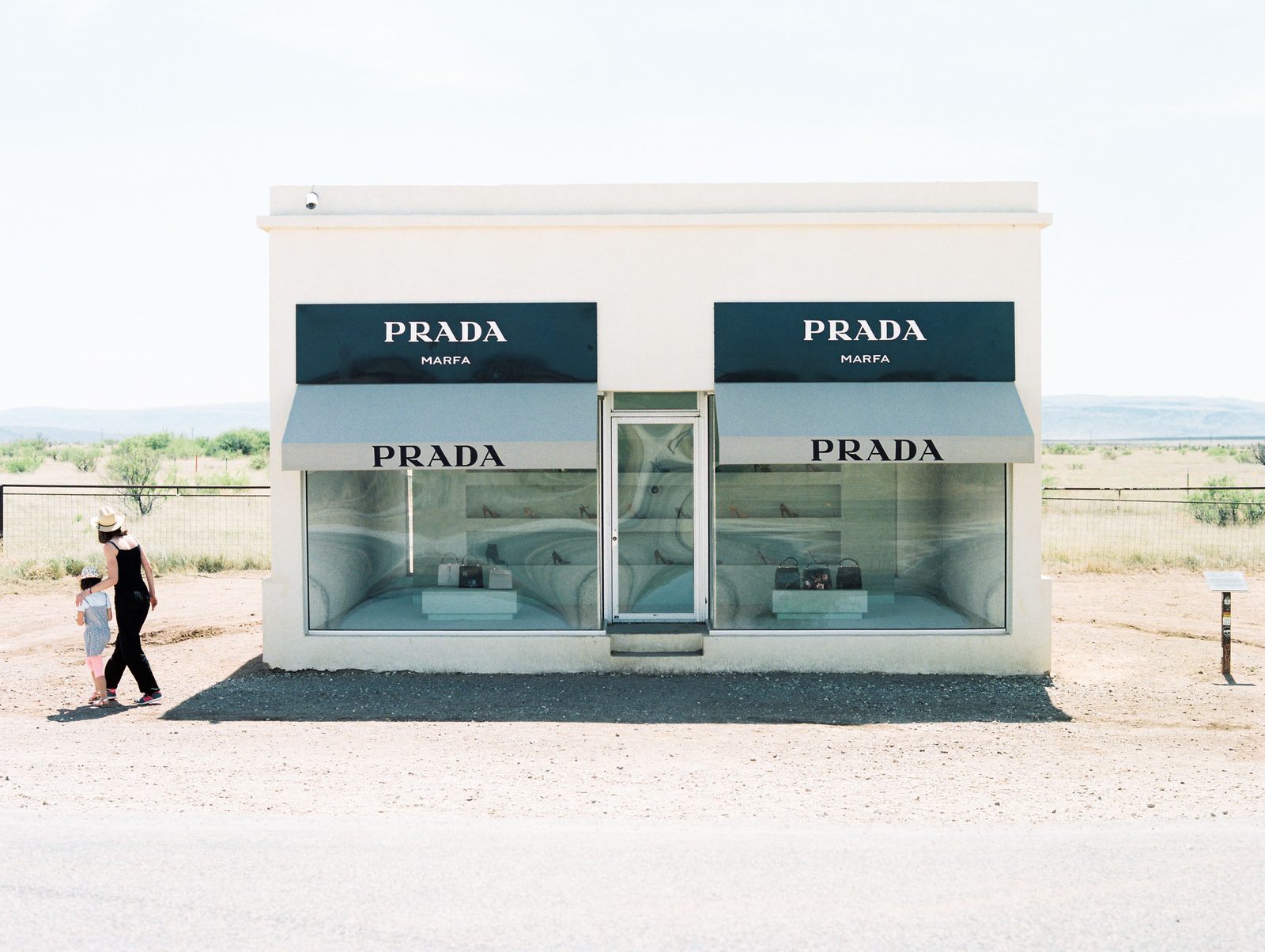
The version of Marfa that shows up in magazine spreads is curated hard: the Prada Marfa art installation on a remote highway 30 miles outside town, the Hotel Saint George’s minimalist lobby, the boutique shops selling $200 candles. That Marfa is real, but it is a thin layer over a town that was, before Judd arrived, a struggling ranching community that had been devastated by drought in the 1950s. Judd himself was explicit that he did not want the town to become tourism-dependent, worried it would be socially corrosive. He was largely right to worry, and also could not stop it.
The Poverty Underneath the Art World Veneer
More than half of Marfa’s residents live below the poverty line, according to estimates from the town’s own mayor cited by City Journal, and over 70% of children in the public schools qualify as low-income. Median household income sits around $41,719, up from $24,712 in 2000 — real growth, but growth from a very low base, and growth that has coincided with rising costs driven by the same tourism and second-home demand that produced the income gains in the first place. Much of the employment the arts economy actually created for longtime residents has been in service roles — landscaping, housekeeping, restaurant work — rather than in the galleries and museums themselves, which tend to employ people who moved to Marfa specifically to work in the arts.
What Goes Wrong When You Visit
The most common mistake visitors make is treating Marfa like a cute weekend town with a lot to browse. It isn’t. The Chinati Foundation requires reservations for its full collection tours, which run for hours and cover several buildings spread across a decommissioned Army base — this is not a casual walk-through. Visitors who show up without booking ahead often find they can only see a fraction of the collection, or none of it, and then wander a downtown that has maybe a dozen shops and restaurants, most closed on Mondays and Tuesdays, and conclude there’s nothing to do.
- Book Chinati Foundation tours in advance — full collection tours run several hours and require reservations
- Expect limited restaurant hours; many downtown businesses close early or take weekday closures
- The nearest major airport is El Paso, roughly three hours away, or Midland-Odessa, about two hours
- The Marfa Lights, an unexplained nighttime phenomenon visible from a viewing area east of town, are free and require no booking
What Actually Works
Marfa rewards visitors who come specifically for the art and the landscape, not for a generic “cute desert town” experience. The Chinati Foundation’s outdoor installations — Judd’s aluminum boxes arranged in former artillery sheds, and the concrete works scattered across the grounds — are genuinely singular; there is nothing else quite like them in the country. The surrounding high desert, with the Davis Mountains and Big Bend National Park both within a couple hours’ drive, gives a visitor who plans ahead a real multi-day itinerary. The mistake is expecting Marfa to entertain you passively. It rewards people who show up with a plan and a reservation, and it can feel bleak and closed-off to people who don’t.
The Judd Foundation vs. Chinati Split That Confuses Visitors
One detail that trips up a lot of first-time visitors is that Marfa’s Judd-related art sites are actually split between two separate organizations: the Chinati Foundation, which operates the large-scale installations on the former Fort D.A. Russell army base, and the Judd Foundation, which manages Judd’s personal residential and studio spaces in town, including The Block, his primary living compound. Each requires separate tickets and separate reservations, and visitors who assume one ticket covers everything Judd-related in Marfa often discover the gap only once they’ve already arrived. Planning both visits in advance, ideally with a full day dedicated to each, is close to mandatory for anyone who wants to see the core of what actually put Marfa on the map.
Beyond the two Judd-affiliated institutions, Marfa also hosts a growing number of independent galleries and project spaces that rotate exhibitions throughout the year, meaning the art scene has expanded well past its original founder even as his name still dominates the town’s identity for most first-time visitors.
The Tension Between Two Marfas Isn’t Going Away
Longtime Marfa residents, many from ranching or Hispanic families with roots in the area going back generations, sometimes describe a town that has effectively split into two overlapping populations that rarely interact: the arts-and-tourism economy clustered around downtown galleries and boutique hotels, and the older, poorer, ranching and working-class population that predates the Judd era and has seen relatively little direct benefit from the tourism boom beyond service-sector jobs. Housing costs in Marfa have risen sharply relative to local wages even though the town’s overall population hasn’t grown much, driven by vacation-home buyers and short-term rental investment rather than organic population growth, a dynamic that has made it genuinely difficult for longtime working residents to remain in town.
Marfa’s population has stayed remarkably flat for decades even as its visitor numbers climbed, which is itself telling: the arts economy created jobs and generated national attention, but it hasn’t necessarily created enough new permanent residency to offset the people who’ve left for larger cities in search of steadier work. That combination, rising visitor numbers against a static or slowly shrinking population, is part of why housing pressure in Marfa feels so outsized relative to the town’s tiny population. A handful of vacation-home buyers and short-term rental investors can meaningfully distort a housing market this small in a way they never could in a larger city.