Chattanooga Called Itself the Dirtiest City in America in 1969. It Now Has 10,000 Miles of Municipal Fiber Internet
We may earn money or products from the companies mentioned in this post. This means if you click on the link and purchase the item, I will receive a small commission at no extra cost to you ... you're just helping re-supply our family's travel fund.
In 1969, Walter Cronkite’s CBS Evening News reported that federal air quality data had identified Chattanooga, Tennessee as having the dirtiest air in the country, a title tied directly to the foundries and manufacturing plants that had defined the city’s economy for a century. The Tennessee River that runs through downtown was similarly fouled by industrial runoff. Chattanooga spent the next five decades methodically reversing that reputation, and the current version of the city — a downtown built around a $120 million riverfront investment and one of the fastest municipal internet networks in the country — is one of the more complete turnarounds among mid-size Southern cities.
The Riverfront That Started Everything
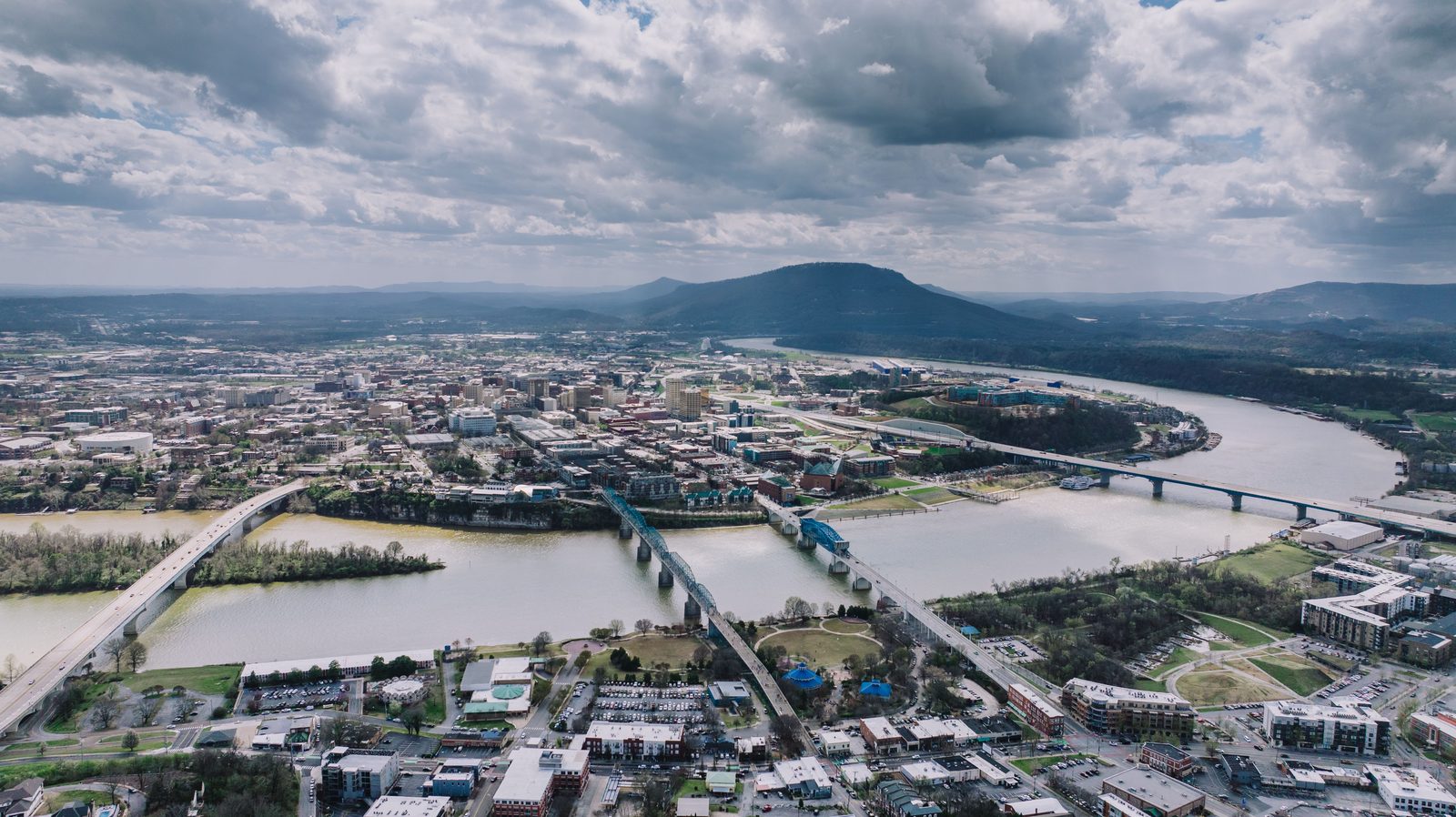
The city’s rebuild began in earnest with a public-private partnership led by the nonprofit River City Company starting in the 1990s, which put $120 million into new riverfront parks and expanded the Tennessee Aquarium, which opened in 1992 and remains a genuine draw, with millions of visitors over its history. The Walnut Street Bridge, an 1890s pedestrian crossing that had sat closed and decaying since 1978, was restored and reopened as a pedestrian bridge, becoming a symbol of the broader revival. The Riverwalk, which now stretches roughly eight miles along the river with plans to eventually reach 22 miles, gave the city a genuine recreational amenity where there had only been industrial waterfront before.
The Gig That Rewired the Economy
The more unusual part of Chattanooga’s turnaround is technical: EPB, the city’s public electric utility, built one of the first citywide gigabit-speed fiber internet networks in the country, installing more than 9,000 miles of fiber across roughly 600 square miles, funded by a combination of local revenue bonds and federal Smart Grid Investment money. The “Gig City” branding that followed was not just marketing — it genuinely attracted tech entrepreneurs and startups who wanted access to internet speeds that, at the time, were unavailable almost anywhere else in the United States, urban or rural.
The Edney Innovation Center, an 11-story former office building converted into co-working and incubator space, became the physical hub of that effort, and Chattanooga’s downtown population grew 23% between 2000 and 2015, nearly double the growth rate of the surrounding county, according to research from the Brookings Institution.
What Changed, By the Numbers
- Downtown residential population grew 23% from 2000 to 2015
- Retail vacancy in downtown dropped to under 2% by 2016
- More than $480 million in private investment fueled construction during what locals called “The Year of the Crane” in 2015
- Gigabit internet access starts around $70 a month, with subsidized low-income tiers available
What Still Has to Be Addressed
Chattanooga’s revival narrative, like most downtown-focused urban turnarounds, has a distribution problem. The Brookings Institution’s own analysis of the city’s innovation district flagged concerns about whether low-income and minority residents were sharing meaningfully in the growth, and the city has run specific programs — like Tech Goes Home Chattanooga, which provides subsidized devices and digital literacy training — aimed at making sure the fiber network’s benefits extend beyond downtown condo buyers and startup founders. Visitors experience the polished version: the aquarium, the riverwalk, the coffee shops with startup founders on laptops. The harder-to-see version is a city still working out whether five decades of reinvention can reach every neighborhood, not just the one along the river.
The Aquarium That Anchored the Whole Strategy
The Tennessee Aquarium, designed by architect Peter Chermayeff and opened in 1992, deserves specific credit as the single investment that proved Chattanooga’s riverfront strategy could work commercially, not just aesthetically. It was, at the time, one of the largest freshwater-focused aquariums in the world, a deliberate choice reflecting the Tennessee River’s ecological importance rather than a generic ocean-themed attraction, and it gave the city a signature destination capable of drawing visitors from well outside the region. Its success gave city leaders and private investors the confidence to keep building around it — additional museums, restaurants, and eventually residential development — rather than treating it as an isolated attraction surrounded by parking.
The Hunter Museum of American Art, perched on a bluff above the river near the aquarium, expanded significantly during the same period, adding a contemporary wing that connects to its original 1904 mansion building via a dramatic glass walkway. Together, the aquarium and the Hunter gave Chattanooga’s riverfront two anchor cultural institutions within walking distance of each other, a combination few mid-size Southern cities can match.
Lookout Mountain Gives the City a Second Identity
Beyond downtown, Chattanooga sits at the base of Lookout Mountain, home to Rock City Gardens and Ruby Falls, two roadside attractions that predate the city’s tech-driven reinvention by decades and still draw a steady stream of family road-trip traffic independent of anything happening downtown. The mountain also hosts some of the best rock climbing terrain in the eastern United States, and Chattanooga has increasingly marketed itself as an outdoor recreation hub — kayaking and paddleboarding on the river, mountain biking on Raccoon Mountain, climbing on the sandstone bluffs — layering an outdoor-adventure identity on top of the tech and riverfront revival story, which together give the city a broader appeal than either narrative alone would provide.
Chattanooga’s transformation has also made it a magnet for remote workers and small businesses drawn by the combination of gigabit internet, outdoor access, and a cost of living meaningfully lower than peer cities like Asheville or Nashville. Real estate prices downtown have risen accordingly, though not yet to the level that would make Chattanooga feel unaffordable by national standards, giving the city a window — one that local leaders are aware may not stay open indefinitely — where it can still market itself as both an innovation hub and a genuinely affordable place to live. Whether that combination proves durable over another decade, as remote work patterns shift and other mid-size cities compete for the same relocating professionals, remains an open question the city has not yet had to fully answer. Fredericksburg’s civic leaders have started discussing shoulder-season marketing campaigns aimed specifically at attracting visitors during exactly this kind of overlooked window, betting that enough travelers will eventually value lower prices and thinner crowds over the postcard version of the town that made it famous in the first place.