Wyoming’s Tourism Economy Is $4.9 Billion a Year. Its Ranching Economy Is $1.6 Billion. Both Sides Think They’re the Real Wyoming
We may earn money or products from the companies mentioned in this post. This means if you click on the link and purchase the item, I will receive a small commission at no extra cost to you ... you're just helping re-supply our family's travel fund.
Wyoming has about 580,000 people spread across nearly 98,000 square miles, and depending on which Wyoming you’re looking at, you’d think the state runs on cattle or on Yellowstone. Both are true, and the two economies barely overlap. Travel and tourism contributed roughly $4.9 billion to Wyoming’s economy in 2025, according to Visit Wyoming’s economic impact data, while the state’s roughly 10,000 to 12,000 farms and ranches together produced about $1.6 billion in agricultural products.
Two States Sharing the Same Land
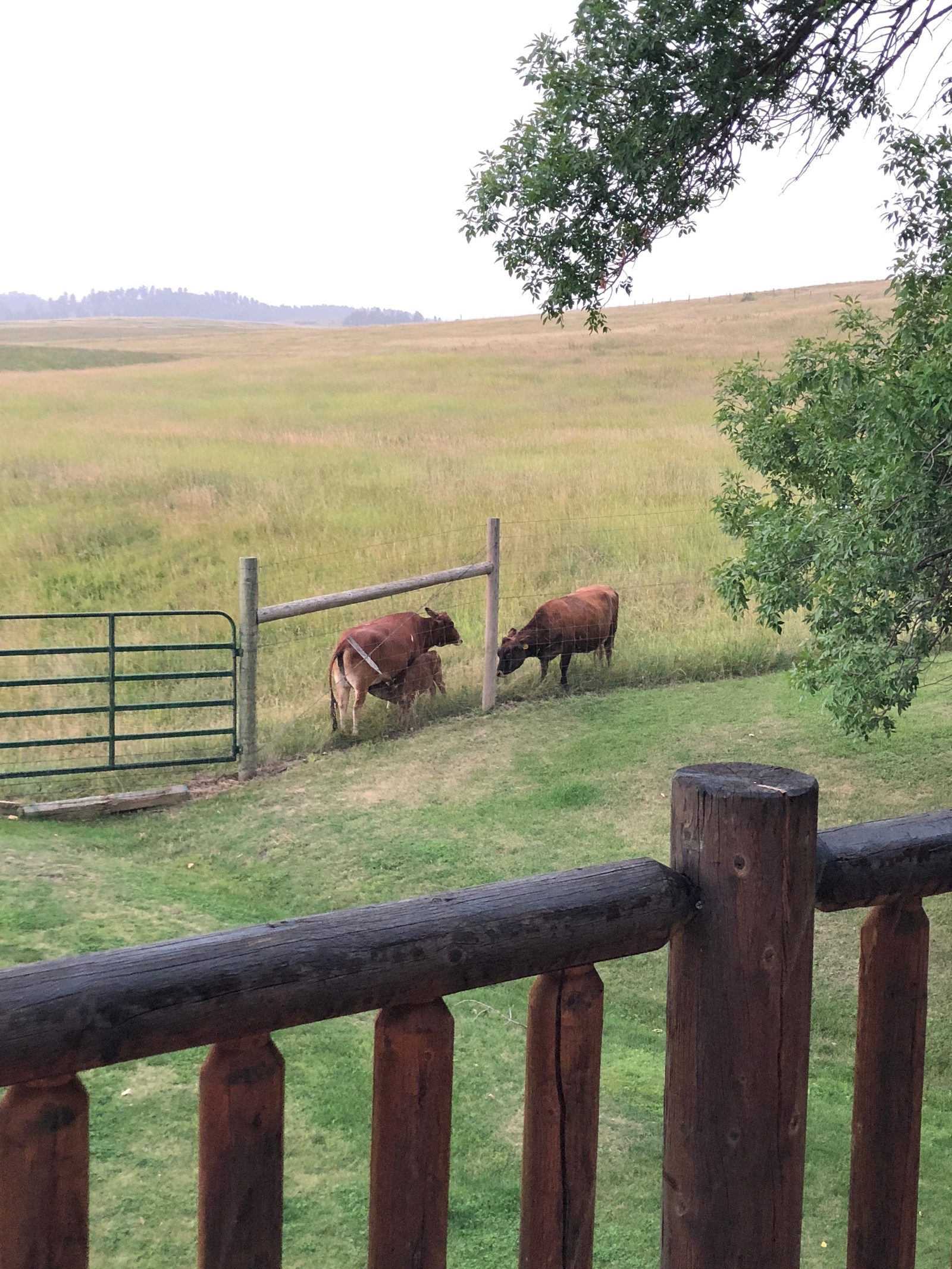
Wyoming’s identity has always been built on the cowboy image: the bucking horse on the license plate, the state’s official nickname, the entire branding apparatus of Cheyenne Frontier Days. But the actual number of people employed in ranching is small relative to the state’s population — total farm employment sits around 14,500 people, or under 4% of jobs statewide, according to analysis compiled by Headwaters Economics. Tourism and the broader service sector connected to it, by contrast, employed over 41,000 people as of recent counts, accounting for close to 16% of personal income in the state.
These are not competing industries in the sense of fighting over the same customers. They are competing for the same land, the same water rights, and increasingly the same political attention, while operating on completely different calendars and completely different relationships to the tourists who define most outsiders’ image of the state.
Where the Money Actually Comes From
Goshen County, in Wyoming’s southeast corner, produced roughly $204.6 million in agricultural value, the highest in the state, driven by irrigated farmland rather than the open-range cattle operations most people picture when they think “Wyoming ranch.” Carbon County holds the most acreage dedicated to ranch and farmland, at nearly 2.9 million acres. Meanwhile, the tourism dollars concentrate almost entirely around Teton County — home to Jackson Hole and the gateway to Grand Teton National Park — and the areas bordering Yellowstone, which sits mostly in Wyoming but straddles Montana and Idaho as well.
Cattle remain the state’s top agricultural commodity by value, with hay a distant second, and roughly 93% of Wyoming farms are family owned rather than corporate operations, according to USDA figures cited by Cowboy State Daily. That family-ownership figure matters because it means the ranching identity, even as its economic share shrinks relative to tourism, is not corporate agribusiness in the way people sometimes assume. It is still, largely, families running operations that have existed for generations.
The Numbers Side by Side
- Tourism: $4.9 billion in direct spending, over 41,000 jobs, concentrated around Jackson Hole and Yellowstone
- Ranching and farming: $1.6 billion in product value, roughly 14,500 jobs, spread across the whole state
- Energy remains the largest single sector at $11.3 billion, dwarfing both
Why the Friction Is Real
Visitors to Jackson Hole rarely see a working cattle operation up close, because the ranches that remain near the park are mostly either conservation easements or operate away from the tourist corridors. Meanwhile, ranchers in the eastern and central parts of the state, where the actual agricultural value concentrates, see almost none of the tourism dollars that define outsiders’ image of Wyoming. A rancher in Goshen County and a hotel worker in Teton County are both, technically, working in “the Wyoming economy,” but their daily experience of the state, its politics, and its future have almost nothing in common. Both consider themselves the authentic version. The state’s tax structure, tourism marketing, and even its congressional politics have to somehow serve both, which is a large part of why Wyoming’s public debates over land use and growth rarely resolve cleanly.
How Federal Land Shapes Both Economies
Nearly half of Wyoming’s land is owned by the federal government, and that fact underlies both economies in ways that create ongoing tension. Ranchers rely heavily on federal grazing allotments to run cattle across public land that would otherwise be unaffordable to lease privately at the scale their operations require, while the same federal lands, managed as national parks and forests, generate the scenery that drives the tourism economy. The two uses aren’t always compatible: grazing cattle near heavily trafficked park entrances or popular trailheads creates friction, and wildlife management decisions, particularly around wolves and grizzly bears, routinely pit ranching interests against conservation and tourism interests in ways that show up in state legislative fights nearly every session.
Wyoming’s political identity has long skewed toward protecting ranching and extraction industries even as those sectors employ a shrinking share of the state’s workforce, a mismatch that shows up in state policy debates about everything from public land management to taxation. Wyoming has no state income tax and relies heavily on mineral extraction taxes to fund government services, which means neither the ranching sector nor the tourism sector is actually the primary source of state revenue — that’s overwhelmingly energy, coal, oil, and natural gas, a third economy layered on top of the two most visitors and most outsiders think about.
What a Visitor Actually Sees
A tourist driving from Jackson to Yellowstone will pass working ranches without necessarily registering them as part of a distinct economy, because the visual signals — split-rail fencing, grazing cattle, the occasional roadside historical marker about homesteading — read as scenic backdrop rather than active industry. That disconnect is exactly why so few visitors leave Wyoming with any real sense of how the state’s ranching economy functions, even after driving directly past it for hundreds of miles. The tourism economy has, in a sense, aestheticized the ranching economy into scenery, which is a strange fate for an industry that still employs thousands of families and defines how a huge share of the state’s private land actually gets used day to day.
The state’s political tension over land use shows up most visibly in debates over predator management, where ranching interests have pushed for looser restrictions on wolf and grizzly bear hunting near grazing land, while tourism-dependent communities near Yellowstone and Grand Teton, where wildlife viewing is a central draw, have pushed back hard. Wyoming’s legislature has had to navigate this divide repeatedly, and the compromises that result rarely satisfy either side completely, which is a fairly accurate reflection of how uneasily the state’s two defining industries actually coexist on the ground, regardless of how neatly they’re packaged together in tourism marketing that leans on cowboy imagery to sell trips to a landscape that a shrinking number of actual cowboys still work.