Sedona in April and Sedona in August Are Barely the Same Place. The Red Rocks Don’t Change. Everything Else Does.
We may earn money or products from the companies mentioned in this post. This means if you click on the link and purchase the item, I will receive a small commission at no extra cost to you ... you're just helping re-supply our family's travel fund.
Sedona, Arizona’s red rock formations look identical on a calendar year-round, which is exactly why so many first-time visitors underestimate how dramatically different a trip there feels depending on the season. A spring visit and a late-summer visit to the same trails, the same overlooks, even the same restaurants, can produce two almost unrecognizable versions of the same trip, driven almost entirely by temperature, monsoon weather patterns, and crowd density that shift more sharply in Sedona than in most comparable Southwest destinations.
Spring Is Sedona at Its Most Forgiving
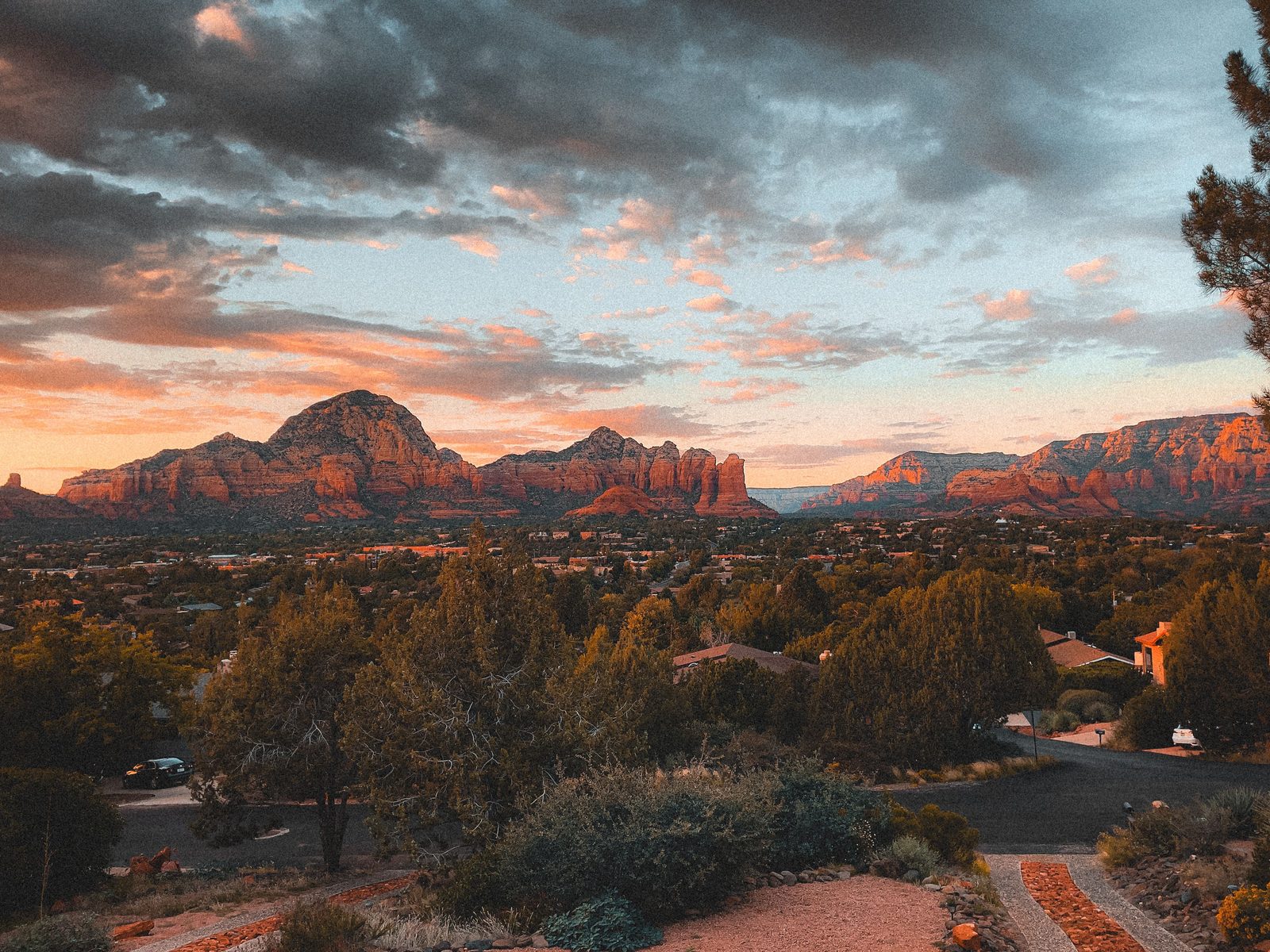
March through May in Sedona typically brings daytime highs in the comfortable 70s to low 80s, ideal conditions for the area’s most popular hiking routes, including Cathedral Rock and the Devil’s Bridge Trail, both of which become genuinely dangerous heat exposure risks later in the summer. Multiple Sedona-focused travel guides, including Tripster’s seasonal travel guide, specifically identify spring and fall as the shoulder seasons offering the best combination of comfortable temperatures and comparatively manageable crowds, positioning them as the town’s most broadly recommended visiting windows.
August Brings Genuine Heat and the Monsoon
Summer in Sedona, particularly July and August, brings daytime highs that regularly climb into the triple digits, a level of heat that transforms hiking from a pleasant morning activity into something requiring genuine caution, early starts before sunrise, and significantly reduced trail time compared to spring conditions. Arizona’s monsoon season, running roughly from mid-June through September, adds another variable entirely: sudden, intense afternoon thunderstorms that can trigger flash flooding in Sedona’s characteristic slot canyons and washes, a genuine safety hazard that spring visitors simply don’t need to plan around at all. Local outfitters and guide services routinely adjust their summer schedules around this pattern, offering early-morning-only excursions specifically to avoid both the worst heat and the afternoon storm risk.
The Crowd Difference Is Almost as Dramatic as the Weather
Sedona’s visitor volume follows a predictable seasonal curve that closely tracks its weather, with spring and fall drawing the heaviest crowds precisely because the conditions are most favorable, while summer’s extreme heat genuinely thins out visitor numbers during the hottest mid-day hours even as overall summer tourism remains substantial. This creates a counterintuitive trade-off some more heat-tolerant visitors have learned to exploit deliberately: accepting the discomfort of summer heat in exchange for meaningfully quieter trails and easier parking at the most popular trailheads, a trade a growing number of early-rising, heat-adapted visitors make specifically to avoid Sedona’s increasingly congested spring parking situation at trailheads like Devil’s Bridge, which now frequently fills before 8 a.m. during peak spring weekends.
- Spring (March-May): 70s-80s, ideal hiking conditions, heaviest crowds
- Summer (June-August): triple-digit highs, monsoon flash flood risk, early-morning-only hiking recommended
- Devil’s Bridge and Cathedral Rock trailhead parking often fills before 8 a.m. during peak spring weekends
- Fall offers a comparable shoulder-season alternative to spring, with somewhat lighter crowds
What Locals Actually Recommend Depending on Priorities
Sedona-based tour operators and lodging businesses, drawing on years of guiding visitors through both extremes, tend to recommend spring or fall unambiguously for first-time visitors prioritizing comfortable hiking and full access to the area’s trail network, while reserving summer recommendations specifically for repeat visitors comfortable trading heat tolerance for lighter crowds and lower lodging rates, since summer hotel and vacation rental pricing in Sedona typically drops meaningfully compared to the area’s spring peak. Red Rock State Park’s own seasonal guidance, according to the Arizona State Parks weather information, reinforces this pattern, noting that visitors should plan activity timing around the specific season rather than assuming a single set of expectations applies year-round.
The Photos Look the Same. The Experience Doesn’t.
Because Sedona’s red rock scenery is so visually consistent year-round, unlike a destination defined by seasonal foliage or snow cover, the marketing photos and social media posts that draw visitors in the first place rarely convey any sense of which season they were taken in, leaving many first-time visitors to book based purely on their own schedule availability rather than any real understanding of how differently the trip will feel depending on the month. That gap between visual consistency and experiential variability is arguably Sedona’s most underappreciated planning trap, one that a quick look at seasonal average temperatures before booking would resolve for almost any visitor willing to check.
Winter Adds a Third, Almost Entirely Different Sedona
Beyond the spring-versus-summer comparison, Sedona’s winter months, typically December through February, introduce a third distinct version of the destination that few first-time visitors plan around at all: occasional snow dusting the red rocks, considerably colder overnight temperatures given the area’s roughly 4,500-foot elevation, and a noticeably quieter tourism economy overall compared to both spring and summer. Photographers in particular have increasingly sought out winter visits specifically for the rare visual combination of snow-dusted red rock formations, a look that only occurs a handful of days each winter and has become its own minor niche within Sedona’s broader tourism photography culture.
Local lodging operators generally offer their lowest rates of the year during this winter window, a genuine opportunity for budget-conscious visitors willing to trade guaranteed warm weather for meaningfully lower prices and the quietest trail conditions Sedona offers outside of the most extreme summer heat days. Between spring’s crowds, summer’s heat, fall’s milder repeat of spring, and winter’s cold-but-quiet character, Sedona effectively offers four meaningfully different destinations under a single, visually unchanging red rock backdrop, a fact that surprises most visitors who’ve only ever experienced one of the four.
Sedona’s business community has become increasingly sophisticated about communicating these seasonal differences directly to prospective visitors, with many tour operators and lodging properties now publishing detailed seasonal guidance on their own websites specifically to manage expectations before a booking is made rather than after a disappointed guest arrives. That shift toward proactive seasonal transparency reflects a broader recognition within Sedona’s tourism industry that mismatched expectations, a visitor picturing spring conditions while booking an August trip, have historically been one of the more common sources of visitor dissatisfaction the destination could resolve simply through better upfront communication.