Winston-Salem Outgrew Tobacco—Wake Forest and Medicine Built the City Visitors Explore Today
We may earn money or products from the companies mentioned in this post. This means if you click on the link and purchase the item, I will receive a small commission at no extra cost to you ... you're just helping re-supply our family's travel fund.
Winston-Salem after tobacco is a city that looks quite different from the one that made Camel cigarettes famous. R.J. Reynolds Tobacco Company defined the town for most of the 20th century, but Wake Forest University and its medical center have built a new economy on top of the old one. The result is a place of about 250,000 residents where factories have become labs, lofts and galleries.
How Wake Forest and Medicine Built Winston-Salem After Tobacco
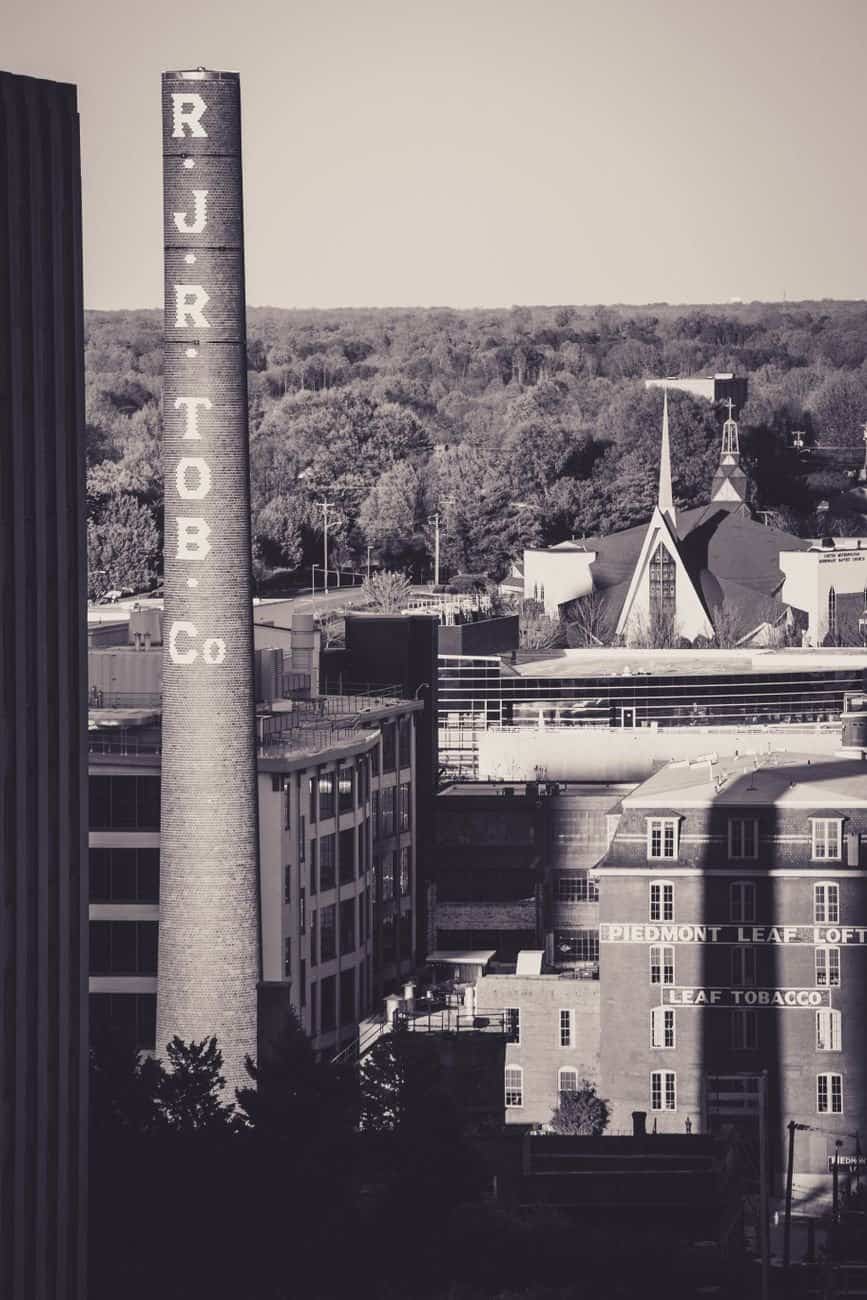
The short version of the story goes like this. Winston, founded in 1849, and Salem, a Moravian settlement dating to 1766, merged in 1913. R.J. Reynolds, which began making tobacco products in Winston in 1875, became the biggest employer, and the money from Camel cigarettes shaped the city’s skyline, banks, philanthropy and neighborhoods. When smoking rates fell and the tobacco industry consolidated, the city needed another engine.
That engine turned out to be education and medicine. Wake Forest College, then a Baptist school in the town of Wake Forest, North Carolina, moved to Winston-Salem in 1956, thanks to land and money from the Reynolds family and the Z. Smith Reynolds Foundation. The medical school, now Wake Forest University School of Medicine, grew into a major academic medical center, and in recent decades the city has turned the old tobacco district into an Innovation Quarter focused on biomedical research and technology.
The Tobacco Era
Reynolds grew quickly in the early 20th century, building enormous factories and a headquarters that became a symbol of the city. The Reynolds Building, finished in 1929, is an Art Deco skyscraper often said to have been an influence on the design of the Empire State Building, and it remains a landmark on the skyline. For decades Reynolds employed thousands of local workers, and the city developed a reputation as a corporate hometown, with banks such as Wachovia headquartered there as well.
Reynolds still has a presence in the area, but its role is much smaller than it once was. The company’s headquarters operations have shrunk and its ownership has changed through mergers. The old factory complexes that once defined the east side of downtown were largely emptied.
Wake Forest Moves In
The 1956 relocation of Wake Forest College to Winston-Salem is one of the most significant events in the city’s modern history. The move brought a campus of brick Georgian buildings and a student body that now totals around 9,000 undergraduate and graduate students. The university has grown into a respected private school with a strong academic reputation, and its presence has shaped the city’s culture, from sports to the arts.
Wake Forest’s medical school, which was based in the city already as the Bowman Gray School of Medicine, expanded along with the university. Today, Wake Forest University School of Medicine and its affiliated hospital, now part of Atrium Health, are among the largest employers in the region. Health care has overtaken tobacco as the city’s economic backbone.
The Innovation Quarter
The most visible result of the shift is the Innovation Quarter, a downtown district that occupies former Reynolds buildings. Brick factory space has been converted into laboratories, offices, classrooms and apartments. The district is home to Wake Forest School of Medicine research, companies working in biotechnology and information technology, and parts of the local university systems. Regenerative medicine is a particular strength.
For visitors, the district is a pleasant place to walk, with converted warehouses, public art, restaurants and green space. It shows how a city can reuse old industrial buildings without erasing their character. Signs of the past remain, from smokestacks to the bold lettering on old brick walls.
What Visitors Can See and Do
Winston-Salem has a surprising range of attractions for a city of its size:
- Old Salem Museums and Gardens, a restored Moravian town with costumed interpreters, craft shops and the Winkler Bakery, known for its Moravian sugar cake and cookies.
- Reynolda House Museum of American Art, in the former estate of R.J. Reynolds and his wife Katharine, with a collection of American paintings, surrounded by Reynolda Gardens and shops in Reynolda Village.
- SECCA, the Southeastern Center for Contemporary Art, which shows modern and contemporary work in a historic house setting.
- The Museum of Anthropology on the Wake Forest campus, with free admission.
- The Krispy Kreme story, because the doughnut chain was founded in Winston-Salem in 1937, and a few local historical references remain.
- Downtown Arts District, with galleries, theaters and restaurants.
Admission prices vary, with museum tickets commonly ranging from $10 to $25 per person. Check hours and special events before you go.
The Moravian Heritage
Old Salem is one of the best places in the South to see early American craft traditions. Moravians, a Protestant group from central Europe, founded Salem in 1766 as a planned community, with trades such as pottery, tin work, baking and gunsmithing. Visitors can watch craftspeople at work and walk streets lined with preserved buildings. The history also includes slavery, and the interpretation at Old Salem has expanded to address the lives of enslaved and free Black residents, including the Home Moravian Church’s role in the community.
That complexity is part of what makes the town worth visiting. The city’s identity includes Moravian craftsmanship, tobacco wealth, Black history and the university culture that came later.
A Short Timeline
A quick timeline helps place what you see:
- 1766: Moravians found Salem as a planned church town.
- 1849: Winston is established as the county seat of Forsyth County.
- 1875: R.J. Reynolds starts a tobacco business in Winston.
- 1913: Winston and Salem merge into one city.
- 1929: The Reynolds Building opens downtown.
- 1937: Krispy Kreme begins in Winston-Salem.
- 1956: Wake Forest College relocates to the city.
- 2000s: The tobacco district becomes the Innovation Quarter.
Seeing the dates in sequence makes it clear how the city’s story moved from religion to industry to education and medicine.
What to Eat and Drink
Winston-Salem has a growing food scene. Look for North Carolina barbecue, Southern comfort food and newer restaurants in the Arts District and West End. Craft breweries and distilleries operate in converted buildings, and the nearby Yadkin Valley is a wine region. Moravian sugar cake and chicken pie are local specialties. A good dinner for two typically runs $50 to $100, and lunch is cheaper.
A Day Built Around the Story
If you want to trace the city’s history in one day, start in the morning at Old Salem, where you can watch bakers and potters and taste sugar cake. Take lunch downtown near the Reynolds Building, then walk through the Innovation Quarter to see the converted factories. In the afternoon, drive to the Wake Forest campus and stroll the quad, then finish at Reynolda House and the gardens before dinner in Reynolda Village or West End. That route follows the city’s path from Moravian settlement to tobacco wealth to university and medicine.
Neighborhoods Worth a Walk
A few areas show different sides of the city:
- West End: A historic neighborhood of Victorian and craftsman homes, with local cafes.
- Downtown: Home to the Reynolds Building, the Arts District and the Innovation Quarter.
- Ardmore: A residential area with a medical presence and local restaurants.
- Reynolda Village: A shopping and dining area near the former Reynolds estate.
Arts, Music and Sports
The arts are a bigger part of the city’s identity than many visitors expect. Winston-Salem has long called itself the City of Arts and Innovation, and it is home to the University of North Carolina School of the Arts, a public conservatory training dancers, musicians, actors and filmmakers. Student performances are often inexpensive, and professional touring shows play at downtown theaters. On the sports side, Wake Forest Demon Deacons football and basketball bring game-day crowds, and the Winston-Salem Dash, a minor league baseball team, plays downtown at Truist Stadium. A ticket to a Dash game often costs less than a movie.
Getting There and Timing
Winston-Salem sits in the Piedmont Triad region of North Carolina, about 30 minutes from Greensboro and about two hours from Charlotte and Raleigh. The Piedmont Triad International Airport serves the area. Spring and fall are the most pleasant seasons, with spring blossoms and fall color. The Dixie Classic Fair, held in October, is a longtime local tradition. Summers are hot and humid, and winters are mild, with occasional snow.
Lodging includes historic inns, chain hotels and a few boutique options downtown, with rates commonly around $110 to $200 a night. Weekends during university events and graduation can book up, so reserve ahead.
What Locals Say About the Change
Residents often describe the transformation as both welcome and complicated. Many are proud of the city’s reinvention and the new jobs in medicine and technology. Others note that the benefits have not reached every neighborhood, and that the loss of manufacturing jobs left gaps for people without college degrees. Debates about housing costs, school quality and downtown development continue.
The city’s challenge is to build on its institutions while making sure growth is shared. Visitors can see that effort in local nonprofits, community gardens and neighborhood revitalization projects.
The Bottom Line
Winston-Salem outgrew tobacco by building on education and medicine. Wake Forest University and its medical center, along with the Innovation Quarter, turned old factories into places for research and creativity, while Old Salem and Reynolda keep the earlier history in view. If you visit, plan at least a weekend, walk the converted districts and see how a city can reinvent itself without forgetting where it came from.