The Hardest Part of Loving a Place Isn’t Arriving—It’s Leaving. Here’s Why the Goodbye Can Linger Longer
We may earn money or products from the companies mentioned in this post. This means if you click on the link and purchase the item, I will receive a small commission at no extra cost to you ... you're just helping re-supply our family's travel fund.
Psychologists who study travel and well-being have repeatedly found an asymmetry that most travelers recognize instinctively but rarely articulate: the emotional low of leaving a place you loved tends to be sharper and longer-lasting than the emotional high of arriving somewhere new. Arrival excitement is real but often diluted by logistics — jet lag, navigating an unfamiliar airport, finding the hotel. Departure sadness arrives cleanly, usually in a single, undiluted wave, on the last morning or during the drive to the airport.
The Research Behind the Asymmetry
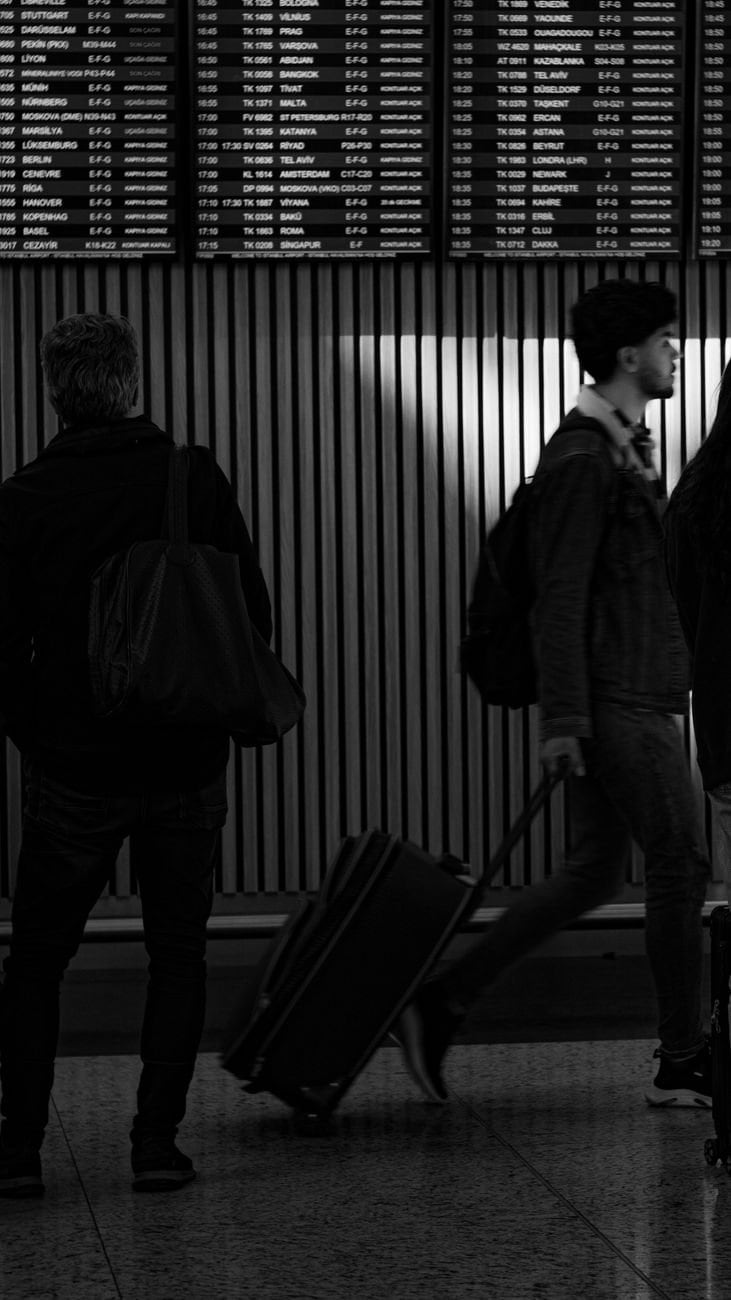
Some of this traces to what psychologists call the “peak-end rule,” first documented by Daniel Kahneman’s research on how people remember experiences: we don’t remember an experience as an average of every moment, we remember it disproportionately by its most intense point and by how it ended. A trip’s ending is, by definition, the last thing encoded into memory before the experience closes, which gives it outsized emotional weight regardless of how the middle of the trip actually went.
There’s also a straightforward loss-aversion explanation drawn from behavioral economics: humans generally register losses more intensely than equivalent gains, a finding first formalized by Daniel Kahneman and Amos Tversky in prospect theory. Arriving somewhere new is a gain — new experiences, novel stimulation — while leaving is explicitly registered as a loss, even when you’re returning to a comfortable, familiar home life that isn’t actually worse than the vacation.
Why Certain Departures Hit Harder Than Others
- Trips that involved deep unstructured time — longer stays in one place rather than fast-paced multi-city itineraries — tend to produce stronger attachment and harder departures
- Solo trips often generate more acute departure sadness than group trips, possibly because the traveler has had more space for reflective, meaning-making thought during the experience
- Departures that coincide with an abrupt return to high-stress obligations amplify the contrast and intensify the sadness
- Repeat visits to the same beloved place tend to reduce departure intensity over time, a pattern consistent with habituation research
Travel researchers have also pointed to a specific cognitive quirk: anticipation of a future return, even a vague or unplanned one, measurably softens departure sadness. Telling yourself “I’ll come back” — even without concrete plans — appears to function as a genuine psychological buffer, according to research on anticipated future contact reducing the pain of present separation, a phenomenon also studied in the context of long-distance relationships and expatriate communities.
What Frequent Travelers Do Differently
People who travel very frequently for either work or pleasure often report that they consciously ritualize departures — a final walk through a favorite neighborhood, a specific meal, a deliberate goodbye to a place rather than letting it end passively. This tracks with broader psychological research on ritual and closure: deliberately marking an ending, rather than letting it simply happen, appears to reduce the abruptness that makes departures feel so much worse than arrivals.
There’s also a documented tendency for frequent travelers to develop what some researchers term “anticipatory savoring” — the ability to consciously appreciate a moment while still inside it, rather than only recognizing its value retrospectively once it’s over. This skill, sometimes cultivated deliberately through mindfulness practice, appears to reduce the gap between how good an experience felt in the moment and how much its ending hurts.
The Practical Takeaway
None of this means departure sadness is avoidable or should be avoided — researchers studying nostalgia have found it carries real psychological benefits, including strengthened social bonds and increased life meaning, even though it’s technically classified as a bittersweet rather than purely positive emotion. But understanding the asymmetry helps explain why a trip that was, on balance, mostly ordinary can still end in real grief, and why the solution isn’t necessarily better trips but often just structuring the ending of a trip — and the transition back to ordinary life — with more intention than most travelers currently give it.
The Role Anticipation Plays Before You Even Leave
Some of the same researchers studying post-trip emotion have also examined pre-trip anticipation, finding that the period of planning and looking forward to a trip generates measurable well-being gains independent of the trip itself. A frequently cited study on vacation anticipation found that the boost to happiness from planning a trip could exceed the happiness boost from the trip’s aftermath, suggesting that a meaningful share of travel’s total emotional value is front-loaded into the weeks of anticipation rather than evenly distributed across the whole experience.
This has a somewhat counterintuitive implication: the emotional gap between arrival excitement and departure sadness may be less about the trip itself and more about where in the overall arc of anticipation, experience, and memory a traveler happens to be standing. Departure sadness isn’t simply grief about the trip ending — it’s the specific transition out of an anticipation-and-experience phase that had been building, in some cases, for months, into the comparatively flat terrain of ordinary post-trip life.
Some travel researchers have suggested that this explains why booking a next trip almost immediately after returning from one — a habit common among frequent travelers — provides a genuine, measurable mood benefit beyond simple distraction. Restarting the anticipation cycle appears to directly counteract the flat, letdown feeling that follows a trip’s end, which is a big part of why travel becomes habit-forming for people who structure their lives around it: the anticipation phase is doing real emotional work, not just the trip itself.
There’s a reasonable case that the specific sting of leaving a beloved place is, in the end, simply the cost of having genuinely valued the experience in the first place, and that trying to eliminate it entirely would mean traveling with less attachment and presence than makes travel worthwhile. The goal isn’t a departure-proof trip; it’s recognizing the asymmetry for what it is so that the sadness doesn’t get mistaken for a signal that the trip itself went wrong. Travelers who understand this ahead of time report feeling less blindsided by the low that follows a great trip, which doesn’t eliminate the feeling but does change its meaning from a warning sign into simply the expected, and in some sense earned, closing chapter of having loved a place enough to be sad about leaving it.