Ketchikan’s 6-Hour Cruise Stop Is Built Around Totem Poles—But Its Economy Tells a Very Different Story
We may earn money or products from the companies mentioned in this post. This means if you click on the link and purchase the item, I will receive a small commission at no extra cost to you ... you're just helping re-supply our family's travel fund.
Ketchikan, Alaska sits at the southern tip of the Inside Passage and functions, for roughly six months a year, as the first port of call for hundreds of thousands of cruise passengers heading north to Juneau, Skagway, and Glacier Bay. On a peak summer day, four or five ships can dock simultaneously, disgorging up to 20,000 passengers into a downtown with a year-round population of only around 8,200 — more visitors in a single day than residents in the entire city.
What Cruise Passengers See in Six Hours
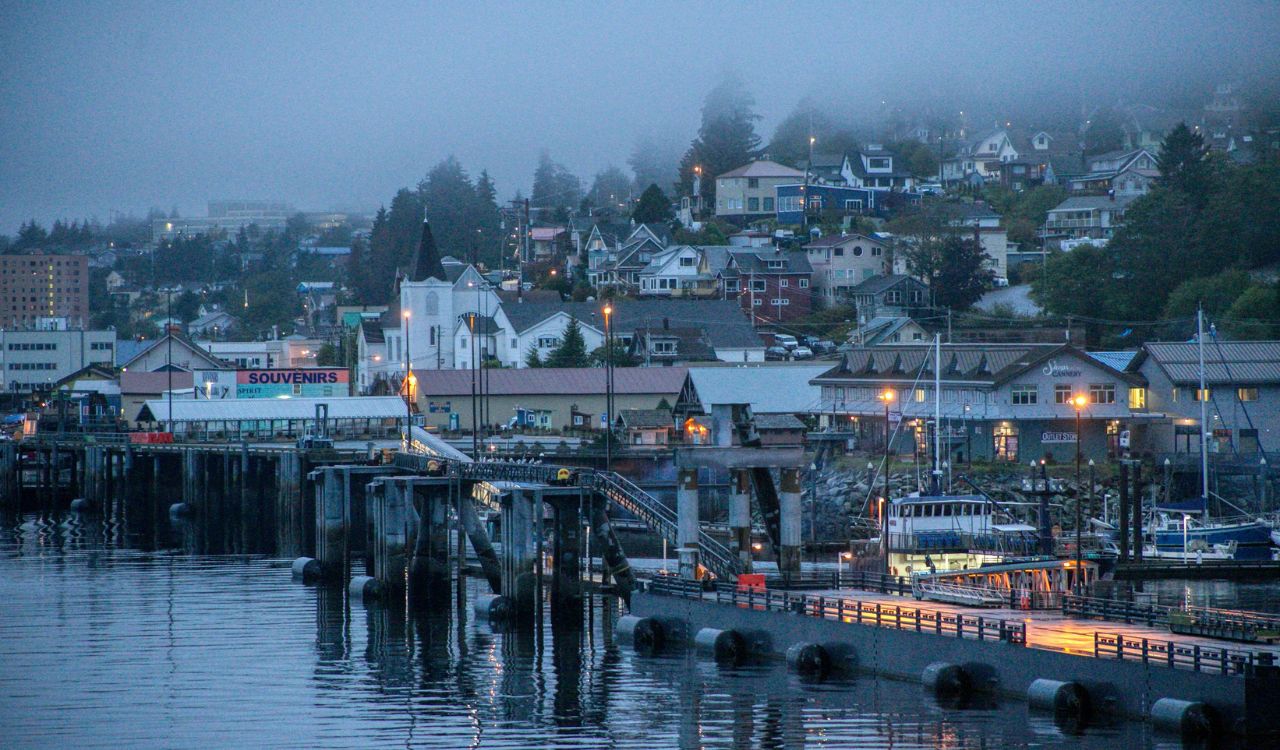
The typical cruise stop in Ketchikan covers Creek Street, a boardwalk built over Ketchikan Creek that once housed the city’s red-light district and is now lined with jewelry shops and tourist retail; the Saxman Native Village and its totem pole park; and maybe a floatplane tour over Misty Fjords National Monument. It’s a curated, retail-heavy six hours that gives almost no indication of what Ketchikan actually is: one of the most productive commercial fishing ports in Alaska and a town still substantially built around the timber and seafood industries that predate cruise tourism by a century.
Ketchikan calls itself the Salmon Capital of the World, and it’s not just branding — the city has one of the highest concentrations of commercial fishing permits per capita in the state, and the seafood processing industry remains a major employer alongside tourism, particularly for the Filipino and other immigrant communities who have worked in Alaska’s canneries for generations.
The Economy Cruise Passengers Never See
- Ketchikan’s port handled more than 1.6 million cruise passengers in recent peak years, according to city port records, an extraordinary volume for the town’s size
- The city has passed and revisited per-passenger head taxes and dock fee structures multiple times, balancing tourism revenue against congestion and infrastructure strain
- Alaska Airlines and a state ferry system, the Alaska Marine Highway, provide the only non-cruise transportation options — there is no road connection to Ketchikan or most of Southeast Alaska
- The University of Alaska Southeast maintains a campus in Ketchikan, and the local school district and hospital, PeaceHealth Ketchikan Medical Center, are among the top non-tourism employers
Southeast Alaska’s isolation from the road network — a consequence of the region’s mountainous, glacier-carved geography — means every car, every piece of lumber, and most groceries arrive by barge or ferry, which drives up the cost of living substantially above the national average even before accounting for Alaska’s already elevated prices.
What Happens When the Ships Leave
By October, cruise season ends almost entirely, and Ketchikan’s population and economic rhythm shift dramatically. Restaurants and shops catering to cruise crowds close or cut hours severely, while the fishing and timber-adjacent economy, along with government and healthcare jobs, carry the town through winter. Locals sometimes describe the cruise season as “putting up with six months of intensity to fund six months of quiet,” a trade-off that generates real friction, particularly around housing costs pushed up by seasonal worker demand and cruise-tourism-driven commercial rents downtown.
Ketchikan’s city council has debated cruise ship caps and dock fee increases multiple times in recent years, following similar debates in Juneau and other Southeast Alaska ports grappling with the tension between tourism revenue — genuinely significant for local government budgets — and the strain of hosting visitor volumes that dwarf the resident population every single day of the season.
The Real Ketchikan Is Twenty Minutes From the Dock
Drive or walk a short distance from the cruise dock and cannery-district retail, and Ketchikan becomes a fairly ordinary small Alaska fishing town: modest homes built on stilts against the steep, rainy terrain (Ketchikan receives over 150 inches of rain annually, among the wettest cities in the country), a working boat harbor, and a community that has learned to live alongside an industry that dominates its downtown for half the year and nearly disappears for the other half.
The Totem Pole Tradition Is More Complicated Than the Postcards
Ketchikan markets itself as having the largest collection of standing totem poles in the world, and that claim holds up — Totem Bight State Historical Park and the Saxman Native Village both preserve poles carved primarily by Tlingit and Haida artists, many recovered and restored through a Depression-era Civilian Conservation Corps project that salvaged deteriorating poles from abandoned village sites across Southeast Alaska. The poles are genuine and the carving tradition is actively continued by Alaska Native artists today, but the presentation to cruise passengers, often compressed into a twenty-minute stop, tends to flatten a complex and still-living Tlingit and Haida cultural practice into a quick photo opportunity.
Local Native corporations and cultural organizations have pushed for cruise itineraries and shore excursions that give visitors more context about the ongoing significance of totem carving, subsistence fishing rights, and Alaska Native governance in the region, with mixed success given how tightly cruise lines script their port stops to maximize the number of ships they can move through a single day.
Ketchikan’s downtown retail mix has shifted substantially over the past two decades toward jewelry stores that cater almost exclusively to cruise passengers, several owned by companies that operate similar shops across multiple Alaska port towns and even Caribbean ports during the winter season when their ships reposition. Longtime residents have mixed feelings about this consolidation, since it has pushed out some locally owned shops that served year-round residents, even as it has also filled storefronts that might otherwise have sat vacant in a town too small to support that much retail space on local demand alone.
Getting to Ketchikan without a cruise ship requires either flying into Ketchikan International Airport, which sits on a separate island and requires a short ferry crossing to reach downtown, or taking the state-run Alaska Marine Highway ferry system, a slower but scenic option that carries considerably more locals than tourists. Independent visitors who arrive this way tend to see a version of Ketchikan much closer to its actual rhythm, without the compressed six-hour retail-and-photo itinerary that defines the cruise experience for the vast majority of people who ever set foot in the city.