Before You Visit Iowa City, Look at Its Writers’ Workshop and Hospital System—They Explain the Town’s Character
We may earn money or products from the companies mentioned in this post. This means if you click on the link and purchase the item, I will receive a small commission at no extra cost to you ... you're just helping re-supply our family's travel fund.
Iowa City looks, on the surface, like any other Big Ten-adjacent college town — bars, football Saturdays, a walkable downtown — but two institutions explain why it functions differently from Ann Arbor, Madison, or Columbus: the Iowa Writers’ Workshop, the oldest and most prestigious creative writing MFA program in the country, and University of Iowa Hospitals & Clinics, one of the largest academic medical centers in the Midwest and the state’s largest single-site employer.
The Workshop That Built a Literary Identity
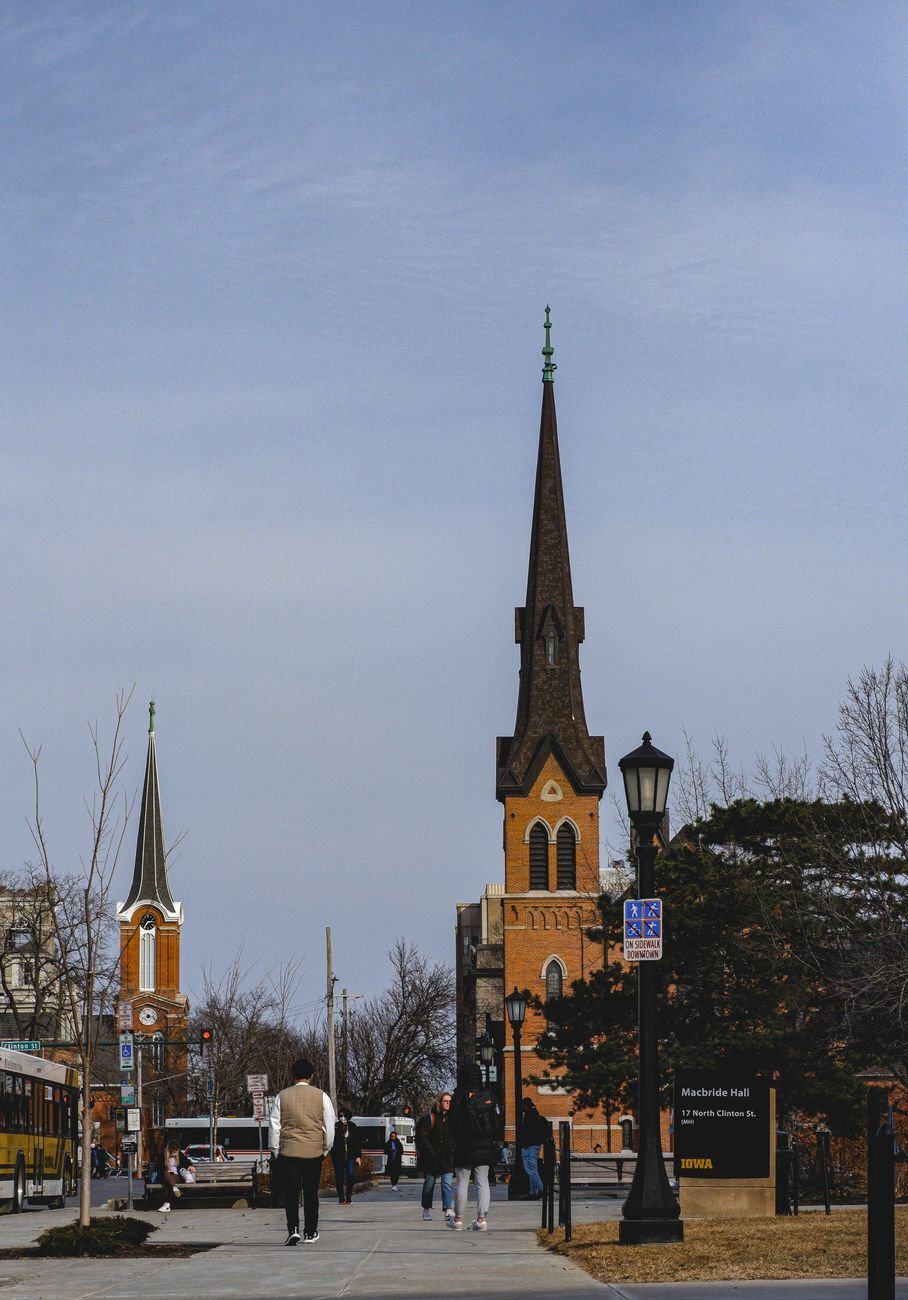
The Iowa Writers’ Workshop, founded in 1936, has produced or employed more Pulitzer Prize winners and major American novelists than any comparable program, including Flannery O’Connor, Kurt Vonnegut, Marilynne Robinson, and dozens of others across nine decades. That legacy turned Iowa City into the first American city designated a UNESCO City of Literature in 2008, a designation shared with places like Edinburgh and Dublin, and it shows up in the town’s density of independent bookstores, literary festivals, and a public radio and small press culture disproportionate to its population of roughly 75,000.
Prairie Lights Bookstore, operating since 1978, has hosted readings from a staggering number of major American writers over the decades and remains a genuine cultural hub rather than a tourist novelty, a rarity for an independent bookstore in a city this size.
The Hospital System That Anchors the Economy
- University of Iowa Hospitals & Clinics employs more than 12,000 people, making it by far the largest employer in Johnson County
- The medical center draws patients from across Iowa and neighboring states for specialized care unavailable in smaller regional hospitals
- The University of Iowa itself, including the medical school, employs tens of thousands more across research, teaching, and administration
- This healthcare and education base has made Iowa City’s economy far less tied to agricultural commodity cycles than most of the rest of the state
This matters because most Iowa towns remain economically tied to row-crop agriculture, a sector that swings hard with commodity prices, trade policy, and weather. Iowa City’s economy, dominated by healthcare and higher education, is comparatively insulated from those swings, which shows up in steadier employment numbers and a median household income that consistently ranks among the highest in the state.
A College Town Without the Boom-Bust Cycle
Many college towns see dramatic population swings between semester and summer, and dramatic economic dependence on one industry — the university itself. Iowa City has that too, but the hospital system diversifies it: patients and their families travel to Iowa City year-round regardless of the academic calendar, filling hotels and restaurants during weeks when a typical college town would be empty.
Home prices in Iowa City run moderate by national standards, with a median around $260,000 as of 2024, reflecting steady, healthcare-and-education-driven demand rather than the speculative swings seen in tourism or tech-driven markets. The city has managed steady population growth without the extreme housing cost spikes seen in similarly situated college towns closer to major coastal metros.
The Combination That Makes It Work
What makes Iowa City distinct isn’t the university alone — plenty of towns have a flagship state university without becoming culturally significant beyond their state’s borders. It’s the specific combination of a globally significant literary institution that draws writers and readers from everywhere, layered onto a massive regional hospital system that provides economic ballast the arts alone never could. Take away either one and Iowa City looks like a smaller, less distinctive version of dozens of other Midwestern college towns.
What Visitors Actually Come For
Beyond the literary tourism drawn by the Writers’ Workshop’s reputation, Iowa City draws a specific medical tourism population — families of patients receiving specialized treatment at University of Iowa Hospitals & Clinics who end up staying in local hotels and extended-stay housing for days or weeks at a time, a visitor category almost invisible in typical tourism marketing but economically significant in occupancy terms. The Iowa Hawkeyes athletic program adds a third, more conventional visitor draw, with football Saturdays at Kinnick Stadium filling the city’s hotels for a dozen weekends each fall and generating the kind of retail and restaurant spending common to any major college sports town.
These three distinct visitor economies — literary pilgrims, medical families, and football fans — rarely overlap in the same week, which gives Iowa City a more evenly distributed occupancy calendar than towns dependent on a single seasonal draw, even though none of the three alone would be enough to sustain the hospitality infrastructure the city has built.
The city’s downtown pedestrian mall, anchored by the Old Capitol building at the center of the University of Iowa campus, remains one of the more successful car-free commercial districts in the Midwest, largely because the university guarantees a dense, walking population year-round that keeps ground-floor retail viable in a way that struggling downtown malls in similarly sized non-university Iowa towns simply can’t replicate. That built-in foot traffic is, in its own quiet way, as important to Iowa City’s downtown health as either the Writers’ Workshop or the hospital system, even if it gets far less attention in any single explanation of why the city works.
The city’s designation as a UNESCO City of Literature has also generated a modest but steady stream of international academic visitors and literary tourists, a category that few other Iowa cities compete for at all, adding another distinct layer to the visitor mix beyond the hospital families and football fans who otherwise dominate Iowa City’s hospitality demand throughout the year. The International Writing Program, a separate residency that has hosted writers from dozens of countries since the 1960s, extends that literary infrastructure beyond the graduate workshop itself, reinforcing Iowa City’s identity as a place that draws serious literary attention on a scale wildly disproportionate to its modest population. Few American cities under 100,000 people can claim a comparable density of internationally significant cultural infrastructure layered onto a functioning regional hospital system, and that combination remains the single best explanation for why Iowa City keeps punching above its weight in national attention despite its remote Midwestern location.