Bend, Oregon Was Affordable for 5 Years. That Window Closed Around 2022 and Hasn’t Reopened
We may earn money or products from the companies mentioned in this post. This means if you click on the link and purchase the item, I will receive a small commission at no extra cost to you ... you're just helping re-supply our family's travel fund.
In 2018, Bend, Oregon was an outdoor recreation city with home prices still south of $350,000 and a lifestyle that felt like a deal for what it offered. By 2024, the median home price crossed $600,000. By 2026, it’s hovering near $650,000. The brief window when Bend was undervalued relative to its quality of life is closed, and the city that exists now is a genuinely expensive place to live — for reasons that are both obvious and worth understanding.
What Drove Bend’s Price Spike
The same factors that hit every desirable Western outdoor town hit Bend harder than most because of its specific set of qualities. It has Mt. Bachelor ski resort 22 miles away. It has the Deschutes River running through the city with a genuine riverside trail. It’s in central Oregon’s high desert, with over 300 days of sun per year — dramatically more than Portland or Eugene. And it has a walkable, high-quality downtown that grew genuine restaurants, craft breweries, and cultural institutions over the decade before the boom.
Remote workers from the Bay Area and Seattle recognized that Bend offered what they were paying coastal prices for, at prices that were — briefly — 40% lower. The migration accelerated housing demand while Oregon’s restrictive land use laws (urban growth boundaries) limited the supply response. The result was predictable in retrospect and felt sudden to anyone who hadn’t been tracking it closely.
What Bend Costs to Live In Now
Housing in 2026:
- Median home price: approximately $650,000
- Two-bedroom apartment rent: $1,900–$2,500
- Redmond (20 minutes north): median around $420,000 — the cost-conscious alternative
- La Pine (30 minutes south): median under $350,000 — more rural, fewer amenities
Oregon income tax note:
Oregon has one of the highest state income tax rates in the country — up to 9.9% on income over $125,000. This meaningfully changes the effective cost comparison with Washington State (no income tax) for higher-earning remote workers. Someone earning $150,000 and moving to Bend versus Spokane, Washington faces roughly $10,000–$13,000 more per year in state taxes before accounting for the housing premium. The combination of higher taxes and higher housing makes the Bend cost picture more significant than the home prices alone suggest.
What Bend Still Gets Right
The things that made Bend attractive haven’t changed. Mt. Bachelor (early-season snow, reasonable day ticket prices compared to California or Colorado resorts) is still there. The Deschutes River trail is still there. The 10 Barrel Brewing origin story and the craft beer culture it seeded (25+ breweries in a city of 100,000) is still there. The food scene is legitimate. The community of outdoor-focused people who moved here and built a shared culture — climbing gyms, river kayaking, trail running races — is still there.
As a visitor, Bend delivers everything it promises. Hotels range from $150–$280/night in most seasons with a quality inventory. The restaurant scene rewards a three-day visit. Smith Rock State Park (30 minutes north) is world-class rock climbing and hiking accessible to non-climbers with dramatic canyon views. The high desert scenery east of Bend is unlike anything in the Pacific Northwest and gives the region a distinctive character.
As a place to move: the math now requires either a high income (the housing premium demands it) or willingness to live in Redmond or La Pine and drive to the Bend amenities. The effortless affordability that drew the first wave of movers is gone. What remains is a genuinely excellent small city whose price now reflects its quality — which is either reasonable or frustrating depending on your budget and how long ago you first heard about it.
Bend’s Outdoor Identity in 2026
The Bend outdoor economy — which pre-dates the housing price spike and survived it — is built on a specific combination: Mount Bachelor ski resort 22 miles west (3,688 skiable acres, one of the largest ski areas in the Pacific Northwest), the Deschutes River Trail through downtown, and the High Desert Museum 3 miles south of downtown (one of the best natural and cultural history museums in the Pacific Northwest). The trail system within Bend city limits has 60+ miles of singletrack, gravel, and paved paths that make biking a genuine transportation option in addition to a recreation activity.
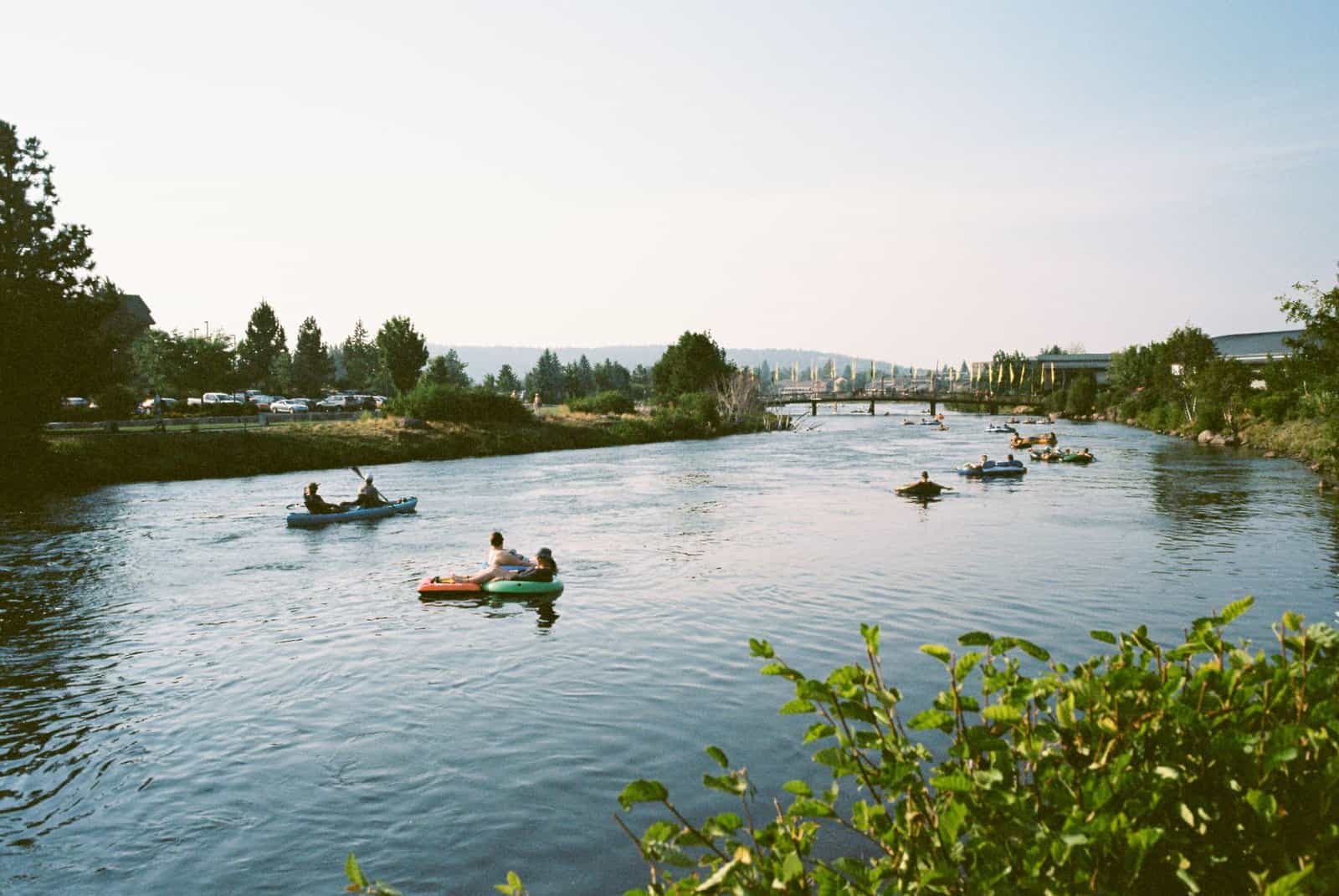
The Deschutes River below Bend at Tumalo State Park is the starting point for inner tube floats that go through downtown Bend in summer — a tradition that’s been part of the city’s identity for 40 years and has survived the growth. The Old Mill District, built on the site of the Brooks-Scanlon lumber mill that operated until 1994, has a retail and restaurant corridor along the Deschutes River that provides the walkable downtown amenity that Bend’s original downtown lacked. The combination of the river trail, the Old Mill, and the brewery culture (Deschutes Brewery, 10 Barrel, Crux Fermentation Project) makes Bend’s evening economy strong enough that visitors who came for the outdoors end up staying two days for the downtown.