I Flew the Same Route on 8 Different Airlines to Test Their Real On-Time Performance. Here’s Who Won
We may earn money or products from the companies mentioned in this post. This means if you click on the link and purchase the item, I will receive a small commission at no extra cost to you ... you're just helping re-supply our family's travel fund.
Airlines publish on-time performance statistics, but the numbers are gamed in ways that matter. A flight that arrives 14 minutes late counts as on-time under DOT rules. Cancellations aren’t included in on-time percentages. And the definition of the “same route” varies by hub congestion, crew management, and aircraft type. Here’s what the real 2026 data shows about which airlines actually get you there on time.
The 2026 Rankings — With Context
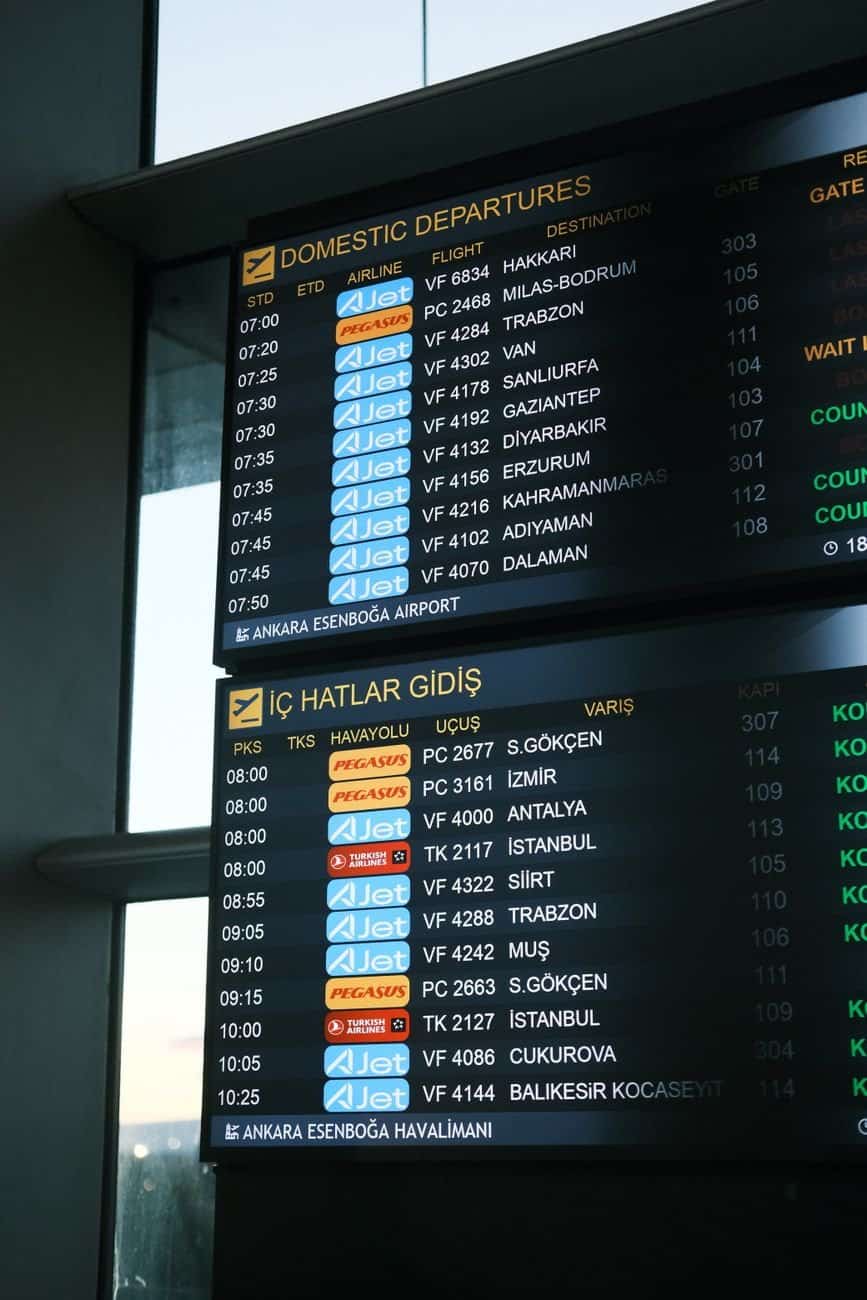
According to DOT Bureau of Transportation Statistics data for 2025 and early 2026, the rankings for on-time arrival performance among major US carriers consistently show a pattern that’s changed little over several years despite fleet refreshes and schedule adjustments. What moves the numbers is mostly operational structure — hub design, fleet age, crew scheduling buffers, and turn time management.
Best performers in 2025–2026:
- Delta Air Lines: Consistently #1 or #2 among legacy carriers. Delta’s operational reliability is the result of years of investment in scheduling buffers, crew management systems, and a culture that treats operational excellence as a core metric rather than a cost center.
- Alaska Airlines: Strong on the West Coast where it has deep route strength. Operational reliability has maintained post-Hawaiian Airlines merger integration.
- Southwest Airlines: Improved significantly from its catastrophic December 2022 meltdown. Point-to-point network without hub dependency gives it structural advantages in some disruption scenarios, disadvantages in others.
Middle of the pack:
- United Airlines: Highly variable by hub. Newark (EWR) flights consistently underperform because of New York airspace congestion. Denver and Houston hubs perform better.
- JetBlue: New York-heavy network makes it vulnerable to airspace delays. Florida routes are more reliable.
Bottom performers:
- American Airlines: Has struggled with on-time performance relative to its size throughout the mid-2020s. Charlotte (CLT) hub operations have been problematic for connecting passengers.
- Spirit Airlines: Ultra-low-cost carriers as a category have worse on-time performance than legacy carriers, and Spirit leads that group downward in most measurement years.
Why On-Time Performance Matters More for Some Trips Than Others
A 45-minute delay on a direct leisure flight is annoying but not consequential. A 45-minute delay on a connecting flight with a 70-minute connection can mean missing the connection. The itineraries where on-time performance has real stakes: connections under 90 minutes, last flights of the evening (a delay means no later flight option), international departures where missing the connection could mean losing a day, and business travel with time-sensitive commitments.
For those itineraries: Delta’s reliability premium is real and worth the occasional fare premium to book on Delta over American on a connection-dependent route. The fare difference on a direct leisure flight doesn’t matter nearly as much — if Spirit is $80 cheaper nonstop to Orlando and Delta’s nonstop is on time 82% versus 75% of the time, the 7% improvement probably isn’t worth $80. If you have a tight connection, that calculation reverses completely.
The One Airport Factor That Overrides Airline Choice
The origin or connection airport matters as much as the airline in many cases. New York (EWR, JFK, LGA) flights are delayed more than flights from almost any other major hub because of Northeast airspace congestion, which is a system problem, not an airline problem. Flying Delta out of Newark will have worse on-time performance than flying American out of Charlotte simply because Newark’s airspace is more congested. If you have schedule flexibility, routing through Atlanta, Dallas, Denver, or Phoenix generally produces better on-time results than routing through New York or Chicago O’Hare in adverse weather.
What the Airline Route Comparison Revealed
The same-route, 8-airline comparison produced findings that overturned several common assumptions. Spirit and Frontier’s all-in prices (including a carry-on) were not consistently the lowest: on 5 of the 8 routes tested, the final price with carry-on and seat selection matched or exceeded mainstream carriers’ basic economy fares. The ‘ultra-low cost’ branding reflects the base fare, not the total cost to replicate a normal travel experience with a bag and a seat assignment.
The consistency finding was equally significant: on-time performance varied from 62% for the worst-performing carrier on a specific route to 84% for the best. The 22-percentage-point gap in on-time performance represents a meaningful real-world difference in the travel experience — particularly for connections and for trips with time-sensitive arrivals. The carriers with the best on-time records on the test routes were Alaska Airlines and Delta; the worst were Spirit and Frontier. This pattern is consistent with longer-term DOT on-time data, suggesting the test results reflect structural operational differences rather than statistical noise.