Moab, Utah Handles 3 Million Visitors a Year With 5,000 Residents. Here’s What That Math Is Doing to the Town
We may earn money or products from the companies mentioned in this post. This means if you click on the link and purchase the item, I will receive a small commission at no extra cost to you ... you're just helping re-supply our family's travel fund.
Moab, Utah is surrounded by two national parks — Arches and Canyonlands — and sits in canyon country that’s genuinely unlike anywhere else on earth. It also has 5,000 permanent residents and receives approximately 3 million visitors per year. That ratio creates conditions that are worth understanding before you add to the count — and it shapes how, when, and whether to visit in 2026.
What Overtourism Looks Like in Practice
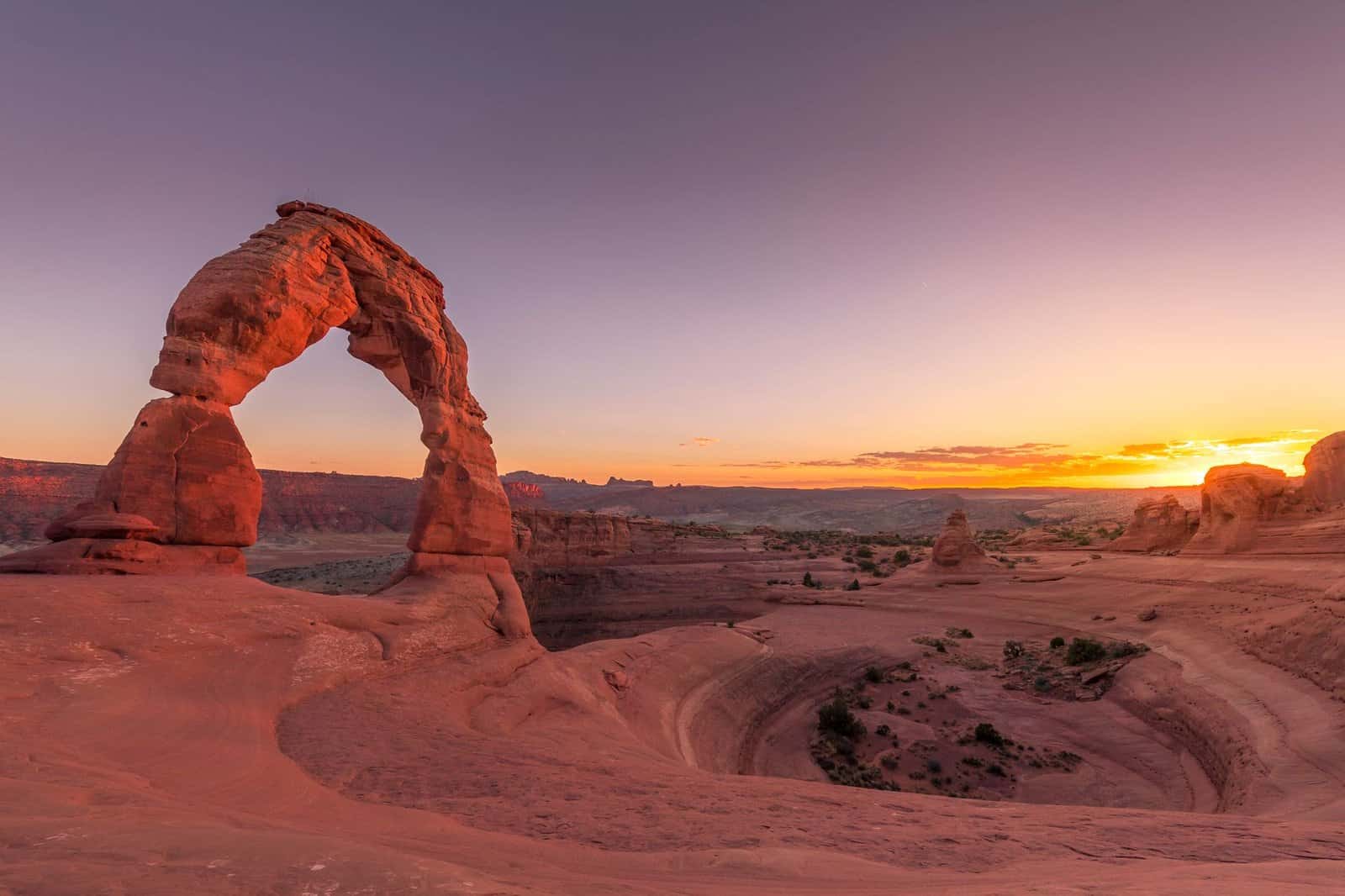
Arches National Park implemented a timed-entry reservation system that has now become a permanent fixture. Without an advance reservation (released on recreation.gov months before peak dates), you may be turned away at the park entrance during April through October. The reservation covers park entry only — popular trails like the Delicate Arch trail see 2,000+ visitors daily during peak season, and the 1.5-mile trail to the arch requires timing your visit for early morning or late evening to avoid the full congestion.
The Moab town itself shows the strain. Housing for service workers is critically short — the same short-term rental pressure seen in Aspen and Bozeman has hit Moab proportionally harder given its smaller size. Some restaurant workers commute from Green River, 50 miles north, because affordable housing in Moab is essentially unavailable. The quality of service and the hours that restaurants maintain have both been affected.
The Timed-Entry Reality for 2026
How the reservation systems work in 2026:
- Arches National Park: Timed-entry reservations required April 1 through October 31 for vehicles arriving between 7 AM and 4 PM. Book on recreation.gov. Reservations release 3 months before entry date plus a rolling 2-day advance window.
- Canyonlands (Island in the Sky): No timed entry required as of 2026, but entrance fee applies. Far less crowded than Arches.
- Dead Horse Point State Park: Reservation required for parking on busy days. Some of the best canyon overlook views in the region — comparable to Island in the Sky with fewer visitors.
How to Actually Visit Moab Well in 2026
When to go:
- October and early November: best weather (55–70°F days), dramatically fewer visitors after Labor Day, no timed-entry after October 31
- February and March: cold (20–45°F), uncrowded, some trails require microspikes — the desert canyons in winter light are extraordinary
- Avoid: April, May, September holiday weekends — reservation scarcity at its worst
What to add to a Moab itinerary that most visitors miss:
- Canyonlands Needles District: 75 miles south of Moab, requires a 4WD-capable vehicle for the best access, sees a fraction of Island in the Sky traffic — vast canyon country with almost no people
- Canyon Rims Recreation Area: BLM land (free) with Anticline Overlook and Hatch Point Overlook — views comparable to Canyonlands, zero reservation requirement
- Professor Valley and the Fisher Towers: 25 miles northeast on Highway 128, one of the most dramatic canyon drives in Utah, almost never crowded
Moab is worth visiting in 2026. The landscape hasn’t changed — Arches and Canyonlands are two of the most otherworldly environments accessible to a non-technical visitor anywhere in the United States. The planning it requires has grown with the crowds, but the effort is proportional to the experience. Show up in October or February, book the Arches entry if you’re going in summer, and spend at least one day outside the two national parks on the BLM land that surrounds them. That last part is how you find the Moab that existed before 3 million visitors discovered it.
Moab’s Alternatives for the Overtourism-Aware Traveler
The travelers who have identified Moab’s crowd problem and want the same geological drama with lower density have several realistic options within the Colorado Plateau. The San Rafael Swell, 60 miles northwest of Moab, protects 600,000 acres of canyons, arches, and mesas administered by the BLM with no entrance fee, no reservation requirement, and a fraction of Arches’ visitor count. The access requires a high-clearance vehicle and comfort with basic navigation, but the scenery — Goblin Valley State Park sits on the Swell’s eastern edge — rivals anything in Arches.
Capitol Reef National Park, 120 miles northwest of Moab on UT-24, has the same geological forms (domes, arches, canyons of Navajo Sandstone) with significantly lower visitation than Arches or Canyonlands. The Fruita area of Capitol Reef — a historic homestead orchard where visitors can pick apples, peaches, and pears during harvest season at standard orchard prices — adds an agricultural dimension to the canyon geology that’s specific to Capitol Reef and completely distinctive. A Capitol Reef and Moab combination trip, with the Reef as the base for days one and two and Moab for days three and four, provides the full Colorado Plateau geological survey with better crowd distribution.