Grand Teton Gets a Million Fewer Visitors Than Yellowstone Every Year Despite Sitting 15 Minutes Away
We may earn money or products from the companies mentioned in this post. This means if you click on the link and purchase the item, I will receive a small commission at no extra cost to you ... you're just helping re-supply our family's travel fund.
Grand Teton National Park’s south entrance sits about 15 minutes from Yellowstone’s border, close enough that most visitors treat the two parks as a single destination. But Yellowstone pulls in around 4.7 million visitors in a typical recent year while Grand Teton logs roughly 3.6 million, a gap of more than a million people between two parks that share a highway. The reason isn’t quality. It’s that almost nobody understands what actually distinguishes them, so most first-time visitors plan the trip backward.
Two Completely Different Parks Wearing the Same Itinerary
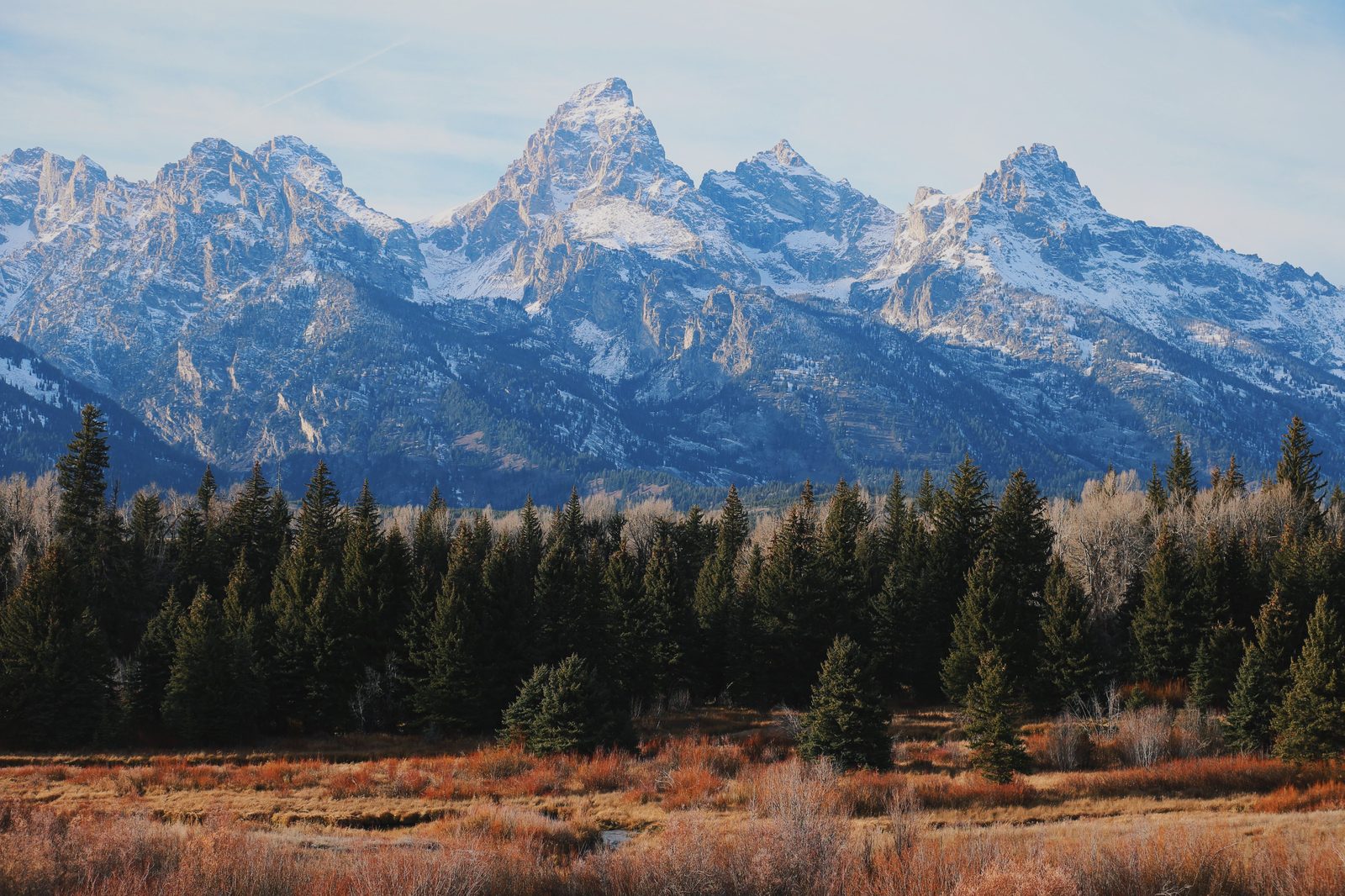
Yellowstone is 2.2 million acres built around a supervolcano, geysers, hot springs, mud pots, and a caldera that reshapes the land itself. It rewards slow, wide-ranging exploration: the Grand Loop Road alone is 142 miles, and seeing Old Faithful, the Grand Prismatic Spring, and Lamar Valley’s wildlife in a single day is close to impossible. Grand Teton, by contrast, is a compact 310,000 acres dominated by a single dramatic mountain range that rises directly out of the valley floor with no foothills in between, the reason the Tetons look so improbably vertical in every photo. There’s no volcanism to explain, no boardwalk network to navigate. It’s a park built for looking up, not around.
That structural difference means the parks reward opposite travel styles. Yellowstone benefits from three or four full days because its highlights are spread across a huge road network. Grand Teton’s essential experience, Jenny Lake, the Snake River overlook, the drive along Teton Park Road, can be absorbed properly in a day and a half, though multi-day hikers headed into the Teton Crest Trail or Cascade Canyon will want much longer.
Why Most People Get the Order Wrong
The common first-timer mistake is treating Grand Teton as an appetizer before the real destination of Yellowstone, spending a rushed morning at Jenny Lake before racing north. That backward sequencing shortchanges a park that has its own case for being the highlight of the trip, Jackson Hole’s wildlife-rich valley floor, Snake River float trips, and mountain views that don’t require walking a single boardwalk to appreciate. Guides who work both parks generally recommend starting in Grand Teton precisely because it’s easier to fully see in limited time, then moving into Yellowstone once travelers are ready for a park that takes real effort to explore properly.
What Each Park Actually Rewards
- Yellowstone: geothermal features, large-scale wildlife viewing in Lamar and Hayden valleys, multi-day road-trip pacing
- Grand Teton: mountain photography, lake-based day hikes, float trips on the Snake River, easier day-trip logistics from Jackson
- Yellowstone requires more driving between attractions; Grand Teton’s highlights sit closer together along a single corridor
The visitor gap also reflects marketing history. Yellowstone was designated in 1872 as the first national park in the world, a distinction that built a century and a half of name recognition Grand Teton, established in 1929 and expanded in 1950, never fully caught up to. Ask a non-American to name a U.S. national park and Yellowstone will come up first almost every time; Grand Teton, despite arguably more photogenic scenery, remains the park people discover only once they’re already planning the Yellowstone trip.
Cost is the other variable that separates the two parks in ways travelers should plan around. Grand Teton and Yellowstone are covered by the same America the Beautiful annual pass, and Yellowstone’s own single-park pass costs $35 for a private vehicle valid for seven days, with Grand Teton charging the same $35 rate independently if visited alone. Because most travelers visit both in a single trip, buying the $80 annual pass usually pays for itself, and it also covers entry to any other national park visited within the following twelve months, a detail many first-time visitors don’t realize until they’re already at the gate.
Lodging logistics differ sharply between the two parks as well. Yellowstone’s in-park lodges, Old Faithful Inn, Lake Yellowstone Hotel, and others, book out six to twelve months in advance for peak summer dates, while Grand Teton’s more limited in-park lodging, along with the town of Jackson just outside its boundary, offers a wider range of last-minute options, albeit at Jackson’s notoriously high price points during ski season spillover and summer alike. Travelers who miss the booking window for in-park Yellowstone lodges often end up staying in West Yellowstone, Cody, or Gardiner and driving in each day, which adds real time to an itinerary that’s already stretched thin by the park’s size.
Wildlife viewing patterns also diverge in ways worth knowing before the trip. Grand Teton’s wildlife, moose along the Snake River, pronghorn on the sagebrush flats, occasional grizzly activity near Jenny Lake, tends to be visible from established pullouts without requiring the dawn-patrol discipline Yellowstone’s Lamar Valley wolf and bear watching demands. For travelers with young kids or limited patience for 5 a.m. wake-ups, that’s a meaningful quality-of-life difference between the two parks that rarely makes it into the marketing copy for either one.
For travelers trying to decide how to split limited time between the two parks, a common and effective approach is anchoring in Jackson, Wyoming, which sits close enough to Grand Teton’s southern entrance for an easy day trip while also serving as a reasonable, if longer, base for Yellowstone’s southern loop. This avoids the higher lodging costs and booking competition inside Yellowstone itself while still allowing a dawn departure for wildlife viewing, since the drive from Jackson to Yellowstone’s most popular wildlife corridors takes roughly two hours, long but manageable for a single big day trip built around one park’s highlights rather than trying to rush both in a single exhausting day.
The practical upshot for anyone planning the trip: budget more days for Yellowstone than feels intuitive, and don’t shortchange Grand Teton by treating it as a drive-through. The lower visitor count in Grand Teton isn’t a signal that it’s the lesser park, if anything, it means shorter lines at trailheads and a less frantic pace, which for a lot of travelers is the better version of the two parks to actually spend a vacation in.