Waco Averaged 790,000 Visitors a Year Before Chip and Joanna Gaines. It Has Averaged Over 2 Million Ever Since.
We may earn money or products from the companies mentioned in this post. This means if you click on the link and purchase the item, I will receive a small commission at no extra cost to you ... you're just helping re-supply our family's travel fund.
Before October 2015, Waco, Texas was known nationally for one thing: the 1993 Branch Davidian standoff that ended in fire and became shorthand for federal disaster. Today it’s known for silos. Chip and Joanna Gaines opened Magnolia Market at the Silos that month, and Waco’s tourism numbers didn’t just grow, they went vertical, from roughly 790,000 annual visitors in 2015 to more than two million within a year, and they haven’t dropped below one million since, even accounting for the pandemic.
Two Grain Silos and a Television Show
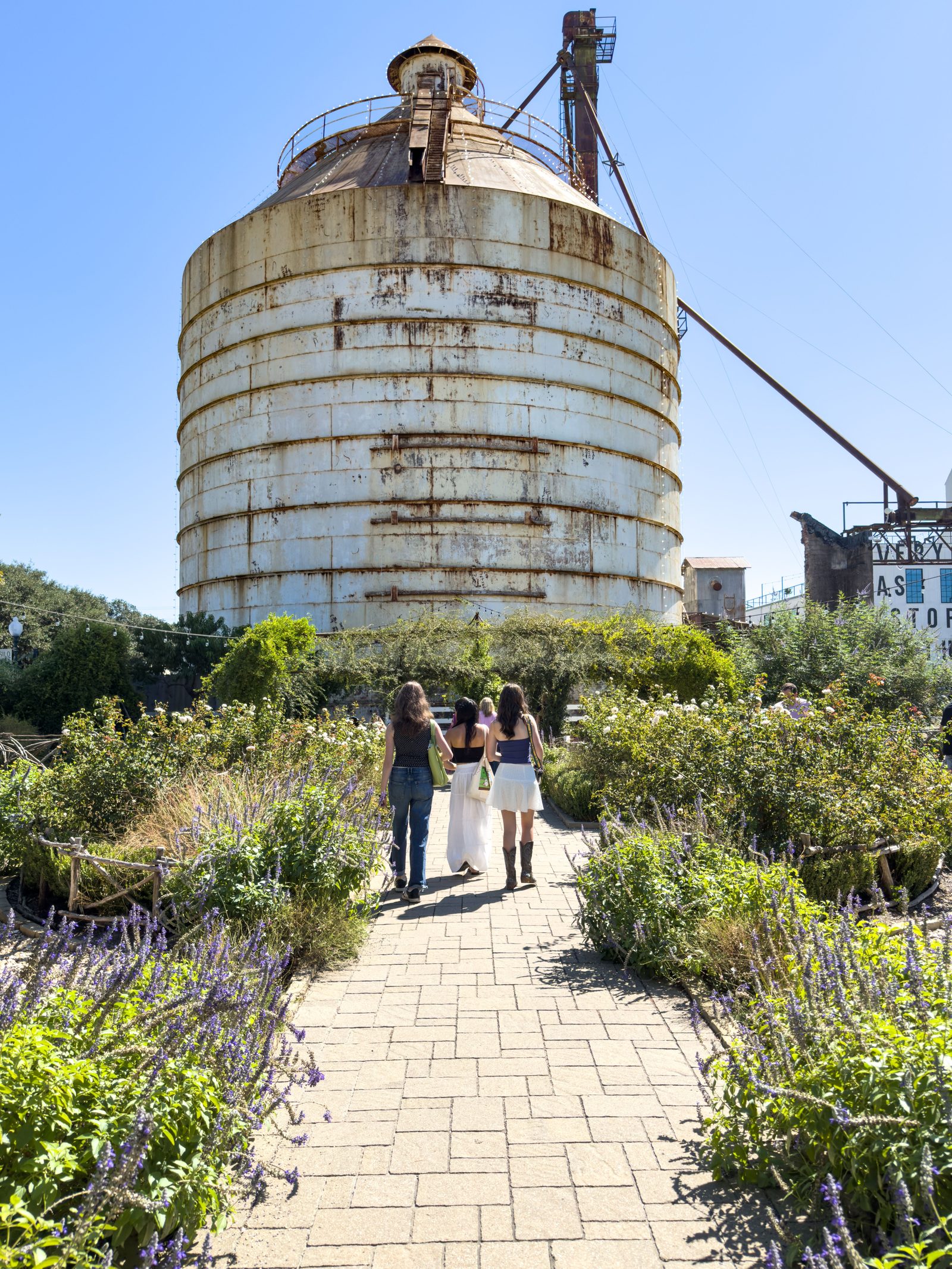
Magnolia Market was built around two 1950s grain silos the Gaineses converted into a retail and events complex, anchored by HGTV’s Fixer Upper, which ran from 2013 to 2018 and turned the couple’s renovation aesthetic — shiplap, farmhouse sinks, black window frames — into a national design vocabulary. The Silos alone drew an estimated 1.5 million visitors a year at their peak, according to figures cited by economist Ray Perryman, outdrawing the Alamo in San Antonio, a genuine tourist landmark with 300 years of history behind it.
The economic impact studies that followed put a number on what that meant for the city: roughly half a billion dollars a year in gross local economic product, according to Perryman’s analysis, with tourism growth of around 44 percent attributed directly to the Magnolia effect. Retail spending in Waco nearly doubled between 2000 and 2018, reaching $321 million even though the city added only about 19,000 new residents in that span, meaning the growth was overwhelmingly driven by visitors, not population.
What Two Million Visitors a Year Does to a City of 140,000
The hotel math alone tells the story: Waco recorded the second-highest hotel occupancy rate in Texas in 2017, prompting more than 1,000 new hotel rooms to be built downtown in a rush to catch up with demand that had already outpaced supply for two years. Independent restaurants followed the same curve — at least five opened downtown in a single year during the height of the boom, many of them started by entrepreneurs who moved to Waco specifically because of the Silos traffic.
But the growth carried costs that mirror what happens in any small city absorbing sudden fame. Property values around downtown and the Magnolia-adjacent neighborhoods rose fast enough that some longtime residents reported property tax increases near 29 percent, according to reporting compiled by the Houston Chronicle, straining people on fixed incomes who had no interest in shiplap or farmhouse sinks and simply wanted to keep their houses.
Beyond the Silos
- The Dr Pepper Museum, located across the street from the Silos, saw attendance jump from a pre-Magnolia record of 75,000 a year toward 170,000
- Baylor University’s Mayborn Museum reported the same visitor bump, riding the same foot traffic without spending a marketing dollar on it
- A survey of Magnolia visitors found roughly 78 percent came to Waco specifically because of Magnolia, and about 60 percent traveled from outside Texas entirely
What makes Waco a useful case study is how deliberately the rebrand worked. Waco’s tourism bureau leaned all the way into the Gaines association rather than fighting for a separate identity, correctly betting that being known as the home of Chip and Joanna was a more marketable story than anything else the city had to offer, including Baylor University and the Texas Ranger Hall of Fame. It’s a small-city playbook other places have since tried to copy, find one cultural export and build the entire tourism strategy around it, with far less success, because most towns don’t have a couple with a nationally syndicated television show and millions of social media followers between them.
The Waco story also offers a lesson in how fragile a single-family tourism strategy can be, even a wildly successful one. Fixer Upper ended its original run in 2018, and there were real questions at the time about whether Waco’s tourism numbers would hold without new episodes generating fresh national attention. They did hold, in large part because the Gaineses diversified beyond television into a full media and retail company, Magnolia Network launched on cable and streaming in 2021, keeping the brand in front of audiences even between shows, and because by that point Waco’s tourism infrastructure, hotels, restaurants, a redesigned downtown, had become self-sustaining rather than purely dependent on the original spark.
Baylor University’s role in all of this often gets underweighted in the Magnolia narrative but matters enormously to Waco’s underlying economic stability. The university enrolls around 20,000 students and has undertaken its own significant capital investment in recent years, including a new on-campus football stadium and expanded research facilities, giving Waco an economic anchor that predates and will outlast any single television show. The Magnolia effect accelerated Waco’s transformation, but Baylor’s steady institutional growth is what gives the city’s economy a floor that doesn’t depend on cultural relevance.
What’s genuinely notable, and rarely acknowledged in coverage that treats Waco purely as a HGTV punchline, is how deliberately the city’s tourism and economic development offices used the Magnolia moment as leverage to fund broader downtown infrastructure. Streetscape improvements, a riverside park expansion along the Brazos, and new mixed-use zoning downtown all got easier to fund politically once the city could point to visible tourism revenue as justification. Whether that counts as savvy governance or simply riding a wave depends on perspective, but the results, a downtown that looks nothing like the one that existed in 2014, are not in dispute.
For a first-time visitor planning around the Magnolia effect rather than against it, the practical reality is that Magnolia Market at the Silos still draws the heaviest crowds on weekend mornings, and travelers who arrive right at opening or in the last two hours before close consistently report a noticeably calmer experience with shorter lines at the bakery and easier parking nearby. The surrounding downtown district, now dense with Waco-founded restaurants and shops that predate or postdate the Magnolia boom depending on the block, rewards wandering beyond the Silos themselves, since much of what makes downtown Waco interesting now exists specifically because of the foot traffic Magnolia generates, not inside the original attraction itself.
Ten years on, Waco’s downtown looks nothing like it did in 2014. The Silos remain the gravitational center, but the surrounding blocks now hold boutique hotels, a food truck park, and restaurants that would not have opened in a city whose main national association was David Koresh. Whether that’s a net win depends entirely on who in Waco you ask, and how much their property tax bill has changed since 2015.